Paridae: The Fascinating World of Tits, Chickadees, and Titmice
The Paridae are a family of small, energetic passerine birds found primarily across the Northern Hemisphere and Africa. Depending on where you live, you likely know them by different names: in Europe and Africa, they are called "tits," while in North America, they are known as "chickadees" or "titmice." These birds are celebrated for their intelligence, adaptability, and distinctive social behaviors.
The term "titmouse" dates back to the 14th century, combining the Old English word mase (meaning bird) with "tit," denoting something small. While they share a common family tree, these birds have evolved to thrive in diverse environments, from the frozen forests of Alaska to the tropical regions of Africa.

Key Facts
- Global Range: Found across Europe, Asia, North America, and Africa.
- Diet: Generalist insectivores that also consume seeds and nuts.
- Intelligence: Ranked among the most intelligent birds, following corvids and parrots.
- Nesting: Primarily cavity-nesters, though some species nest on the ground.
- Size: Typically range from 10 to 22 cm in length and 5 to 49 g in weight.
Physical Characteristics
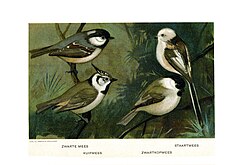
Most members of the Paridae family share a very similar body plan, described by experts as one of the most conservative avian families in terms of general morphology. They are typically stocky woodland birds with short, stout bills. While most are similar, a few monotypic genera (genera containing only one species) show more distinct variations.
The bill shape often reflects the bird's specific diet: insectivorous species possess finer bills, while those that rely more on seeds have stouter ones. An interesting evolutionary trend suggests some tits may be developing longer beaks to better access bird feeders. The most unusual example is Hume's ground tit, which features a long, decurved bill.
Distribution and Habitat
The Paridae family is widespread, with different genera dominating specific regions:
- Poecile: Spans from Europe and Asia into North America (as far south as southern Mexico). This genus includes the chickadees.
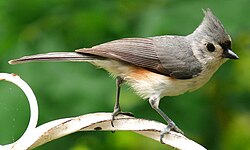
- Baeolophus: Endemic to North America.
- Parus: Includes the great tit, ranging from Western Europe to Indonesia.
- Cyanistes: Distributed across Europe, Asia, and northern Africa.
- Periparus: Primarily found in southeastern Asia, including species endemic to the Philippines.
Behavior and Intelligence
Tits are highly social, noisy, and active birds. They exhibit a fission-fusion society, a social structure where flocks can split into smaller groups or individuals and later reunite. During the breeding season, they are territorial, but in the nonbreeding season, they often join mixed-species feeding flocks.
Their intelligence is a standout trait. Tits can distinguish between dangerous and harmless species, using this knowledge to protect their families through "mobbing" (group harassment of a predator) or by avoiding their nests when predators are nearby to keep their young hidden.
Diet and Foraging Techniques
As generalist insectivores, tits feed on a variety of invertebrates, especially defoliating caterpillars. During winter, they shift their diet toward seeds and nuts. They employ a unique foraging method called "hanging," where they cling upside down to inspect twigs and leaves from all angles.
To handle larger food items, tits use a technique called hold-hammering. They secure a seed or insect between their feet and hammer it with their bill until it opens; some can even open a hazelnut in about 20 minutes. Additionally, several genera practice food caching, hoarding supplies to survive the winter.
Breeding and Life Cycle
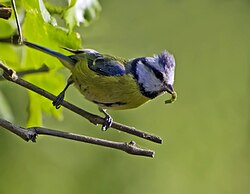
Most tits are cavity-nesters that excavate holes in trees, though the genus Pseudopodoces nests on the ground. They are known for having large clutch sizes for altricial birds (birds born blind and featherless). For example, the European blue tit can lay between 10 and 14 eggs, with record cases of up to 19 eggs.
Many species are multibrooded to survive harsh winters or erratic tropical conditions. In Africa, some species exhibit cooperative breeding, where multiple individuals help raise the young. While most are monogamous, the blue tit is typically polygynous.
Taxonomy and Classification
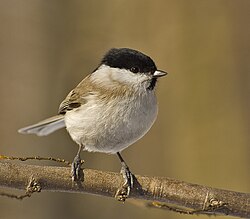
The classification of tits has evolved significantly. Historically, many species were grouped under the genus Parus, but modern mtDNA cytochrome b sequence analysis has led to the creation of several distinct genera. Current research suggests that morphology and biogeography may provide a more robust understanding of their relationships than molecular data alone.
| Genus | Common Examples | Primary Distribution |
|---|---|---|
| Poecile | Chickadees, Marsh tit | Europe, Asia, North America |
| Baeolophus | Titmice | North America |
| Parus | Great tit | Europe to Indonesia |
| Cyanistes | Blue tits | Europe, Asia, N. Africa |
| Melaniparus | Black tits | Africa |
Frequently Asked Questions
What is the difference between a tit, a chickadee, and a titmouse?
These are all members of the Paridae family. "Tit" is the common term used in Europe and Africa, while "chickadee" and "titmouse" are terms used in North America to describe different genera within the same family.
How do tits open hard seeds or nuts?
Tits use a behavior called hold-hammering, where they hold the food item firmly between their feet and strike it repeatedly with their bill until the shell breaks.
Are tits intelligent birds?
Yes, they are considered among the most intelligent of all birds, surpassed only by corvids (like crows) and parrots. They can recognize specific predators and communicate danger to others.
Where do tits build their nests?
The majority of tits are cavity-nesters that use holes in trees. However, there are exceptions, such as the ground tit (Pseudopodoces), which builds its nest on the ground.
What is a fission-fusion society in birds?
It is a social structure where a flock does not remain a fixed group; instead, it can split into smaller subgroups or individuals and later reunite.