Parasitoids: The Lethal Intersection of Parasitism and Predation
In the natural world, the line between a parasite and a predator is often blurred. While a typical parasite relies on a living host to survive and usually avoids killing it, a parasitoid follows a far more lethal trajectory. A parasitoid is an organism that lives in close association with its host at the host's expense, eventually resulting in the inevitable death of that host.
This evolutionary strategy is one of six major types of parasitism. Because the outcome for the host is always fatal, parasitoidism is functionally closer to predation than traditional parasitism. These organisms are primarily found among insects that undergo complete metamorphosis, a biological trait that allows them to maintain a split lifestyle: a parasitic larval stage and a free-living adult stage.
![A parasitoid wasp (Trioxys complanatus, Aphidiinae) ovipositing into the body of a spotted alfalfa aphid (Therioaphis maculata, Calaphidinae), a behaviour that is used in biological pest control[a][2]](/images/42/a5/42a5f2bc9fc22c4315bcae8de107abb1cd4b6733b2c33fde1c7d576d8050feb0.jpg)
Key Facts
- Fatal Outcome: Unlike standard parasites, parasitoids always kill their hosts.
- Taxonomic Range: Approximately 10% of described insects are parasitoids, with the majority belonging to the order Hymenoptera (wasps).
- Diverse Strategies: They can live inside the host (endoparasitism) or outside the host (ectoparasitism).
- Hyperparasitism: Some parasitoids target other parasitoids; in oak galls, this can reach up to five levels.
- Agricultural Use: Many parasitoid species are commercially bred for biological pest control to manage crop-destroying insects.
Parasitoid Strategies and Evolutionary Options
Parasitoids employ various methods to secure their development, which can be categorized by where they reside and how they affect the host's growth.
Endoparasitism vs. Ectoparasitism
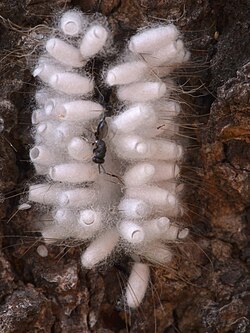
Endoparasitism occurs when the parasitoid lives inside the host's body. Many of these are koinobionts, which allow the host to continue growing, moulting, and evading predators while the larva feeds, effectively maximizing the food source. In contrast, ectoparasitism involves living on the outside of the host. These are often idiobionts, which immediately paralyze the host to prevent escape or the ejection of the parasite.
Impact on Host Fitness
The evolutionary distinction of a parasitoid lies in the host's fitness (the ability to reproduce). While a conventional parasite or pathogen may reduce fitness, a parasitoid reduces it to zero. This distinguishes them from micropredators or parasitic castrators.
| Host Fitness | Single Host (Stays Alive) | Single Host (Dies) | Multiple Hosts |
|---|---|---|---|
| Able to reproduce | Conventional parasite / Pathogen | Trophically transmitted parasite | Micropredator |
| Unable to reproduce | Parasitic castrator | Parasitoid | Solitary predator |
Taxonomic Range and Diversity
Parasitoidism has evolved independently numerous times across the superorder Endopterygota. While most common in wasps, it is also found in flies, beetles, and other insects.
Hymenoptera (Wasps)
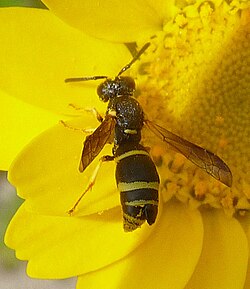
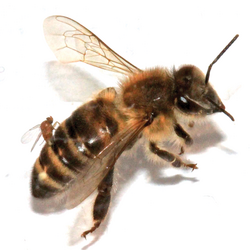
The order Hymenoptera contains the vast majority of parasitoids. Within this group, parasitoidism evolved only once, leading to a massive diversification of species. Key groups include the Ichneumonoidea (approx. 25,000 species) and Chalcidoidea (approx. 22,000 species). These wasps often possess a specialized ovipositor—a tube-like organ used to inject eggs into hosts—which can sometimes be more than 14 times longer than the wasp's head and body.
Other Insect Orders
Beyond wasps, parasitoidism has evolved at least 21 times among Diptera (flies) and 10 or more times among Coleoptera (beetles). For example, the beetle families Ripiphoridae, Passandridae, and Rhipiceridae are largely parasitoidal, as are certain species within the Staphylinidae and Carabidae families.
Behavioral Manipulation and Human Interaction
Some parasitoids have evolved the ability to influence their host's behavior to favor the parasitoid's own propagation. This can include altering the host's movements or defenses to ensure the larva survives to adulthood.
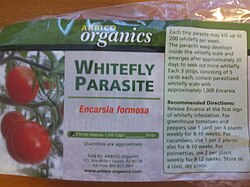
Because of their efficiency in killing specific insect hosts, humans have harnessed parasitoids for biological pest control. By introducing specific parasitoid wasps into greenhouses or fields, farmers can reduce populations of pests like whiteflies or aphids without relying solely on chemical pesticides.
The fascination with these organisms extends beyond science into culture. The concept of a parasitoid—an organism that consumes its host from the inside out—is a central theme in science fiction, most notably reflected in the Xenomorph from the Alien film franchise.
![A 1990s gargoyle at Paisley Abbey, Scotland, resembling a Xenomorph[69] parasitoid from the film Alien[70]](/images/7d/0a/7d0af953620958e14e27c4300db5cda5250d86c5006ef084f6146f0b1a65b43f.jpg)
Frequently Asked Questions
What is the main difference between a parasite and a parasitoid?
The primary difference is the fate of the host. A parasite typically does not kill its host, as it needs the host to remain alive for its own survival. A parasitoid, however, always kills its host as a necessary part of its development.
What is a koinobiont?
A koinobiont is a type of endoparasitoid that allows its host to continue growing, developing, and behaving normally for a period of time before the parasitoid eventually kills it.
How do parasitoids help in agriculture?
They are used in biological pest control. By releasing specific parasitoid wasps that target crop pests, farmers can naturally regulate pest populations, reducing the need for chemical insecticides.
Can a parasitoid be a parasite of another parasitoid?
Yes, this is known as hyperparasitism. In some environments, such as oak galls, this can occur in complex chains reaching up to five levels of parasitism.
Which insect order has the most parasitoids?
The order Hymenoptera, which includes various types of wasps, contains the vast majority of known parasitoid species.