Papaver: The Biology, Taxonomy, and History of Poppies
The genus Papaver comprises a diverse group of 70 to 100 species of frost-tolerant plants. These include annuals, biennials, and perennials native to the cold and temperate regions of North America, Africa, and Eurasia. As the type genus of the poppy family, Papaveraceae, these plants are recognized globally for their striking floral displays and significant chemical properties.
From the vast plains of Europe to the rugged mountains of Asia, poppies have adapted to a wide array of environments. Their classification has evolved significantly as botanists move from observing physical traits to analyzing genetic sequences.
Key Facts
- Species Count: Approximately 68 accepted species as of 2025.
- Type Species: Papaver somniferum (the opium poppy).
- Distribution: Native to temperate and cold regions across Eurasia, Africa, and North America.
- Key Characteristic: Traditionally identified by a sessile stigmatic disc (a flat platform where pollen is received) and the absence of a style.
- Diversity: Includes species ranging from the common corn poppy to specialized South African and North American varieties.
Botanical Taxonomy and Classification
The classification of Papaver has undergone significant revision. While early taxonomies relied on morphology—the physical form and structure of the plant—modern cladistic analysis using DNA sequences has revealed that the genus may not be monophyletic (descended from a single common ancestor).
The Argemonidium and Meconella Sections
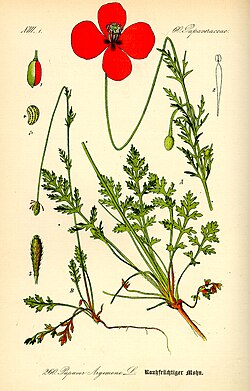
The section Argemonidium includes four annual species, such as P. argemone, distributed from the Adriatic Sea to the Himalayas. These are distinguished by bristly capsules and polyporate pollen grains. Some researchers suggest that Argemonidium and the genus Roemeria are sister taxa and should be elevated to their own genus status.
The section Meconella is widely distributed across the Northern Hemisphere, including Siberia, Canada, and Scandinavia. It is characterized by pinnatisect leaves (deeply divided leaves) and capsules that are both bristly and valvate (opening by valves). Genetic evidence suggests a close relationship between Meconella and the genus Meconopsis.
Regional Specializations: Californicum and Horrida
Certain sections are geographically isolated. Papaver sect. Horrida consists of a single species, P. aculeatum, native to South Africa. It features a glabrous (smooth), narrow capsule and vegetative parts covered in setae (stiff hairs).
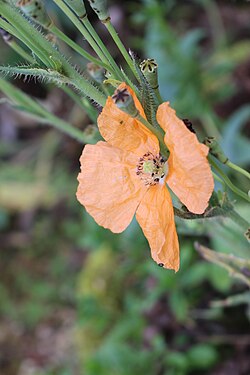
Similarly, P. sect. Californicum is represented by a single annual species native to western North America. It is characterized by a ribbed, glabrous capsule and a racemose inflorescence (flowers arranged along a central axis).
![The fire poppy, Papaver californicum, is placed in a section, Papaver sect. Californicum, on its own.[3]](/images/ae/a1/aea1bc8cef45a9735446801e0a838ae56e67a11453a50276a3328874c21d6d8d.jpg)
The Core Papaver Clade
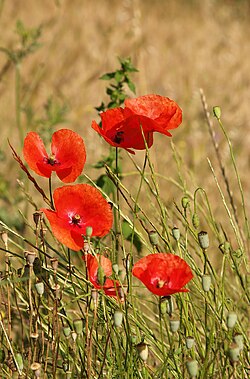
The "core" sections of Papaver s.s. (sensu stricto, or in the strict sense) include groups such as Rhoeadium, Oxytona, and Carinatae. The section Rhoeadium, which includes the common poppy P. rhoeas, is highly diverse and centered in south-western Asia and the Aegean area.
Morphological Evolution
For years, the sessile stigmatic disc was considered the defining feature of Papaver. However, research indicates that this trait may have evolved independently through convergent evolution—where unrelated species evolve similar traits. For example, species like S. heterophylla and P. californicum show a closer genetic link to taxa that possess a style, suggesting the disc is not a unique ancestral marker for the entire genus.
History and Human Use
The most famous member of the genus, Papaver somniferum, has had a profound impact on human history. The latex contained within its seed-heads contains various alkaloids used for medicinal and narcotic purposes.
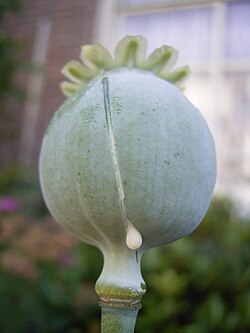
The production of opium led to significant geopolitical conflict, most notably the First (1839–1842) and Second (1856–1860) Opium Wars between Great Britain and China. Beyond narcotics, poppy seed oil became a vital food crop, and the industrial processing of dry capsules began in earnest around 1928.
Summary of Genus Characteristics
| Section/Group | Key Species | Primary Distribution | Distinguishing Feature |
|---|---|---|---|
| Argemonidium | P. argemone | Adriatic to Himalayas | Bristly capsules, polyporate pollen |
| Meconella | P. alpinum s.l. | Circumpolar/Northern Eurasia | Pinnatisect leaves, valvate capsules |
| Californicum | P. californicum | Western North America | Ribbed glabrous capsule |
| Horrida | P. aculeatum | South Africa | Setae-covered vegetative parts |
| Rhoeadium | P. rhoeas | South-western Asia/Europe | Poricidal capsules, dark filaments |
Frequently Asked Questions
What is the type species of the Papaver genus?
The type species is Papaver somniferum, commonly known as the opium poppy or breadseed poppy.
How many species are currently accepted in the genus Papaver?
According to Plants of the World Online as of 2025, there are 68 accepted species.
What is the difference between a sessile stigmatic disc and a style?
A style is a stalk that connects the stigma to the ovary. A sessile stigmatic disc is a flat, stalkless platform where the pollen is received, a trait traditionally used to identify poppies.
Where are poppies naturally found?
They are native to temperate and cold regions across Eurasia, Africa, and North America.
Why is the taxonomy of Papaver considered complex?
Taxonomy is complex because physical similarities (morphology) often do not match genetic data (phylogenetics), suggesting that some traits evolved independently through convergence rather than shared ancestry.