Paleognaths: The Evolutionary History of Ratites and Tinamous
The Paleognaths (Infraclass Palaeognathae) represent one of the most ancient and fascinating lineages of modern birds. Spanning a temporal range from the Paleocene to the Holocene (approximately 60 to 0 million years ago), this group includes some of the world's most iconic avian species, from the towering ostrich to the elusive kiwi. While often associated with flightlessness, the evolutionary journey of the paleognaths is a complex story of divergence, adaptation, and surprising genetic relationships.
Key Facts
- Ancient Lineage: Paleognaths represent the oldest divergence among all extant bird groups.
- Diverse Sizes: Members range from the tiny tinamou (6 inches) to the massive ostrich (9 feet).
- Flight Status: While most are flightless (ratites), tinamous retain the ability to fly.
- Global Distribution: Historically linked to the supercontinent Gondwana.
- Unique Anatomy: Characterized by a specific palate structure, though ostriches possess a reduced vomer bone.
Origin and Evolutionary Timeline
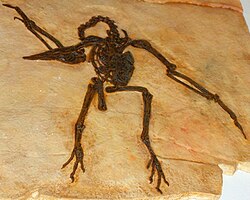
The exact timing of paleognath origins remains a subject of scientific debate. Some molecular and paleontological data suggest that modern bird orders began diverging in the Early Cretaceous, potentially 110 to 120 million years ago. However, a significant gap exists in the fossil record, with no definitive fossils appearing until roughly 70 million years ago.
This 45-million-year discrepancy has led researchers to question whether the fossil record is simply incomplete or if bird evolution accelerated during an adaptive radiation following the Cretaceous–Paleogene (K–Pg) boundary extinction event.
Genomic Insights and Flightlessness
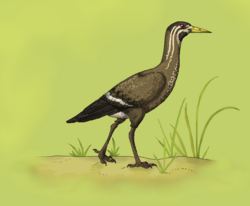
Modern genomic analysis has revolutionized our understanding of this group. A landmark 2007 study involving DNA sequences from 169 species revealed that tinamous are not primitive members of the group, but are actually among the most advanced. This discovery implies that flightlessness evolved multiple times independently within the paleognath lineage, rather than occurring once in a single common ancestor.
Classification and Cladistics
Historically, paleognaths were often grouped as "Ratitae." While early taxonomists like Linnaeus and Merrem laid the groundwork, modern phylogenetics uses a more nuanced approach. The group is currently defined as the least inclusive crown clade containing both Tinamus major and Struthio camelus.
The Notopalaeognathae Clade
It is widely accepted that ostriches were the first to diverge from the living paleognaths. The remaining groups fall into a clade called Notopalaeognathae. Within this group, relationships are often difficult to resolve due to rapid divergence, but four primary clusters are generally recognized:
- Dinocrypturi: A clade comprising the extinct moas and the living tinamous.
- Casuariiformes: The group containing emus and cassowaries.
- Elephant Bird/Kiwi Clade: A sister relationship between the extinct elephant birds and the kiwi.
- Rheas: A distinct lineage of South American birds.
Physical Characteristics and Locomotion
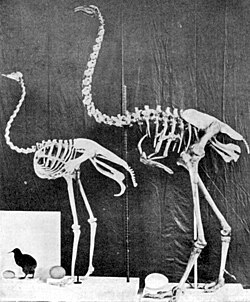
Paleognaths exhibit an extraordinary range of physical dimensions and adaptations. The most prominent feature of the larger species is their specialized locomotion, with many evolving powerful legs for high-speed running.
| Species | Height Range | Weight Range | Key Feature |
|---|---|---|---|
| Ostrich | 1.7–2.7 m | 63–156 kg | Two toes per foot; fastest runner (>35 mph) |
| Emu | 1.5–1.9 m | ~33 kg (avg) | Strong legs; speeds up to 30 mph |
| Rhea | 1.1–1.8 m | 15–40 kg | No clavicles or tail feathers |
| Cassowary | 1.27–1.7 m | 29–59 kg | Quill-like feathers; rudimentary wings |
| Kiwi | 36–56 cm | 1.2–3.9 kg | Smallest ratite; shaggy brown feathers |
| Tinamou | 20–53 cm | 640–2,270 g | Capable of flight |
Frequently Asked Questions
Are all paleognaths flightless?
No. While the ratites (ostriches, emus, rheas, cassowaries, and kiwis) are flightless, the tinamous are capable of flight, making them a unique exception within the group.
Which is the largest member of the Paleognathae?
The ostrich is the largest, reaching heights of up to 9 feet (2.7 meters) and weighing up to 345 pounds (156.5 kg).
How did the discovery of tinamou genetics change evolutionary theory?
The discovery that tinamous are more derived (advanced) than ostriches or rheas suggests that flight was lost multiple times independently across different lineages, rather than being lost once at the base of the ratite tree.
What is the difference between a ratite and a paleognath?
Paleognathae is the broader infraclass that includes all these birds. "Ratite" specifically refers to the flightless members of this group, though the term is sometimes used more broadly in older texts.
How fast can these birds run?
The ostrich is the fastest, exceeding 35 mph (60 km/h), while emus can reach up to 30 mph (48 km/h). Some extinct forms may have reached speeds as high as 45 mph (75 km/h).