Palace of Westminster: The Heart of British Democracy
The Palace of Westminster is one of the world's most iconic legislative buildings, serving as the seat of the Parliament of the United Kingdom. Located in Central London, this architectural masterpiece is not only a center of political power but also a UNESCO World Heritage Site, recognized for its cultural and historical significance. From its origins as a royal residence to its current role as a global symbol of democracy, the Palace blends centuries of history with the grandeur of the Perpendicular Gothic Revival style.
Originally constructed in the 11th century, the site served as the primary residence for English kings until 1512. While the monarchs eventually moved to the nearby Palace of Whitehall, the complex continued to house the Parliament of England, which had been meeting there since the 13th century.
![Conjectural restoration of Westminster during the reign of Henry VIII (1509–1547).[4] St Stephen's Chapel is in the centre, with the White Chamber and Painted Chamber on the left and Westminster Hall on the right.](/images/47/a3/47a3a0123ead946f1f0ae68168dccd3f7b079222b205bae0b34e42ea105dc456.png)
Key Facts
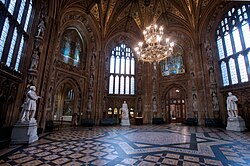
- Architectural Style: Perpendicular Gothic Revival.
- Lead Architects: Charles Barry and Augustus Pugin.
- UNESCO Status: Designated as a World Heritage Site in 1987.
- Ownership: Held by King Charles III in right of the Crown.
- Total Floor Area: 112,476 square meters.
- Key Landmarks: Elizabeth Tower (Big Ben), Victoria Tower, and Westminster Hall.
A History of Fire and Resilience
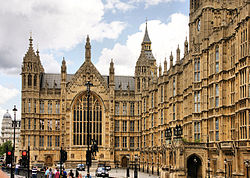
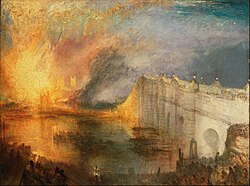
The Palace has survived several catastrophic events, most notably two massive fires. The first occurred in 1512, destroying the royal apartments. The second, and more devastating, fire of 1834 destroyed the majority of the palace. However, the 12th-century Westminster Hall was saved and integrated into the subsequent reconstruction.
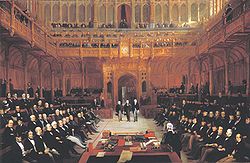
Between 1840 and 1876, the Palace was rebuilt under the direction of architects Charles Barry and Augustus Pugin. This reconstruction gave the building its distinctive Gothic appearance. The Palace faced further turmoil during the Second World War; on the night of May 10–11, 1941, German bombs struck the complex. While the House of Commons chamber was destroyed, firefighters prioritized saving the roof of Westminster Hall.
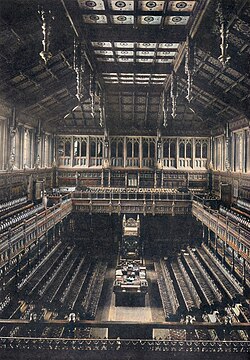
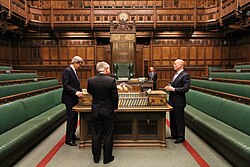
The Commons Chamber was eventually rebuilt in a simplified style and reopened in 1950, designed by architect Giles Gilbert Scott.
Architectural Exterior and Grounds
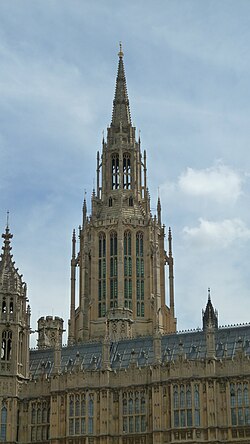
The exterior of the Palace is renowned for its intricate stonework and towering spires. The building is anchored by three primary towers:
- Victoria Tower: A massive structure serving as a royal entrance.
- Elizabeth Tower: Commonly known as Big Ben, housing the famous great bell.
- Central Tower: A smaller but significant architectural feature.
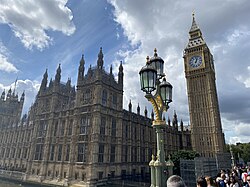
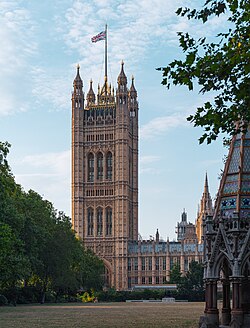
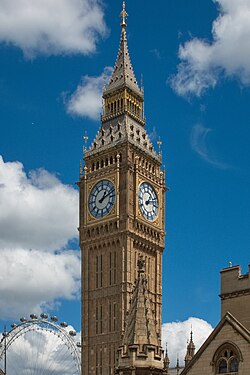
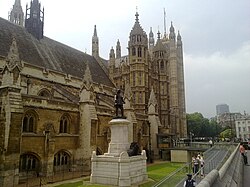
The grounds include Cromwell Green, where a bronze statue of Oliver Cromwell was erected in 1899, and Old Palace Yard, which remains a high-security zone.
Inside the Palace: Layout and Chambers
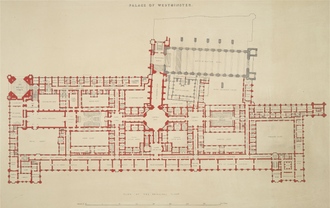
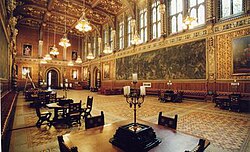
The interior layout is designed to facilitate the complex interactions between the monarchy and the two houses of Parliament. The Central Lobby serves as the octagonal heart of the building, connecting the different wings.
Royal Apartments and Ceremonial Spaces
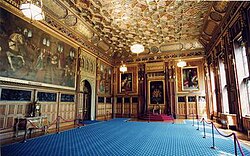
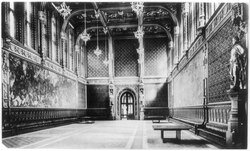
The Robing Room is where the Sovereign prepares for the State Opening of Parliament, featuring the Chair of State. Adjacent to this is the Royal Gallery, one of the largest rooms in the palace. Measuring 110 by 45 feet, it is used for royal processions, receptions for foreign dignitaries, and the Lord Chancellor's Breakfast.
The House of Lords
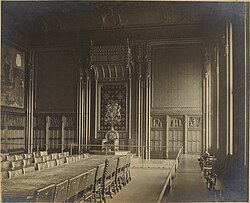
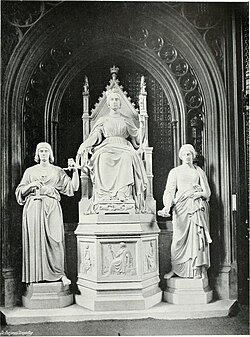
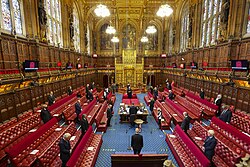
Located in the southern part of the Palace, the Lords Chamber is characterized by its lavish red furnishings and ornate decoration. The room measures 45 by 80 feet and features stained glass windows and six allegorical frescoes representing law, chivalry, and religion. The Sovereign's Throne, topped by a gilded canopy, is the room's focal point.
The House of Commons
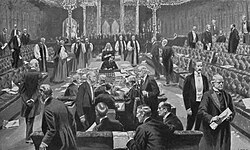
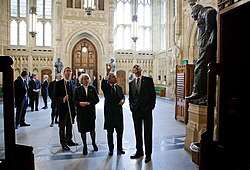
In contrast to the Lords, the Commons Chamber at the northern end is plainer in style. Its furnishings are traditionally green—a color scheme adopted by many Commonwealth nations for their lower houses. The chamber measures 46 by 68 feet, and public seating on the benches is strictly forbidden.
Summary of Palace Features
| Feature | House of Lords | House of Commons |
|---|---|---|
| Primary Color | Red | Green |
| Location | Southern End | Northern End |
| Style | Lavish/Ornate | Simplified/Plain |
| Dimensions | 45 x 80 feet | 46 x 68 feet |
Frequently Asked Questions
Why are the House of Lords and House of Commons different colors?
The House of Lords uses red furnishings, while the House of Commons uses green. This distinction is a long-standing tradition that has been adopted by other Commonwealth parliaments, such as those in Canada, Australia, India, and New Zealand.
What is the significance of Westminster Hall?
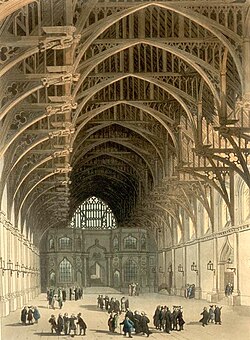
Westminster Hall is the oldest part of the Palace, dating back to the 12th century. It is famous for its medieval hammerbeam roof and was saved during both the fire of 1834 and the bombings of 1941.
Who designed the current Palace of Westminster?
The reconstructed Palace was designed by architects Charles Barry and Augustus Pugin in the Perpendicular Gothic Revival style between 1840 and 1876.
What happened to the House of Commons during WWII?
The original Victorian chamber was destroyed by German bombs on the night of May 10–11, 1941. It was subsequently rebuilt in a simpler style by architect Giles Gilbert Scott and reopened in 1950.