Oxford Dictionary of English: Evolution and Editorial Principles
The Oxford Dictionary of English (ODE) stands as a landmark in modern lexicography. Published by Oxford University Press, this single-volume resource is designed to represent the current usage of the English language faithfully. While often associated with the massive, multi-volume Oxford English Dictionary (OED), the ODE is a distinct entity developed to capture how English is actually spoken and written in the contemporary world.
Originally launched in 1998 under the title The New Oxford Dictionary of English (NODE), the publication underwent a significant rebranding in 2003 with its second edition, dropping the word "New" from its name. Today, it remains the largest single-volume English-language dictionary produced by Oxford University Press.
Key Facts
- Publisher: Oxford University Press
- First Published: 1998 (as The New Oxford Dictionary of English)
- Current Status: Largest single-volume English dictionary from Oxford University Press
- Content Scope: Includes words, phrases, definitions, biographical references, and encyclopaedic entries
- Methodology: Based on contemporary English usage and large linguistic corpora
Editorial Philosophy and Methodology
The development of the ODE is rooted in a modern understanding of linguistics. Rather than enforcing rigid, archaic rules, the editors utilize a corpus—a large, structured collection of texts—to observe how language is used in real-world contexts. For instance, the dictionary does not discourage the use of split infinitives, instead providing justification for their use in specific contexts based on actual usage patterns.
The dictionary's foundation relies on significant linguistic databases, including the British National Corpus and the citation database of the Oxford Reading Programme. This data-driven approach ensures that the definitions reflect the living language.
A Global Perspective
Recognizing that English is a world language, the editors ensure coverage that extends far beyond the United Kingdom. The dictionary includes usage from the United States, the Caribbean, New Zealand, and other English-speaking regions. This global scope allows it to serve a diverse international audience.
Pronunciation and Phonetics
To maintain clarity without unnecessary clutter, the dictionary omits the pronunciations of common, everyday words that native speakers are unlikely to struggle with. For more complex terms, the International Phonetic Alphabet (IPA) is employed to provide accurate guidance, with pronunciations based on Received Pronunciation.
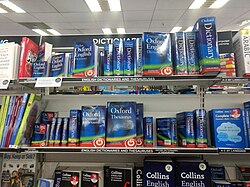
: A selection of various Oxford English Dictionaries: mini, little, pocket, compact, concise, etc. (2018).Evolution of Editions
The dictionary has evolved through several major iterations to keep pace with the rapid changes in the English language. The Third Edition, released in August 2010, introduced new vocabulary such as "vuvuzela" and served as the foundation for ongoing electronic versions.
| Edition/Version | Key Details |
|---|---|
| First Edition (NODE) | 350,000 entries; 12,000 encyclopaedic entries |
| Second Edition (2003) | Dropped "New" from title; added 3,000+ words/senses |
| Third Edition (2010) | Includes new words like "vuvuzela"; basis for digital versions |
| Online Version (as of 2014) | Updated every three months; includes over 350,000 words/phrases |
Digital and Regional Variations
The transition to digital platforms has allowed for even greater depth. By August 2015, the online version had incorporated over 80,000 words from the OED, featuring nearly 100,000 headwords, 11,000 proper names, and 68,000 explanations.
For users in different regions, Oxford provides specialized versions. The New Oxford American Dictionary serves the United States, featuring substantial editing and a unique diacritical respelling scheme instead of the IPA system used in the standard ODE.
Frequently Asked Questions
How does the ODE differ from the OED?
The Oxford Dictionary of English (ODE) is a single-volume dictionary focused on current usage, whereas the Oxford English Dictionary (OED) is a much larger, multi-volume comprehensive historical record.
What is the basis for the dictionary's definitions?
The definitions are derived from a corpus of contemporary English usage, including sources like the British National Corpus, to ensure they reflect how people actually use the language.
Does the dictionary include pronunciations for all words?
No. To remain concise, pronunciations are omitted for common, everyday words. The International Phonetic Alphabet (IPA) is used for words where pronunciation might cause difficulty for native speakers.
Is there an American version of this dictionary?
Yes, the New Oxford American Dictionary is the American counterpart, which uses a diacritical respelling scheme rather than the IPA.
How often is the online version updated?
As of 2014, the online version of the dictionary was updated every three months to ensure the inclusion of new words and meanings.