Osvaldo Soriano: The Life and Legacy of an Argentine Literary Icon
Osvaldo Soriano was a distinguished Argentine journalist and writer whose work seamlessly blended political critique, melancholic humor, and a deep passion for popular culture. Born in Mar del Plata, Soriano emerged as a powerful voice in Latin American literature, utilizing his narratives to explore the complexities of human nature against the backdrop of Argentina's turbulent political history.
Key Facts
- Born: January 6, 1943, in Mar del Plata, Argentina.
- Died: January 29, 1997, in Buenos Aires, Argentina.
- Profession: Journalist and novelist.
- Notable Work: Triste, solitario y final (1973).
- Political Experience: Lived in exile in Brussels and Paris from 1976 to 1984.
- Passions: An avid fan of cinematography and fútbol (soccer), specifically the San Lorenzo club.
Early Career and Literary Beginnings
Soriano's professional journey began in 1971 when he joined the staff of La Opinión, a newspaper founded by editor Jacobo Timerman. The publication was known for its progressive politics, but internal conflicts soon led to an attempt to suppress left-wing influence. After a six-month period where his articles were not published, Soriano turned his attention to fiction.
He began writing a story featuring a character also named Osvaldo Soriano who reconstructs the life of the English actor Stan Laurel. This project evolved into his first novel, Triste, solitario y final (Sad, lonely and final), published in 1973. This melancholic parody, set in Los Angeles and featuring the fictional detective Philip Marlowe as a joint investigator, established the hallmarks of Soriano's style: the integration of factual backgrounds, tortured protagonists, and progressive political themes.
Exile and International Recognition
The political climate in Argentina shifted drastically following the Proceso de Reorganización Nacional (the military coup d'état of 1976). Fearing for his safety, Soriano fled the country. He first settled in Brussels, where he met his wife, Catherine, and later moved to Paris.
During his exile in France, which lasted until 1984, Soriano formed a friendship with the renowned author Julio Cortázar. Together, they founded a short-lived monthly magazine titled Sin censura. Upon the fall of the military junta, Soriano returned to Buenos Aires. His return coincided with a surge in popularity, and his works were translated and published across South America, Italy, and several other nations.
Themes, Passions, and Artistic Influence
Soriano's writing is characterized by its ability to mix the experiences of a democratic activist and a critic of reactionary government violence with a sharp, extraordinary sense of humor. He frequently incorporated his love for cinema and soccer into his narratives. Notably, he was a devoted supporter of the San Lorenzo soccer club, a passion he shared with Pope Francis.
His literary influence extended beyond the page, inspiring numerous film directors and producers. His novels served as the basis for several fiction and documentary works, cementing his place in both Argentine literature and cinema.
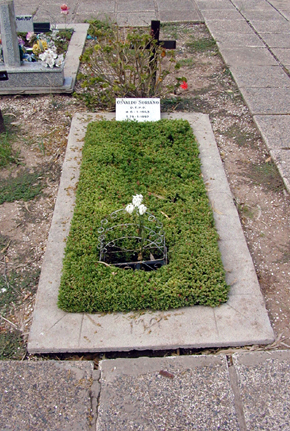
Soriano passed away in 1997 at the age of 54 due to lung cancer. He was laid to rest in the Chacarita Cemetery in Buenos Aires.
Summary of Literary and Cinematic Works
| Category | Title | Year/Note |
|---|---|---|
| Novel | Triste, solitario y final | 1973 |
| Novel | No habrá más penas ni olvido | 1979 (Arg 1983) |
| Novel | Cuarteles de invierno | 1981 (Arg 1983) |
| Novel | El ojo de la patria | 1992 |
| Collection | Fútbol | 1998 (Posthumous) |
| Film | Cuarteles de Invierno | 1984 (Dir. Héctor Olivera) |
| Film | No habrá más penas ni olvido | 1983 (Dir. Héctor Olivera) |
Frequently Asked Questions
What was the inspiration for Osvaldo Soriano's first novel?
His first novel, Triste, solitario y final, was inspired by the life of English actor Stan Laurel and was written during a period when Soriano's journalistic work at La Opinión was being suppressed.
Why did Osvaldo Soriano live in exile?
Soriano was forced to leave Argentina after the 1976 military coup d'état (Proceso de Reorganización Nacional) due to fears for his physical safety.
Which famous author did Soriano collaborate with in France?
While living in Paris, Soriano befriended Julio Cortázar, and the two together founded the monthly magazine Sin censura.
What were the recurring themes in Soriano's writing?
His work frequently blended progressive politics, critiques of reactionary government violence, and extraordinary humor, often featuring contradictory or tortured characters and references to soccer and cinema.
How many languages has his work been translated into?
Osvaldo Soriano's work has been translated into at least fifteen different languages.