Orthodoxy: The Concept of Correct Belief Across Religions and Disciplines
Derived from the Ancient Greek orthodoxía, meaning "righteous" or "correct opinion," orthodoxy refers to the adherence to a recognized, mainstream, or classically accepted creed. While most commonly associated with religious faith, the term describes any system of belief or practice that aligns with an established standard of correctness.
Key Facts
- Etymology: Comes from the Greek words for "correct" and "opinion."
- Christianity: Defined by early ecumenical councils and creeds, leading to branches like Eastern and Oriental Orthodoxy.
- Judaism: Focuses on the continuity of traditional belief rooted in the Written and Oral Torah.
- Islam: Sunni Islam is frequently referred to as the "orthodox" branch of the faith.
- Secular Use: The term applies to mainstream standards in medicine, science, economics, and politics.
Orthodoxy in Christianity
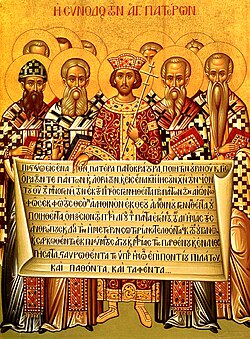
In a classical Christian context, orthodoxy refers to the doctrines held by the early Church. To formalize these beliefs, a series of ecumenical councils—global meetings of church leaders—were held over several centuries.
One of the most pivotal conflicts in early Christian orthodoxy was the debate between the homoousian doctrine (Trinitarianism), championed by Athanasius and Eustathius, and the heteroousian doctrine (Arianism) led by Arius. The homoousian view, which defined Jesus as both God and man, was reaffirmed at the 431 Council of Ephesus and became the standard of orthodoxy for most Christian traditions.
The Great Schism and Branching Traditions
Following the Great Schism of 1054, both the Western Catholic Church and the Eastern Orthodox Church claimed to be the sole guardians of the original, orthodox faith. Over time, the Western Church became more closely identified with the label "Catholic," while the Eastern Church became associated with "Orthodox." Additionally, the Oriental Orthodox Churches separated earlier, following the Council of Chalcedon in AD 451, due to differences in Christology (the study of the nature of Christ).
Post-Reformation Orthodoxy
The term also describes specific eras of theological formalization after the Reformation. Lutheran orthodoxy began in 1580 with the Book of Concord, utilizing a neo-Aristotelian method known as Lutheran scholasticism to defend the faith. Similarly, Reformed (or Calvinist) orthodoxy spanned the 16th to 18th centuries, employing its own scholastic methods to define Calvinist doctrine.
Orthodoxy in Judaism
Orthodox Judaism seeks to maintain traditional Jewish belief and practice rooted in the Tanakh (Hebrew Bible) and the Oral Torah. These are interpreted through Halakhá (Jewish law) as transmitted by rabbinic authority and shaped by minhagim (customs).
Modern Orthodox Judaism emerged largely as a reaction to the 19th-century Haskalah (Jewish Enlightenment), which brought challenges of secularization. This led to a reconciliation between the Hasidic community and the non-Hasidic Misnagdim (opponents of Hasidism).
Subgroups of Orthodox Judaism
- Haredi Judaism: A more conservative and insular stream, which includes both Hasidic and Mitnadic (Yeshivish/Litvish) groups.
- Modern Orthodox Judaism: More open to the outside world and often engaged in political activism. In Israel, this is frequently known as Religious Zionism.
- Open Orthodoxy: A movement sparked by Rabbi Avi Weiss in response to the perceived rightward shift of Modern Orthodoxy.
Orthodoxy in Other Faiths and Philosophies
In Islam, Sunni Islam is sometimes termed "Orthodox Islam," though some scholars, such as John Burton, argue that the term is inappropriate because Islam lacks a centralized magisterium or formal church structure.
Beyond the major Abrahamic faiths, other systems claim orthodoxy:
- Epicureanism: A secular philosophy based on the correct pursuit of pleasure and a naturalistic worldview, guided by forty Principal Doctrines.
- Kemetic Orthodoxy: A modern reconstruction of Ancient Egyptian polytheism.
- Rodnovery: Certain organizations of Slavic Native Faith characterize their practice as orthodoxy.
Non-Religious and Secular Orthodoxy
Outside of religion, "orthodox" describes any mainstream or standard approach to a field. For example, orthodox medicine refers to conventional medical practices, while scientific orthodoxy refers to the generally accepted theories within the scientific community. Conversely, an "unorthodox" approach is one that is unusual or deviates from the norm. This application extends to politics, economics, and the arts.
| Domain | Basis of Orthodoxy | Key Characteristic |
|---|---|---|
| Christianity | Ecumenical Councils & Creeds | Doctrinal adherence to early Church Fathers |
| Judaism | Tanakh & Oral Torah | Adherence to Halakhá (Jewish Law) |
| Islam | Sunna of the Prophet | Mainstream Sunni tradition |
| Secular/Scientific | Peer Consensus & Evidence | Mainstream professional standards |
Frequently Asked Questions
What is the difference between Eastern and Oriental Orthodoxy?
The primary difference stems from the Council of Chalcedon in AD 451. Oriental Orthodox Churches separated from the mainstream due to Christological differences regarding the nature of Christ, while Eastern Orthodoxy is associated with the later Great Schism of 1054.
Is Sunni Islam always considered "Orthodox"?
While it is frequently referred to as Orthodox Islam, some scholars disagree with this label, arguing that the term "orthodoxy" implies a centralized authority or church structure that does not exist in Islam.
What defines Orthodox Judaism today?
Orthodox Judaism is defined by its commitment to the Written and Oral Torah and the application of Halakhá. It is not a single centralized denomination but a collection of groups, ranging from the insular Haredi to the more integrated Modern Orthodox.
Can a secular belief be orthodox?
Yes. For example, Epicureanism is considered an orthodox secular philosophy because it follows a specific set of Principal Doctrines and a naturalistic worldview.
What does "unorthodox" mean in a non-religious context?
In a general sense, unorthodox refers to any method, idea, or solution that is unusual, unconventional, or deviates from the standard, mainstream way of doing things.