The Evolution of Oriental Studies: From Religious Roots to Modern Academic Disciplines
The academic study of the Near East and Far East has undergone a profound transformation over the centuries. Historically known as Oriental studies, this field encompasses the deep exploration of societies, cultures, languages, histories, and archaeology. Today, the discipline has largely evolved into more specific modern terms, such as Middle Eastern studies, Asian studies, Sinology (the study of China), and East Asian studies.
While the field began with religious and linguistic motivations, it has expanded into a complex academic landscape shaped by diplomacy, archaeology, and shifting global politics. Understanding this evolution requires looking back at how Western scholars first engaged with the "East" and how those perspectives have been challenged and redefined in the modern era.
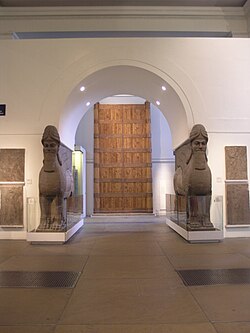
Key Facts
- Core Focus: The study of Near Eastern and Far Eastern societies, including history, language, and archaeology.
- Modern Terminology: Often rebranded as Asian studies, Middle Eastern studies, or Sinology.
- Religious Origins: Early European interest was driven by the study of Abrahamic religions and Arabic science.
- Academic Milestones: The University of Naples "L'Orientale" (founded 1732) is the oldest school of Sinology and Oriental Studies in Continental Europe.
- Critical Shift: The 20th century saw a rise in post-colonial studies and the influence of scholars from the regions being studied.
Historical Foundations
The Middle Ages: Language and Faith
In the Middle Ages, scholarly work was primarily philological—the study of language in historical sources. The initial focus was religious, aiming to understand Biblical Hebrew and languages like Syriac used in early Christian literature. However, there was also a significant drive to access Arabic advancements in medicine, philosophy, and science.
This period saw sporadic efforts known as Studia Linguarum. During the 12th-century Renaissance, there was a surge in translating Arabic and Greek texts into Latin. Notable figures included Constantine the African, who translated 37 medical texts, and Herman of Carinthia, a translator of the Qur'an. While the first Latin translation of the Qur'an was completed in 1143, it did not see widespread use until its printing in 1543. In 1312, following the Council of Vienne, chairs for Hebrew, Arabic, and Aramaic were briefly established at Oxford and three other universities.

The Renaissance to 1800: Diplomacy and Missionaries
During the Renaissance, Oriental studies became more systematic. While religious and linguistic studies remained dominant, a political dimension emerged as European powers required translations for diplomatic purposes. A major milestone was the 1514 publication of the first Polyglot Bible in Spain, which included Hebrew, Aramaic, Greek, and Latin texts.
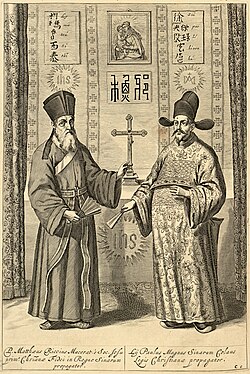
Academic institutions began formalizing these studies. Cambridge University established a Regius Professor of Hebrew in 1540 and an Arabic chair around 1643. In France, Jean-Baptiste Colbert developed training programs for young linguists serving in the diplomatic service. Meanwhile, in the Far East, the study of Chinese culture was pioneered by Jesuit missionaries, most notably Matteo Ricci.
The 19th Century: The Age of Archaeology
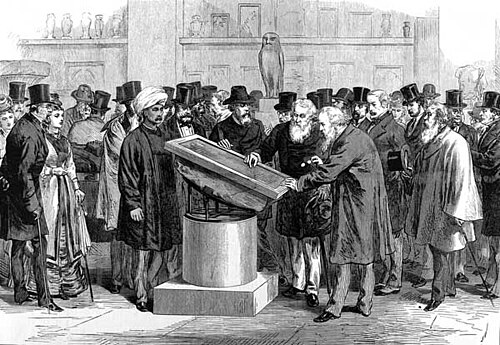
The 19th century marked a shift toward archaeology, which brought the discipline to the attention of the general public. Large-scale excavations in the Middle East and Asia produced spectacular finds that were often displayed in new national museums across Europe.
In the 1850s, the French government led significant operations in Mesopotamia. Victor Place headed an expedition to excavate the palace of the Assyrian King Sargon II in Khorsabad, resulting in the pioneering publication Ninevah and Assyria. These archaeological discoveries turned "Orientalists" into public figures and created a lasting link between academic research and museum collections.
Modern Perspectives and the Concept of Orientalism
The Impact of Edward Said
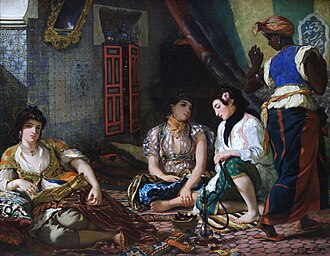
In the 20th century, the discipline underwent a radical critique. Scholar Edward Said famously articulated the concept of Orientalism, arguing that modern Oriental studies were heavily influenced by imperialistic attitudes and a Western fascination with an "exotic" East. He suggested that much of the scholarship was shaped by the prejudices of the era of European imperialism, often portraying Eastern cultures through caricatured lenses.
While some modern scholars use the term to describe writers with pro-Eastern attitudes during the colonial era, it is frequently used today to describe prejudiced outsider interpretations. Since the mid-20th century, scholars from the regions themselves have participated in the discipline on equal terms, leading to the rise of post-colonial and Subaltern Studies.
Post-Cold War Debates
The end of the Cold War brought new complexities to the field. Some scholars argue that the absence of Soviet communism led to a "lacuna" in identity politics, causing a re-emergence of Orientalist themes in discussions regarding international relations and Islamist terrorism. This era also saw the popularization of the "clash of civilizations" thesis, advanced by Bernard Lewis and later Samuel P. Huntington, which viewed the world through the lens of fundamental conflicts between different civilizations.

Evolution of Academic Names
As the field has modernized, many prestigious institutions have rebranded to reflect a more contemporary and inclusive approach to the regions they study.
| Original Name | New/Current Name | Institution |
|---|---|---|
| Faculty of Oriental Studies | Faculty of Asian Studies | Australian National University |
| Faculty of Oriental Studies | Faculty of Asian and Middle Eastern Studies | University of Cambridge |
| Faculty of Oriental Studies | Faculty of Asian and Middle Eastern Studies | University of Oxford |
| Oriental Institute | Institute for the Study of Ancient Cultures, West Asia & North Africa (ISAC) | University of Chicago |
Frequently Asked Questions
What is the difference between Oriental studies and Asian studies?
Oriental studies is the traditional term for the study of Near Eastern and Far Eastern societies. In recent decades, many institutions have transitioned to the terms "Asian studies" or "Middle Eastern studies" to reflect modern academic standards and a broader geographic focus.
What does "Orientalism" mean in a modern academic context?
In modern scholarship, particularly following the work of Edward Said, "Orientalism" often refers to the biased or prejudiced way Westerners have historically interpreted and represented Eastern cultures, often through the lens of imperialism.
How did religion influence the early study of the East?
Early European interest was largely driven by the desire to understand the origins of Abrahamic religions (Christianity, Judaism, and Islam) and to study the languages associated with sacred texts, such as Hebrew, Arabic, and Syriac.
Why did archaeology become important to this field?
In the 19th century, large-scale archaeological excavations in places like Mesopotamia brought physical artifacts to Europe. These finds were displayed in museums, which increased public interest and provided a tangible link between academic study and the wider world.
Who were some key figures in the early history of these studies?
Key figures include Constantine the African (a translator of medical texts), Matteo Ricci (a Jesuit missionary in China), and Edward Said (a scholar who critically redefined the concept of Orientalism).