Brill Academic Publishers: A Legacy of Scholarly Excellence
Founded in 1683, Brill Academic Publishers (Koninklijke Brill NV) stands as one of the oldest and most prestigious publishing houses in the Netherlands. Based in the historic city of Leiden, Brill has spent over three centuries bridging the gap between complex academic research and global dissemination. Today, as part of De Gruyter Brill, the company continues to be a cornerstone for scholars in the humanities, law, and social sciences.
From its origins as a small bookselling business to its current status as a digital-first international publisher, Brill has maintained a rigorous commitment to specialized fields, particularly those requiring complex typesetting and deep linguistic expertise.

Key Facts
- Founded: 1683 by Jordaan Luchtmans in Leiden, Netherlands.
- Parent Company: De Gruyter Brill (merged in 2024).
- Core Specializations: Oriental studies, classics, religious studies, and international law.
- Global Presence: Headquarters in Leiden with offices in Boston, Paderborn, Vienna, Singapore, and Beijing.
- Output: Produces academic journals, books, databases, and primary source materials.
The Evolution of a Publishing Giant
Founding and the Luchtmans Era (1683–1848)
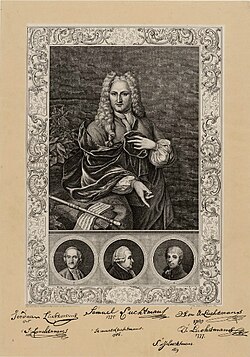
The story of Brill began on May 17, 1683, when Jordaan Luchtmans was registered as a bookseller by the Leiden booksellers' guild. Luchtmans strategically combined bookselling with publishing, focusing on theology, biblical studies, ethnography, and Asian languages. By establishing a close relationship with the University of Leiden—a premier research hub at the time—the business secured its academic foundation. The company remained under the stewardship of the Luchtmans family until 1848.
The Transition to E.J. Brill (1848–1896)
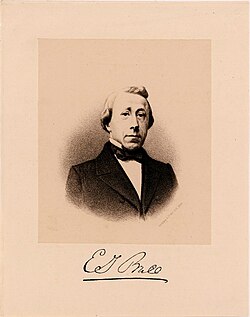
In 1848, ownership passed to Evert Jan (E.J.) Brill, a former employee whose father had served as the company's steward. To settle inherited financial obligations, Brill auctioned off the Luchtmans' book inventory between 1848 and 1850. Under his leadership, the firm expanded its technical capabilities. A notable milestone occurred in 1855 with the publication of Het Gebed des Heeren in veertien talen ("The Lord's Prayer in Fourteen Languages"), which showcased Brill's ability to typeset non-Latin alphabets, including Arabic, Sanskrit, Hebrew, and Coptic.
Corporate Growth and the World War II Era
Brill became a public limited company (naamloze vennootschap) in 1896. The company saw a period of significant, albeit controversial, growth under the directorship of Theunis Folkers, who took over in 1934. During the German occupation of the Netherlands in World War II, Brill's turnover rose from 132,000 guilders to 579,000 guilders by 1943. This growth was largely driven by contracts with occupying forces to print military manuals and foreign-language textbooks for administrative use in occupied territories.
Post-War Recovery and Modernization
Following the war, the Dutch denazification committee identified "enemy money" in the company's accounts, leading to the arrest of Folkers in 1946. While the company paid a fine of 57,000 guilders, it remained operational. The late 1980s brought a period of crisis due to over-expansion and industry shifts, leading to a major restructuring between 1988 and 1991. This included the closure of foreign offices and the sale of its printing business to ensure the company's survival.
By 2008, Brill had recovered strongly, publishing approximately 600 books and 100 journals annually with a turnover of 26 million euros. In 2024, the company entered a new chapter by merging with the German publisher De Gruyter to form De Gruyter Brill.
Academic Scope and Specialized Imprints
Brill is renowned for its depth in the humanities and social sciences. Its portfolio is organized through several specialized imprints:
- Brill–Nijhoff: Acquired in 2003, this imprint focuses on public international law, human rights, and international relations.
- Brill–Rodopi: Acquired in 2014, this imprint specializes in literature and cultural studies.
- Wageningen Academic: Acquired in 2022, expanding the company's reach into specific scientific and academic niches.
- Global Oriental and Hotei Publishing: Dedicated to Asian studies.
Summary of Publication Areas
| Category | Key Subject Areas |
|---|---|
| Humanities | African, American, Asian, and Slavic Studies; Classics; Philosophy; Religious and Jewish Studies. |
| Law | International Law, Human Rights, and Humanitarian Law (via Brill–Nijhoff). |
| Social Sciences | Anthropology, History, Political Science, Sociology, and Linguistics. |
| Sciences | Biology and Cartography. |
| Theology | Biblical Studies, Early Christianity, and World Christianity. |
Innovation in Digital Publishing and Typography
Brill has evolved from traditional print and microform to a digital-first approach, offering ebooks and comprehensive online databases. The company is a strong advocate for Open Access (publications available free of charge to the public), participating in the Knowledge Unlatched consortium and establishing the IFLA/Brill Open Access Award in 2013.
Additionally, the company developed the Brill typeface. This commercial font is free for personal use and is specifically designed to support Latin, Greek, and Cyrillic character ranges, providing superior diacritic rendering for scholarly work.
Frequently Asked Questions
Who founded Brill?
Brill was founded by Jordaan Luchtmans in 1683 in Leiden, Netherlands, originally as a bookselling and publishing business.
What is the relationship between Brill and De Gruyter?
In October 2023, it was announced that De Gruyter would acquire Brill for €51.1 million. The two merged their operations in 2024 to form the entity De Gruyter Brill.
What are the primary academic strengths of Brill?
Brill is most recognized for its expertise in Oriental studies, classics, religious studies, Jewish studies, Islamic studies, and international law.
What is the Brill-Nijhoff imprint?
Brill-Nijhoff is a specialized imprint focusing on public international law, humanitarian law, and international relations, originating from the acquisition of Martinus Nijhoff Publishers.
Does Brill support Open Access publishing?
Yes, Brill publishes several open-access journals, is a member of the Open Access Scholarly Publishers Association, and collaborates with the Knowledge Unlatched consortium.