Oriental Carpets in Renaissance Art: Symbolism, Luxury, and Power
During the Renaissance, Oriental carpets were far more than mere floor coverings; they were potent symbols of status, spirituality, and global reach. To the European eye, these textiles were perceived as rare, precious, and exotic commodities. However, the way they were integrated into Western art reveals a complex relationship with the Islamic world—one characterized by admiration, misunderstanding, and at times, political assertion.
In Western Europe, these carpets were utilized in contexts entirely different from their original cultural purposes. From the sacred spaces of religious iconography to the opulent settings of the wealthy, the Oriental carpet served as a visual shorthand for value and prestige.
Key Facts
- Religious Elevation: Early Renaissance art used carpets to separate holy figures from the mundane world, creating a "sacred ground."
- Armenian Hypothesis: Some scholars argue many "Oriental" carpets were actually woven by Christian Armenians, making them appropriate for churches.
- Status Symbols: By the 16th century, carpets transitioned from religious backgrounds to markers of political power and wealth.
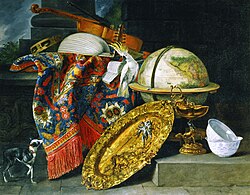
- Vanitas Symbolism: In Dutch and Flemish art, carpets often appeared in still lifes to represent luxury or the futility of earthly life (vanitas).
- Political Trophies: Following conflicts like the Siege of Vienna, carpets were often kept as "Turkish loot" (Türkenbeute) to signal Christian victory.
Sacred Ground and the "Christian Oriental Carpet"
The appearance of Oriental carpets in European painting dates back to the late 12th century. Initially, they served a specific theological purpose: by depicting saints standing or enthroned upon a carpet, artists visually elated the holy figures, separating them from their surroundings. Donors of these paintings were sometimes depicted kneeling on the same carpet, allowing them to share in the atmosphere of holiness.
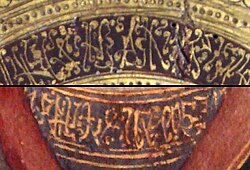
A compelling theory proposed by Volkmar Gantzhorn in 1998 suggests that many of these textiles were actually Christian Oriental carpets. By comparing patterns with Armenian illuminated manuscripts, Gantzhorn concluded that Christian Armenian weavers produced these works. He argues that hidden Christian symbolism made these carpets suitable for European churches, though this knowledge was likely passed down through oral traditions that were largely lost during the Armenian genocide. This theory extends to the Pazyryk carpet (5th century BC), where chemical analysis of red threads revealed the use of Armenian cochineal dye and a double-knot technique consistent with Armenian craftsmanship.
Objects of Luxury and Decoration
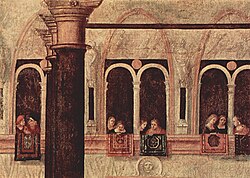
Beyond the church, carpets were prized as exotic luxury goods. In Venice, for example, carpets were draped over windows during processions to create a decorative framework for public events, highlighting the importance of the occasion.
The German painter Albrecht Dürer's letters from 1506 illustrate the commercial value of these items. In correspondence with Willibald Pirckheimer, Dürer describes his struggle to find "broad" carpets in Venice, noting that most were "narrow and oblong." He categorized carpets alongside gold, jewels, and exotic crane feathers, treating them as high-value commodities rather than artistic masterpieces.
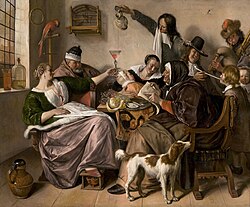
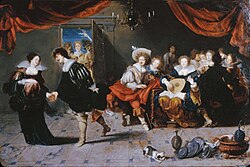
In the Dutch Golden Age and Flemish Baroque periods, carpets appeared frequently in "Merry Company" paintings—scenes of people drinking and making music. Depending on the setting, a carpet covering a table could signal the respectability and wealth of the subjects or, in scenes of debauchery, suggest profligacy and vanity.
By the 16th century, carpets became staples of still life painting. Often paired with Chinese porcelain or exotic animals, they contributed to the theme of vanitas—the reminder of the futility of human life. In these compositions, the material value of the carpet contrasted with symbols of mortality, such as human skulls.
Symbols of European Self-Assertion
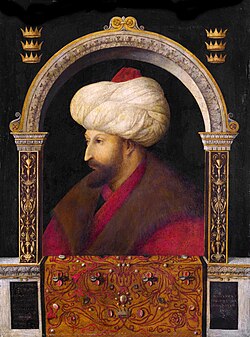
As contact between Europe and the Islamic world intensified—often through conflict—the carpet took on a political dimension. Gentile Bellini, who visited the court of Sultan Mehmet II, integrated Oriental motifs into his work, though often anachronistically. His depictions of the exotic were more about creating a stage for important figures than accurately representing Islamic culture.
Political power was further asserted through specific poses. For instance, a 1547 portrait of King Edward VI shows the young monarch standing on an Oriental carpet, a deliberate echo of his father's portrait to project strength and authority. Similarly, in the Piccolomini library frescoes, Pinturicchio depicts Pope Pius II with a carpeted table, which some historians believe represented a trophy from previous expeditions.
The most explicit use of carpets as symbols of dominance occurred after the Siege of Vienna in 1683. Carpets acquired as Türkenbeute (Turkish loot) were proudly displayed by their new Christian owners, sometimes featuring inscriptions marking the date and location of their capture.
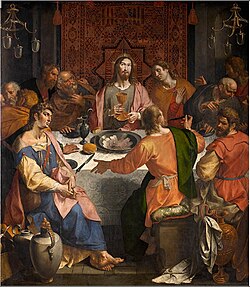
Whether used to highlight the nimbus of Christ in a Last Supper scene or as a trophy of war, the Oriental carpet in the Renaissance remained a multifaceted object—admired for its beauty, but often stripped of its original cultural meaning to serve Western narratives of faith and power.
Summary of Carpet Perceptions
| Context | Primary Meaning | Typical Depiction |
|---|---|---|
| Religious | Sacredness & Elevation | Under the feet of saints or holy figures |
| Domestic/Social | Wealth & Exoticism | Covering tables in "Merry Company" scenes |
| Allegorical | Vanitas (Futility) | Still life settings with skulls or porcelain |
| Political | Power & Triumph | Under monarchs or as war trophies (loot) |
Frequently Asked Questions
Why were carpets placed under saints in early Renaissance paintings?
Carpets were used to create a visual boundary that separated holy figures from the ordinary world, effectively elevating the saints and marking the space as sacred ground.
What is the "Christian Oriental carpet" theory?
Proposed by Volkmar Gantzhorn, this theory suggests that many carpets depicted in Renaissance art were woven by Christian Armenians and contained hidden Christian symbolism, making them appropriate for use in Western churches.
How did the meaning of carpets change in Dutch still life paintings?
In these works, carpets often symbolized luxury and material wealth, but when paired with objects like skulls, they served as a reminder of vanitas, or the transience of earthly life.
What does the term "Türkenbeute" refer to?
"Türkenbeute" translates to "Turkish loot." It refers to precious items, including Oriental carpets, captured by European forces during conflicts with the Ottoman Empire, such as the Siege of Vienna in 1683.
Did Renaissance artists accurately depict the cultural context of these carpets?
Generally, no. Most artists used carpets as decorative elements to signify wealth or exoticism, often ignoring or misunderstanding the original cultural and symbolic meanings from the Islamic world.