Order of Australia: The Nation's Highest Honours System
The Order of Australia is the preeminent means by which Australia recognizes its citizens and other individuals for outstanding service and achievement. Established to create a distinct national identity in the realm of honours, it rewards those who have made significant contributions to the Australian community or to humanity at large.
Instituted on February 14, 1975, by Queen Elizabeth II on the advice of Prime Minister Gough Whitlam, the Order was designed to move the nation away from its reliance on British Imperial honours. While British awards continued to be issued in parallel until 1992, the Order of Australia now stands as the primary system for recognizing merit and achievement within the country.
Key Facts
- Founder: Elizabeth II, Queen of Australia, on the advice of Gough Whitlam.
- Sovereign Head: King Charles III.
- Chancellor: Samantha Mostyn, the Governor-General of Australia.
- Purpose: To recognize achievement and merit in service to Australia or humanity.
- Structure: Divided into a General Division and a Military Division.
- Total Inductees: 47,869 as of July 2024.
Levels of Membership and Criteria
The Order is structured into several grades, each reflecting a different level of achievement and responsibility. These are awarded by the Governor-General of Australia based on specific criteria for both the general and military divisions.
Companion (AC)
The highest current level, awarded for eminent achievement and merit of the highest degree in service to Australia or humanity. In the military division, it recognizes eminent service in duties of great responsibility. The annual quota for this grade has varied from 25 to 35 since 1975.
Officer (AO)
Awarded for distinguished service of a high degree to Australia or humanity, or distinguished service in responsible positions for the military division. The annual quota currently stands at 140.
Member (AM)
This grade recognizes service in a particular locality, field of activity, or to a specific group. For military personnel, it is awarded for exceptional service or performance of duty. The annual quota was increased to 605 in 2019.
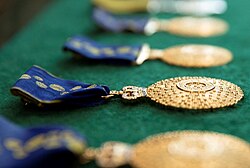
Medal of the Order of Australia (OAM)
The OAM is awarded for service worthy of particular recognition (general division) or meritorious service and performance of duty (military division). Unlike the higher grades, the OAM has no annual quota.
Historical Evolution
Establishment and Influence
The original structure of the Order—consisting of Companions, Officers, and Members—was closely modeled after the Order of Canada. However, Australia has been more liberal in granting honorary awards to non-citizens. By July 2024, 537 non-Australians had been appointed to the Order, compared to only 30 non-Canadians in the Canadian system.
The Rise and Fall of Knights and Dames
The Order has seen periods of structural change. On March 19, 2014, Prime Minister Tony Abbott advised the Queen to reinstate the levels of Knight (AK) and Dame (AD). This allowed for up to four such appointments per year.
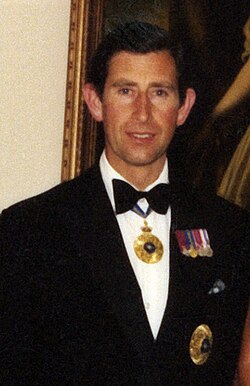
This reinstatement was short-lived; the levels were subsequently abolished by Prime Minister Malcolm Turnbull in 2015, returning the Order to its previous structure.
Demographics and Sociology
Analysis of the Order's recipients has highlighted sociological trends. A 2010 study reported that recipients of the highest honours (Knight/Dame and Companion) disproportionately attended a small number of elite Victorian secondary schools, with Scotch College alumni receiving the highest number of awards.
Summary of Order Statistics and Quotas
The following table provides a comprehensive overview of the Order's membership and the current annual quotas for the general division.
| Grade | Total Inductees | General Division Criteria | Current Annual Quota |
|---|---|---|---|
| Knight/Dame (AK/AD) | 19 | No longer awarded | N/A |
| Companion (AC) | 647 | Eminent achievement and merit of the highest degree | 35 |
| Officer (AO) | 3,615 | Distinguished service of a high degree | 140 |
| Member (AM) | 13,169 | Service in a particular locality or field | 605 |
| Medal (OAM) | 30,670 | Service worthy of particular recognition | No quota |
Frequently Asked Questions
Who is the current head of the Order of Australia?
The Sovereign Head is King Charles III, the King of Australia, while the Chancellor and Principal Companion is the Governor-General, Samantha Mostyn.
Can non-Australian citizens receive these awards?
Yes. Honorary awards are granted to non-citizens for extraordinary achievements. As of July 2024, there are 537 honorary appointments across all levels.
Are Knights and Dames still appointed?
No. While they were briefly reinstated between 2014 and 2015, the levels of Knight and Dame are no longer awarded.
What is the difference between the General and Military divisions?
The General Division recognizes service to the community or humanity at large, while the Military Division recognizes service and performance of duty within the armed forces.
How many people have been inducted into the Order in total?
As of July 2024, there have been a total of 47,869 inductees across all grades and divisions.