Optical Focus: The Science of Light Convergence
In the realm of geometrical optics, focus (also known as an image point) is the precise location where light rays originating from a single point on an object converge. Whether it is the human eye capturing a landscape or a high-end camera lens snapping a portrait, the ability to concentrate light is what allows us to perceive clear, sharp images.
While we often think of a focus as a mathematical point, physical reality is slightly different. In practice, a focus has a spatial extent known as the blur circle. This occurs because no optical system is perfect. Non-ideal focusing is often the result of aberrations—distortions caused by the imaging optics themselves.
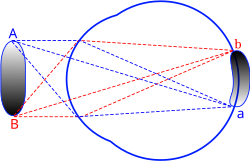
The Limits of Clarity
Even in a theoretically perfect system without aberrations, there is a fundamental physical limit to how small a focus can be. This limit is caused by diffraction, the bending of light as it passes through the optical system's aperture. The resulting smallest possible blur circle is called the Airy disc.
There is a delicate balance between aperture size and image quality. While larger apertures reduce the size of the Airy disc, they often increase the impact of optical aberrations, which can widen the blur circle.

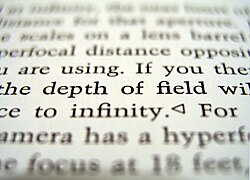
An image is considered in focus when light from object points converges as tightly as possible. Conversely, it is out of focus when the light fails to converge effectively. To determine the boundary between these two states, technicians and physicists often use a criterion known as the circle of confusion.
Principal Focus and Focal Length
A principal focus, or focal point, is a specific type of focus. For lenses, as well as spherical or parabolic mirrors, this is the point where collimated light (light rays traveling parallel to the axis) converges.
- Lenses: Because light can pass through a lens from either side, every lens possesses two focal points.
- Focal Length: This is the distance measured in air from the principal plane of the mirror or lens to the focal point.
Specialized Mirror Geometries
Different mirror shapes manipulate light in unique ways:
- Elliptical Mirrors: These have two focal points. Light passing through one focus is reflected directly through the second.
- Hyperbolic Mirrors: These possess two points where light originating from one is reflected as if it had come from the other.
Diverging Systems and Virtual Focus
Not all optical systems converge light to a physical point. Diverging (negative) lenses and convex mirrors spread light apart. In these cases, the focus is a virtual point from which the light appears to emanate after reflection or refraction.
The behavior varies by mirror type:
- Convex Parabolic Mirrors: These reflect collimated light to make it appear as if it is radiating from the focal point. Conversely, they can take rays directed toward the focus and reflect them as a collimated beam.
- Convex Elliptical Mirrors: These reflect light directed toward one focus as if it were radiating from the other focus, with both points located behind the mirror.
- Convex Hyperbolic Mirrors: These reflect rays from a focal point in front of the mirror as if they originated from a focal point behind it. This specific property is utilized in the design of Cassegrain telescopes to focus rays directed at a rear focal point toward a front focal point.
Key Facts
- Focus: The point where light rays from a single object point converge.
- Blur Circle: The physical spatial extent of a focus, rather than a perfect point.
- Airy Disc: The smallest possible blur circle, limited by diffraction.
- Focal Length: The distance from the principal plane to the focal point.
- Collimated Light: Light rays that are parallel to the optical axis.
- Virtual Focus: The apparent point of origin for light in diverging lenses or convex mirrors.
| Component | Light Behavior | Focus Type |
|---|---|---|
| Converging Lens | Converges parallel rays | Real (Two points) |
| Diverging Lens | Spreads parallel rays | Virtual |
| Parabolic Mirror | Focuses collimated light | Real or Virtual |
| Elliptical Mirror | Reflects from one focus to another | Dual Focal Points |
| Hyperbolic Mirror | Reflects as if from a secondary point | Dual Focal Points |
Frequently Asked Questions
What is the difference between a focus and a blur circle?
Conceptually, a focus is a single point where light rays converge. Physically, however, light spreads into a small area called a blur circle due to optical aberrations or diffraction.
What is an Airy disc?
The Airy disc is the smallest possible blur circle an optical system can produce. It is caused by diffraction, which is the ultimate physical limit to how precisely light can be focused.
How does focal length work?
Focal length is the measurement of the distance in air between the principal plane of a lens or mirror and its focal point.
Do all lenses have a physical focal point?
No. While converging lenses focus light to a real point, diverging (negative) lenses create a virtual focus, which is the point from which light appears to emanate.
How are hyperbolic mirrors used in telescopes?
In systems like the Cassegrain telescope, convex hyperbolic mirrors are used to reflect rays directed at a focal point behind the mirror toward a focal point in front of the mirror.