Depth of Field: Mastering Focus and Sharpness in Photography
In photography, depth of field (DOF) is the distance between the nearest and farthest objects in a scene that appear acceptably sharp in an image. While a camera typically focuses on a single point, the DOF defines the zone of acceptable focus around that point. Mastering this concept allows photographers to control whether a background is creamy and blurred or crisp and detailed.
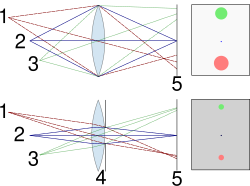
The perception of what is "acceptably sharp" is defined by the circle of confusion—the maximum diameter of a blurred point that the human eye still perceives as a sharp point. This threshold varies depending on the final use of the image; for example, 35mm motion pictures traditionally used a limit of 0.05 mm, while modern productions often use a stricter 0.025 mm.
Key Facts
- Aperture Control: Smaller apertures (higher f-numbers) increase the depth of field, while larger apertures (lower f-numbers) decrease it.
- Distance Impact: The further the subject is from the lens, the greater the depth of field.
- Focal Length: Longer focal lengths (telephoto lenses) result in a shallower depth of field compared to wide-angle lenses.
- Asymmetry: The depth of field extending beyond the subject is always greater than the depth of field in front of the subject.
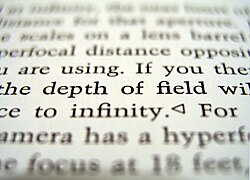
- Hyperfocal Distance: Focusing at this specific distance provides the maximum possible depth of field, extending from half that distance to infinity.
Factors Affecting Depth of Field
Several physical and optical variables determine the depth of field in any given shot. The primary factors include the focal length of the lens, the distance to the subject, the aperture (f-number), and the acceptable circle of confusion.
The Role of Aperture
The aperture is the most direct tool for controlling DOF. A wide aperture (e.g., f/1.8) creates a shallow depth of field, isolating the subject from the background. Conversely, a narrow aperture (e.g., f/22) expands the area of sharpness, which is ideal for landscape photography.
| Aperture (f-number) | Approximate Depth of Field |
|---|---|
| f/1.4 | 0.8 cm |
| f/4.0 | 2.2 cm |
| f/22 | 12.4 cm |
Camera Movements and the Plane of Focus
Advanced cameras, such as view cameras or those with tilt-shift lenses, allow for "camera movements." By swiveling (tilting or swinging) the lens or sensor, the plane of focus (POF) also swivels. This allows photographers to change the shape and orientation of the field of acceptable focus, effectively manipulating the DOF to cover specific areas of a scene.
Hyperfocal Distance and DOF Scales
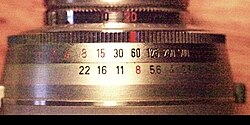
Hyperfocal distance is the focus distance that yields the maximum depth of field. When a lens is focused at its hyperfocal distance (H), everything from H/2 to infinity remains in acceptable focus. This is a critical technique for fixed-focus cameras and landscape photographers.
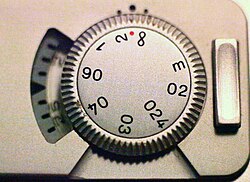
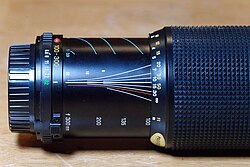
Many lenses feature DOF scales to help photographers calculate these distances manually. By aligning the index mark between two distance points and setting the corresponding f-number, a photographer can ensure a specific range of the scene is sharp.
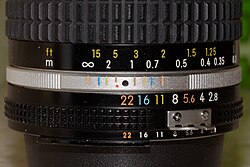
The hyperfocal distance changes based on both the f-stop and the focal length. For instance, a zoom lens will have a different hyperfocal distance at 100mm than it would at a wider setting.
Overcoming Depth of Field Limitations
When the physical limitations of a lens are insufficient, computational and specialized optical techniques can be used to expand the apparent depth of field.
- Focus Stacking: Combining multiple images focused at different planes into a single image with a deep apparent DOF.
- Light Scanning Photomacrography (LSP): A technique for macro photography that scans a thin light plane across a subject on a moving stage, ensuring total sharpness.
- Color Apodization: Modifying a lens so different color channels have different apertures (e.g., blue at f/5.6 and red at f/2.4), then merging the sharpest data from each.
- Plenoptic Cameras: These capture 4D light field information, allowing the user to alter the focus and depth of field after the photo has been taken.
Frequently Asked Questions
What is the difference between depth of field and depth of focus?
While closely related, depth of field refers to the distance in the scene (the object space) that is in focus, whereas depth of focus refers to the range within which the image plane (the sensor or film) can be moved without blurring the image.
How does focal length affect the depth of field?
Focal length has an inverse relationship with DOF. Shorter focal lengths (wide-angle) generally produce a deeper depth of field, while longer focal lengths (telephoto) produce a shallower depth of field.
Why is the background blur usually more extensive than the foreground blur?
The distribution of DOF is asymmetrical; the area of acceptable focus beyond the subject is always greater than the area in front of it. As the subject distance increases or the hyperfocal distance is reached, the far DOF can become infinite.
What is a circle of confusion?
The circle of confusion is the small blur spot created when a point in the scene is not perfectly focused. If this spot is smaller than a specific threshold (the acceptable circle of confusion), the human eye perceives it as a sharp point.