Operation Olive Branch: The Turkish Military Offensive in Afrin
Operation Olive Branch was a significant military campaign conducted by Turkey and its allied Syrian rebel forces between January 20 and March 24, 2018. The operation targeted the Afrin District in the Aleppo Governorate of Syria, an area then controlled by the People's Protection Units (YPG), a primary component of the Syrian Democratic Forces (SDF). This offensive was a critical chapter in the broader Rojava conflict and the long-standing Kurdish-Turkish conflict.
The operation aimed to remove the YPG from the border region, which Turkey views as a security threat due to the YPG's links to the PKK. The campaign combined heavy aerial bombardment, artillery shelling, and a ground invasion involving both the Turkish Armed Forces and the Turkish-backed Syrian National Army (SNA), also known as the TFSA.
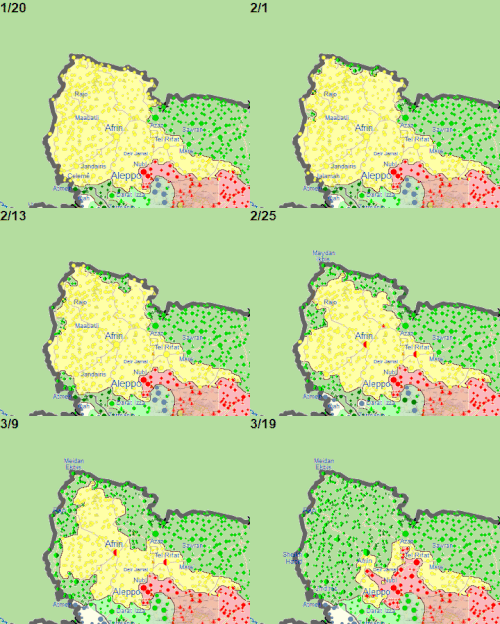
Key Facts
- Duration: January 20 to March 24, 2018 (approximately two months).
- Location: Afrin and Azaz districts, Aleppo Governorate, Syria.
- Outcome: Victory for Turkish and SNA forces; territorial control shifted from the SDF to Turkish-backed opposition.
- Primary Belligerents: Turkey and the Syrian Interim Government vs. the SDF/YPG.
- Humanitarian Impact: Reports indicate hundreds of civilian casualties and the displacement of approximately 167,000 people.
Military Composition and Equipment
Turkish and Allied Forces
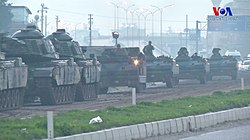
Turkey deployed a sophisticated array of military hardware to ensure air and ground superiority. The force included F-16 Fighting Falcons and F-4E 2020 Terminator jets for airstrikes, alongside Leopard 2 A4 and M60T Sabra main battle tanks. Artillery support was provided by T-155 Fırtına Howitzers and T-122 Sakarya Rocket Artillery. Ground mobility was maintained via FNSS ACV-15 and Kirpi APCs, with aerial support from T129 ATAK helicopters.
SDF and Local Defenses
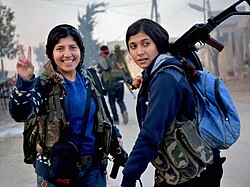
The defense of the Afrin region was led by the SDF, with commanders including Mahmud Berxwedan and Defense Minister Bahjt Abedo. The forces consisted primarily of the YPG and the Women's Protection Units (YPJ), supported by local volunteers and some foreign fighters.
The Course of the Offensive
Initial Advances and Strategic Gains
The operation began with intense shelling and airstrikes targeting YPG positions. Turkish-backed forces quickly made gains, capturing strategic heights such as Mount Barsa. These early victories allowed the coalition to establish observation points and secure the perimeter of the district.
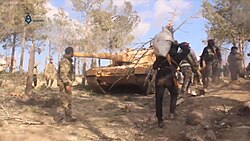
![TFSA fighters hoist the Turkish flag and the Syrian independence flag on the top of Barsaya mountain.[150]](/images/da/a2/daa2079be445fb73e2bf19260900de919168fc153e6192c38b993c6d2452cd16.png)
The Encirclement of Afrin City
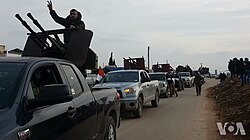
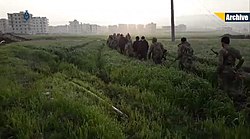
As the offensive progressed, Turkish forces and the TFSA pushed deeper into the region, eventually encircling Afrin city. During this phase, pro-Syrian government militias entered the district, attempting to support the Kurdish forces, though they suffered significant losses in the process.
The Fall of Afrin
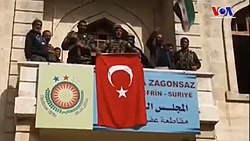
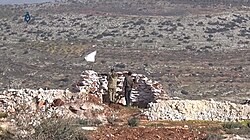
By mid-March, the encirclement was complete. After urging the YPG to surrender, Turkish and TFSA forces entered the city on March 18, 2018. They captured the building that had hosted the PYD-led government, effectively ending SDF control over the region.
Aftermath and Consequences
Stabilization and Insurgency
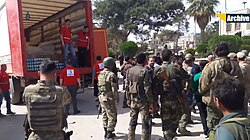
Following the capture of the city, Turkey began stabilization efforts. However, the transition was marked by tensions between the conservative TFSA fighters and the local Kurdish population. This environment led to a subsequent YPG guerrilla campaign and a persistent insurgency against the new administration.
![Free Syrian Army fighters praying after capturing Mount Barsa. The conservative values of the Turkish-backed FSA fighters caused tensions with many "leftist-minded" Kurdish civilians.[246]](/images/c5/1e/c51e1068f02bd6a5631dfa7ef52f808e62e48fdf81979c7752015d0f18f5ec50.png)
Human Rights and Cultural Impact
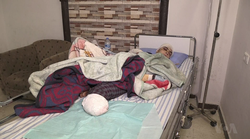
The operation was marred by reports of human rights violations. The Syrian Observatory for Human Rights (SOHR) and the SDF reported hundreds of civilian deaths resulting from airstrikes and shelling. Additionally, there were reports of looting in Afrin city and damage to ancient archaeological sites and temples.
International and Domestic Reactions
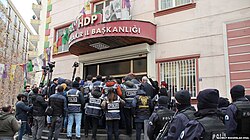
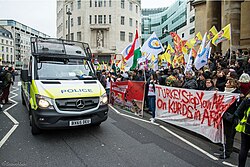
The operation drew mixed international responses. While some nations acknowledged Turkey's security concerns, others, including France and the UN, expressed alarm over civilian casualties and displacement. Within Turkey, the operation was largely supported, though the government faced criticism from pro-Kurdish groups, leading to raids on HDP offices and arrests of those opposing the offensive.
Summary of Operation Olive Branch
| Category | Details |
|---|---|
| Dates | January 20 – March 24, 2018 |
| Primary Goal | Removal of YPG/SDF from Afrin District |
| Key Equipment | F-16s, Leopard 2 A4, T-155 Howitzers, T129 ATAK |
| Result | Turkish-SNA victory; capture of Afrin city |
| Civilian Displacement | Approximately 167,000 people |
Frequently Asked Questions
What was the primary objective of Operation Olive Branch?
The primary objective was to clear the Afrin region of the YPG and other Kurdish-led forces, which Turkey considers extensions of the PKK, to prevent the creation of a Kurdish corridor along its southern border.
Who were the main combatants in the conflict?
The main combatants were the Turkish Armed Forces and the Turkish-backed Syrian National Army (TFSA/SNA) on one side, and the Syrian Democratic Forces (SDF), primarily the YPG and YPJ, on the other.
What was the humanitarian impact of the operation?
The operation resulted in significant civilian casualties and the displacement of roughly 167,000 people. Reports also highlighted the destruction of cultural sites and allegations of looting following the capture of Afrin city.
How did the international community react?
Reactions were divided. Some countries recognized Turkey's security interests, while others condemned the military incursion and the resulting humanitarian crisis. The UN specifically highlighted the deaths of families and children due to shelling and airstrikes.
What happened after Afrin city was captured?
Turkey established a new administration in the region, but the area remained unstable. The YPG transitioned to a guerrilla warfare strategy, launching attacks against Turkish forces and their allied Syrian rebels.