Ontario: Canada's Economic and Cultural Powerhouse
Exploring Ontario: Canada's Economic and Cultural Powerhouse Ontario is a province of immense scale, diversity, and influence. As Canada's most populous province, it serves as a central h...
Exploring Ontario: Canada's Economic and Cultural Powerhouse
Ontario is a province of immense scale, diversity, and influence. As Canada's most populous province, it serves as a central hub for the nation's economy, culture, and political landscape. From the rugged landscapes of the Canadian Shield to the bustling financial districts of Toronto, Ontario offers a unique blend of natural beauty and urban sophistication.
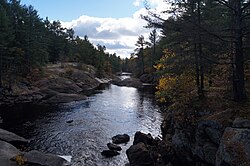
Typical landscape of the Canadian Shield at Queen Elizabeth II Wildlands Provincial Park, located in Central Ontario.: Typical landscape of the Canadian Shield at Queen Elizabeth II Wildlands Provincial Park, located in Central Ontario.
Key Facts
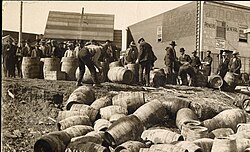
Law enforcement confiscate stores of alcohol in Elk Lake in an effort to enforce prohibition. The prohibition measures were introduced in 1916 and were not repealed until 1927.
Capital City: Toronto
Population: Over 14.2 million (2021 Census)
Largest City: Toronto
Official Language: English
GDP Rank: 1st in Canada
Provincial Motto: "Loyal he began, loyal he remains" (Ut Incepit Fidelis Sic Permanet)
Geography and Climate
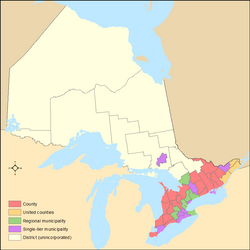
Map of the counties, regional municipalities, districts, and municipalities of Ontario.
Spanning a vast area of approximately 1,076,395 km², Ontario is the fifth-largest province in Canada. Its geography is characterized by a significant amount of water, which accounts for roughly 14.7% of its total area. This includes the massive Great Lakes, which provide vital access to ocean routes for interior industries.
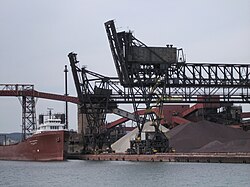
Container ship at Algoma Steel. The Great Lakes provide ocean access for industries in the province's interior.: Container ship at Algoma Steel. The Great Lakes provide ocean access for industries in the province's interior.
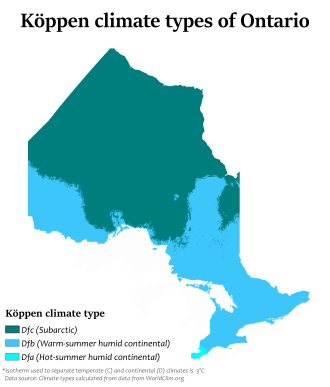
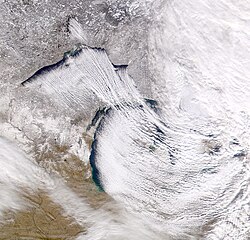
The province's climate is diverse, divided into three main climatic regions. While southern areas like Windsor and Toronto experience milder temperatures, northern regions such as Moosonee see much colder winters. A notable weather phenomenon in the province is lake-effect snow, which occurs when cold northwesterly winds blow over the Great Lakes.
Köppen climate types of Ontario: Köppen climate types of Ontario
Cold northwesterly wind over the Great Lakes creating lake-effect snow. Lake-effect snow most frequently occurs in the snowbelt regions of the province.: Cold northwesterly wind over the Great Lakes creating lake-effect snow. Lake-effect snow most frequently occurs in the snowbelt regions of the province.
A Journey Through History
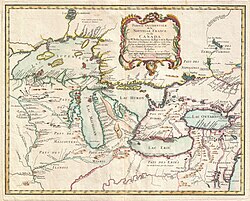
The history of Ontario is a complex tapestry of Indigenous habitation, European exploration, and colonial shifts. Long before European arrival, the land was inhabited by Indigenous peoples. By 1610, the region became part of the Pays d'en Haut, a French territory.
A 1755 map of the Pays d'en Haut region of New France, an area that included most of Ontario: A 1755 map of the Pays d'en Haut region of New France, an area that included most of Ontario
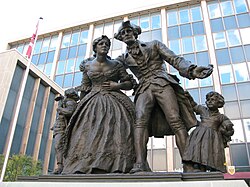
Following various colonial shifts, the region was known as Upper Canada (1791–1841) and later Canada West (1841–1867). The province was one of the original four provinces to join the Confederation on July 1, 1867.
A monument in Hamilton commemorating the United Empire Loyalists, a group of settlers who fled the United States during or after the American Revolution: A monument in Hamilton commemorating the United Empire Loyalists, a group of settlers who fled the United States during or after the American Revolution
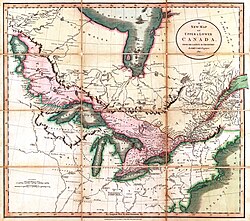
Map of Upper Canada, 1811: Map of Upper Canada, 1811
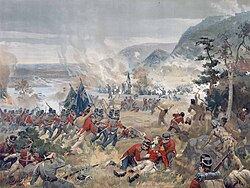
Depiction of the Battle of Queenston Heights, during the War of 1812. Upper Canada was an active theatre of operation during the conflict.: Depiction of the Battle of Queenston Heights, during the War of 1812. Upper Canada was an active theatre of operation during the conflict.
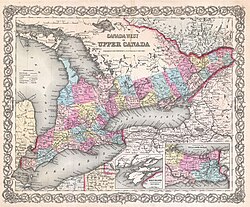
Map of Canada West from 1855. Canada West formed the western portion of the Province of Canada.: Map of Canada West from 1855. Canada West formed the western portion of the Province of Canada.
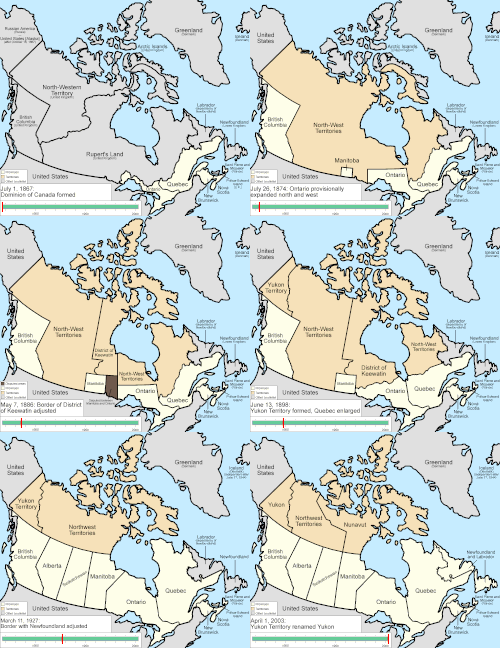
An animated map of the changes to the borders of Canada. The borders of Ontario were last changed in 1912.: An animated map of the changes to the borders of Canada. The borders of Ontario were last changed in 1912.
Demographics and Society
Ontario is a multicultural society. According to the 2021 Census, the population is composed of various ethnic groups, including a significant European population (62.8%) and diverse visible minority groups, with South Asians being the largest minority group at 10.8%. The Indigenous population, including First Nations, Métis, and Inuit, makes up 2.9% of the total.
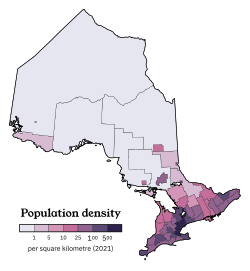
Population density of Ontario: Population density of Ontario
Language and religion also define the social fabric. While English is the official language, there are sizeable Francophone communities, and provincial services are available in French in certain areas. Religious diversity is also high, with no religious affiliation being the largest single group (31.6%), followed by Catholic and Protestant denominations.
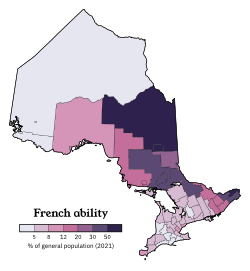
Map of French language ability according to the 2021 census.: Map of French language ability according to the 2021 census.
English and French displayed on a gantry sign. Communities with sizeable francophone populations are able to receive provincial services in French.: English and French displayed on a gantry sign. Communities with sizeable francophone populations are able to receive provincial services in French.
Summary of Population and Economy
Ontario Statistical Overview
Category
Value/Detail
Total Population (2021)
14,223,942
GDP (2024)
CA$ 1,178.092 billion
HDI (2025)
0.945 (Very High)
Land Area
892,411.76 km²
Water Area
158,654 km²
Economy and Infrastructure
Ontario boasts the largest economy in Canada. Its economic strength is driven by several key sectors:
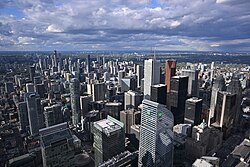
Finance: Toronto's Financial District serves as the heart of Canada's financial services.
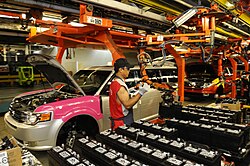
Manufacturing: The automotive industry is a major contributor, with significant assembly operations in cities like Oakville.
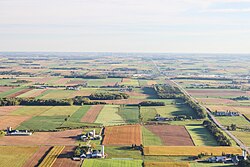
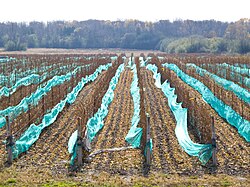
Agriculture: Large portions of Southern Ontario are dedicated to farmland, including significant crop production and vineyards.
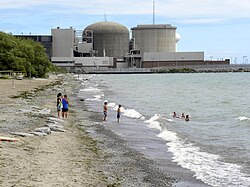
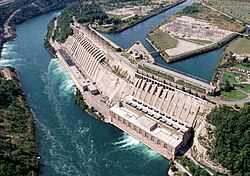
Energy: The province utilizes a mix of nuclear power, hydroelectricity, and other sources to fuel its industry.
A worker at the Oakville Assembly installs a battery in an automobile. The automotive industry is a contributor to the economy of Ontario.: A worker at the Oakville Assembly installs a battery in an automobile. The automotive industry is a contributor to the economy of Ontario.
Toronto's Financial District serves as the centre for Canada's financial services.: Toronto's Financial District serves as the centre for Canada's financial services.
Aerial view of farms in Waterloo. A significant portion of the land in Southern Ontario is used as farmland.: Aerial view of farms in Waterloo. A significant portion of the land in Southern Ontario is used as farmland.
Vineyard, Prince Edward County: Vineyard, Prince Edward County
The Pickering Nuclear Generating Station is one of three nuclear power stations in Ontario.: The Pickering Nuclear Generating Station is one of three nuclear power stations in Ontario.
The Sir Adam Beck Hydroelectric Generating Stations are hydroelectric plants located in Niagara Falls.: The Sir Adam Beck Hydroelectric Generating Stations are hydroelectric plants located in Niagara Falls.
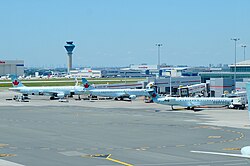
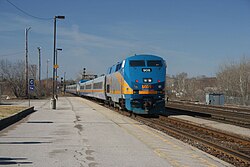
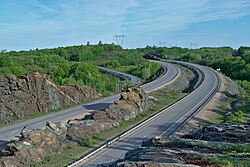
Transportation is equally robust, featuring a massive network of highways, passenger rail services like VIA Rail and GO Transit, and major international hubs such as Pearson Airport.
Airport apron of Pearson Airport, Canada's busiest airport. Control tower visible in background.: Airport apron of Pearson Airport, Canada's busiest airport. Control tower visible in background.
A Via Rail train approaching Belleville station: A Via Rail train approaching Belleville station
Highway 400 in Seguin. The roadway forms a part of the province's 400-series highways.: Highway 400 in Seguin. The roadway forms a part of the province's 400-series highways.
Government and Law
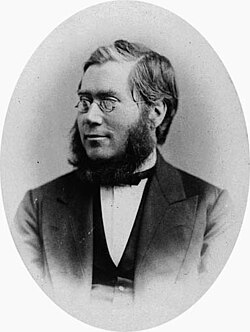
Ontario operates as a parliamentary constitutional monarchy. The provincial government is led by a Premier, currently Doug Ford, and a Lieutenant Governor, Edith Dumont. The Legislative Assembly of Ontario serves as the province's primary meeting place for lawmaking.
Oliver Mowat, Premier of Ontario from 1872 to 1896: Oliver Mowat, Premier of Ontario from 1872 to 1896
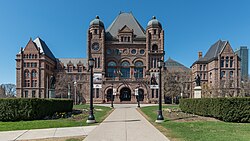
The Ontario Legislative Building at Queen's Park. The building serves as the meeting place for the Legislative Assembly of Ontario.: The Ontario Legislative Building at Queen's Park. The building serves as the meeting place for the Legislative Assembly of Ontario.
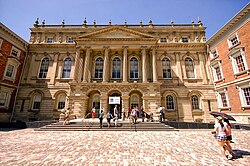
The legal system is upheld through various institutions, including the Court of Appeal for Ontario, housed at Osgoode Hall.
Osgoode Hall houses the Court of Appeal for Ontario, the appellate court for the province.: Osgoode Hall houses the Court of Appeal for Ontario, the appellate court for the province.
Culture and Tourism
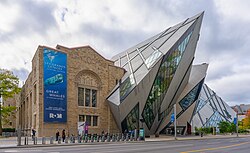
From world-class museums like the Royal Ontario Museum to a vibrant professional sports scene, Ontario is a cultural leader. The province hosts various professional leagues, including the NHL (Toronto Maple Leafs and Ottawa Senators), MLB (Toronto Blue Jays), and the NBA (Toronto Raptors).
Royal Ontario Museum in fall of 2021: Royal Ontario Museum in fall of 2021
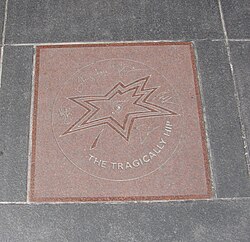
The Tragically Hip star on Canada's Walk of Fame in Toronto: The Tragically Hip star on Canada's Walk of Fame in Toronto
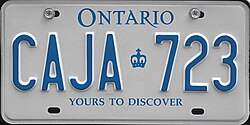
An Ontario licence plate with the slogan Yours to Discover at the bottom of the plate: An Ontario licence plate with the slogan Yours to Discover at the bottom of the plate
Frequently Asked Questions
What is the capital of Ontario?
The capital of Ontario is Toronto, which is also the province's largest city.
What are the official languages of Ontario?
English is the official language of Ontario, though French language services are available in communities with significant Francophone populations.
How is Ontario's economy structured?
Ontario has the largest GDP in Canada, driven by sectors such as financial services, automotive manufacturing, agriculture, and energy production.
What is the main type of government in Ontario?
Ontario is a parliamentary constitutional monarchy.
Which province has the highest population in Canada?
Ontario is the most populous province in Canada, with a 2021 population of over 14.2 million people.