Ole Colbjørnsen: The Architect of Norway's Early Planned Economy
Ole Colbjørnsen was a pivotal figure in 20th-century Norwegian public life, blending the roles of journalist, economist, and politician. Known as Norway's first plan economist—a specialist in the systematic state planning of economic activity—Colbjørnsen played a critical role in shifting the Norwegian Labour Party away from revolutionary rhetoric toward a pragmatic, production-oriented governance model.
His career spanned continents and ideologies, from the early days of the Soviet Union to the diplomatic halls of Washington, D.C., and the United Nations. Through his writing and policy proposals, he helped lay the groundwork for the modern Norwegian welfare state.
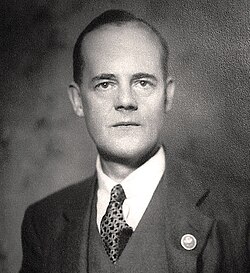
Key Facts
- Full Name: Ole Colbjørnsen (1897–1973).
- Primary Role: Journalist, economist, and Labour Party politician.
- Major Contribution: Co-authored the three-year economic plan En norsk treårsplan (1934).
- Political Shift: Helped move the Labour Party from redistribution goals to production-focused growth.
- International Experience: Worked for the Soviet Union's ROSTA and handled timber exports in London.
- Diplomatic Service: Served at the Norwegian embassy in Washington, D.C., and as a UN delegate.
Early Life and Soviet Influence
Born on May 30, 1897, in Vegårshei, Aust-Agder, to Torjus Taxeraas and Marie Colbjørnsen, Ole Colbjørnsen showed early academic promise. He completed his examen artium (university entrance exam) in Arendal before the age of 18 and enrolled in university in 1915 to study natural sciences. During this time, he served as an assistant to professors Lars Vegard and Carl Størmer.
While studying, Colbjørnsen became active in the Norwegian Labour Party and adopted communist ideals, which led to a deep interest in the Soviet Union. This passion translated into professional opportunities: from 1921, he worked for the state news agency ROSTA (Russian Telegraph Agency). Between 1922 and 1928, he focused on Soviet trade and finance, eventually contributing to the organization and preparation of the first Soviet five-year plan. He later spent 1929 to 1931 in London, managing a shipping company focused on Soviet timber exports.
Reshaping the Norwegian Labour Party
Upon returning to Norway in 1931, Colbjørnsen entered the world of financial journalism. By the autumn of 1932, he joined Arbeiderbladet, the Labour Party's newspaper, under the leadership of chief editor Martin Tranmæl. Inspired by the economic theories of John Maynard Keynes and William Beveridge, Colbjørnsen used his columns to introduce new economic ideas to the Norwegian public.
His influence grew rapidly. At the 1933 national convention, he presented several reform proposals and authored the influential pamphlet Hele folket i arbeid ("The Whole People at Work"), which became the party's official slogan. In 1934, alongside Axel Sømme, he published En norsk treårsplan, a document outlining a comprehensive three-year economic plan for the nation.
A Shift in Political Strategy
Colbjørnsen and Sømme were instrumental in changing the Labour Party's trajectory following its defeat in the 1930 general election. They helped the party move away from radical revolutionary tactics in two primary ways:
- Production over Redistribution: They shifted the movement's focus from simply redistributing wealth to increasing overall production.
- State Cooperation: They fostered acceptance of working within the existing state framework, which the party had previously dismissed as "bourgeois."
Governmental Influence and Later Career
When the Labour Party formed a cabinet under Johan Nygaardsvold in 1935, Colbjørnsen did not hold a cabinet post but remained highly influential. He was appointed to the Trustlovkomiteen av 1935 and the Tiltakskommisjonen av 1935, a commission specifically tasked with combating unemployment. He also served as a board member of the Norwegian Industrial Bank starting in 1936, becoming its chairman from 1938 to 1940.
Politically, he served as a deputy representative to the Parliament of Norway for the Oslo constituency. Notably, he was one of the most pro-military voices within the Labour Party leading up to 1940. In a display of his international outlook, he repeatedly nominated Mahatma Gandhi for the Nobel Peace Prize during the late 1930s.
War and International Diplomacy
The outbreak of World War II in 1940 forced Colbjørnsen to leave Norway. He spent the war years working at the Norwegian embassy in Washington, D.C. Following the war, he transitioned into international diplomacy, serving as a delegate (1946) and advisor (1947) to the United Nations General Assembly, as well as participating in the UN Economic and Social Council assembly. He also became a proponent of Norway joining NATO.
Colbjørnsen returned to Norway in November 1948 to serve as the acting director of the Direktoratet for økonomisk forsvarsberedskap (Directorate for Economic Defense Preparedness). He spent his final years in a quieter professional capacity. He married Veslemøy Ihlen Larssen in 1936 and passed away in Oslo in November 1973.
Summary of Career Milestones
| Period | Role/Achievement | Key Focus |
|---|---|---|
| 1921–1928 | ROSTA / Soviet Finance | Soviet trade and the first five-year plan |
| 1929–1931 | Shipping Company Head (London) | Soviet timber exports |
| 1932–1934 | Journalist at Arbeiderbladet | Keynesian economics and En norsk treårsplan |
| 1935–1940 | Commission Member / Bank Chair | Unemployment battle and Industrial Bank leadership |
| 1940–1948 | Diplomat (USA & UN) | Embassy work and UN General Assembly |
| 1948 | Acting Director | Economic Defense Preparedness |
Frequently Asked Questions
Who was Ole Colbjørnsen?
Ole Colbjørnsen was a Norwegian economist, journalist, and politician who is credited as Norway's first plan economist. He was instrumental in shifting the Labour Party's focus toward production and state-led economic planning.
What was the significance of "En norsk treårsplan"?
Published in 1934 by Colbjørnsen and Axel Sømme, this document proposed a three-year economic plan for Norway, marking a transition from revolutionary rhetoric to practical economic reform within the state framework.
How did Colbjørnsen's time in the Soviet Union influence him?
His work with the Russian Telegraph Agency (ROSTA) and his involvement in preparing the first Soviet five-year plan gave him practical experience in large-scale economic planning, which he later adapted for the Norwegian context.
What role did he play during World War II?
Colbjørnsen left Norway in 1940 and worked at the Norwegian embassy in Washington, D.C., before later serving as a delegate and advisor to the United Nations.
Which economic thinkers inspired his work?
Colbjørnsen was heavily influenced by the ideas of John Maynard Keynes and William Beveridge, integrating their theories into his journalism and policy proposals for the Labour Party.