Old World Warblers: Taxonomic Evolution and Diversity
The Old World warblers represent a vast and diverse group of songbirds that have long challenged the field of ornithology. Historically grouped under the family Sylviidae, these birds are entirely distinct from the New World warblers. For decades, the Sylviidae family served as a broad taxonomic "catch-all," containing over 400 species across more than 70 genera. However, this expansive grouping led to significant taxonomic confusion, as many of the birds within it were not closely related.
In recent years, the application of DNA sequence data has revolutionized our understanding of the Sylvioidea (the superfamily containing these warblers). Research has revealed that the original Sylviidae was not a single evolutionary lineage but a collection of several distinct groups. This has led to a massive reorganization, with most species being moved into new or existing families to better reflect their true evolutionary history.
Key Facts
- Former Scope: Once included over 400 species in the family Sylviidae.
- Current Status: Only a small number of species in two genera remain in the restricted Sylviidae family.
- Physical Traits: Small to medium birds (9–20 cm) typically featuring slender, pointed bills.
- Diet: Primarily insectivorous, though some consume nectar, seeds, and soft fruit.
- Taxonomic Shifts: Major splits include the creation of families such as Phylloscopidae, Cettiidae, and Acrocephalidae.
Physical and Behavioral Characteristics
Most Old World warblers possess a relatively understated appearance, though a few species exhibit bold markings. While many species show little difference between males and females, sexual dimorphism (distinct differences between sexes) is notable in the genera Sylvia and Curruca.
These birds generally range from 9 to 20 centimeters in length. Their slender, finely pointed bills are specialized tools for their primary diet of insects, although their opportunistic nature allows them to feed on soft fruits and nectar when available.
The Great Taxonomic Shift
The reclassification of Old World warblers is one of the most complex shifts in modern avian systematics. Early DNA studies often underestimated the scope of the clade because they sampled too few specimens and ignored minor groups like the parrotbills.
A pivotal study in 2003 using mitochondrial DNA (mtDNA) revealed that the Sylviidae and Old World babblers were not reciprocally monophyletic—meaning they did not share a single exclusive common ancestor. Surprisingly, the genus Sylvia was found to be more closely related to the yellow-eyed babbler (Chrysomma sinense) and the wrentit (Chamaea fasciata) than to other traditional warblers.
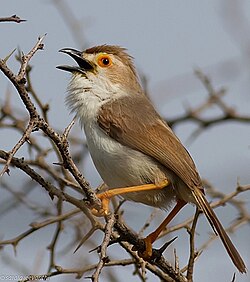
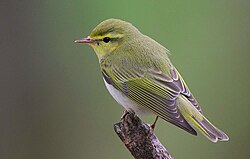
Further research by Beresford et al. (2005) and Alström et al. (2006) determined that the late-20th-century Sylviidae actually comprised between four and seven major distinct lineages. To correct this, several new families were established or revived, including the Phylloscopidae (leaf warblers), Cettiidae (bush warblers), Acrocephalidae (marsh and tree warblers), and Locustellidae (grassbirds).
Current Family Distributions
The reorganization has distributed the former Sylviidae members across various groups:
- Sylviidae (sensu stricto): Now restricted to the genera Sylvia and Curruca.
- Paradoxornithidae: Includes parrotbills and the wrentit.
- Cisticolidae: Includes cisticolas and rufous-warblers.
- Macrosphenidae: Includes crombecs and longbills.
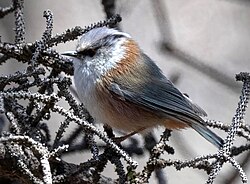
- Aegithalidae: Now includes the tit-warblers.
Summary of Major Taxonomic Reassignments
| New/Revised Family | Key Genera/Groups | Example Species |
|---|---|---|
| Sylviidae (Strict) | Sylvia, Curruca | Eurasian blackcap, Common whitethroat |
| Phylloscopidae | Phylloscopus | Green-crowned warbler |
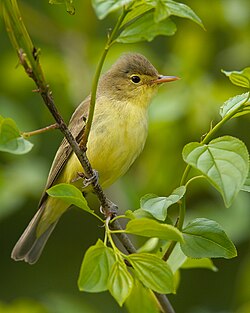
| Acrocephalidae | Acrocephalus, Hippolais | Icterine warbler |
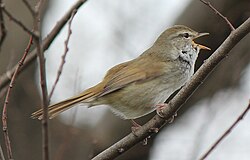
| Cettiidae | Cettia, Horornis | Japanese bush warbler |
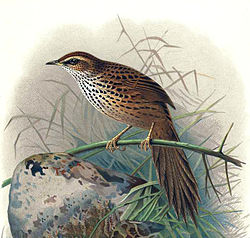
| Locustellidae | Locustella, Bradypterus | New Zealand fernbird |
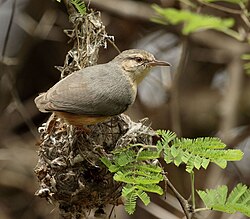
| Macrosphenidae | Sylvietta, Macrosphenus | Long-billed crombec |
Frequently Asked Questions
Are Old World warblers related to New World warblers?
No, they are not closely related. Despite the similar name, they belong to different evolutionary lineages.
Why was the family Sylviidae split into so many different families?
DNA sequence analysis revealed that the original family was polyphyletic, meaning it grouped birds together based on similar appearances rather than a shared common ancestor. The split reflects their actual evolutionary history.
What do Old World warblers primarily eat?
They are primarily insectivorous, though many species supplement their diet with nectar, tiny seeds, and soft fruits.
Which species are still considered "true" Sylviidae?
Only a small number of species within the genera Sylvia and Curruca are now retained in the family Sylviidae sensu stricto.
What is the size range of these birds?
They are generally small to medium-sized birds, typically ranging from 9 to 20 centimeters in length.