Acrocephalus Warblers: The Specialized Birds of the Wetlands
The Acrocephalus warblers are a group of small, insectivorous passerine birds—perching birds with feet adapted for gripping branches. Once grouped within the broad and paraphyletic (a group that does not include all descendants of a common ancestor) Old World warbler assemblage, these birds are now the namesake of their own family, Acrocephalidae, which comprises the marsh and tree warblers.
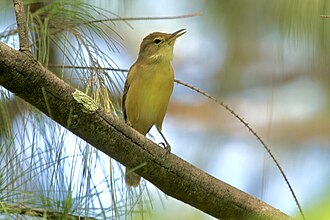
Commonly referred to as reed warblers or marsh warblers, these birds are typically characterized by their drab, brownish plumage, which provides excellent camouflage in their preferred habitats. While some species feature streaked patterns, others are plain. Many species that breed in temperate regions are migratory, traveling long distances between their breeding and wintering grounds.
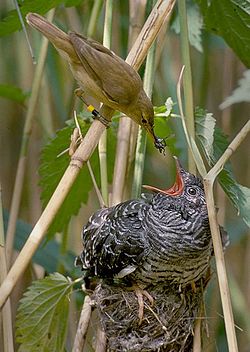
These birds are most frequently associated with marshes and other wetland environments, where they forage for insects among the reeds and aquatic vegetation.
Key Facts
- Genus: Acrocephalus, established in 1811 by Johann Andreas and Johann Friedrich Naumann.
- Diet: Primarily insectivorous.
- Habitat: Predominantly marshes and wetlands.
- Diversity: Contains 42 species, including several extinct insular forms.
- Distribution: Found globally, with significant diversification across tropical Pacific islands.
- Type Species: The Great reed warbler (Acrocephalus arundinaceus).
Taxonomy and Etymology
The genus Acrocephalus was introduced in 1811 by German naturalists Johann Andreas Naumann and his son, Johann Friedrich Naumann. In 1840, English zoologist George Gray designated the Great reed warbler (Turdus arundinaceus Linnaeus, 1758) as the type species for the genus.
The name Acrocephalus is derived from the Ancient Greek words akros ("highest") and kephale ("head"), referring to the flat head profile characteristic of many species in the genus. Some historians suggest the Naumanns may have interpreted akros as meaning "sharp-pointed."
Species Diversity and Conservation
The genus has undergone heavy diversification, particularly across the islands of the tropical Pacific. However, this specialization has made many insular endemic species—those found only in one specific location—highly vulnerable to extinction. Consequently, several species have already vanished, including two from French Polynesia and nearly all species endemic to the Marianas.
One of the most mysterious members of the genus is the large-billed reed warbler (A. orinus). After being recorded only once in 1867, it remained elusive until it was rediscovered in Thailand in March 2006 and later in a remote area of Afghanistan in the summer of 2009.
The evolutionary history of the family extends back significantly. Fragmentary fossil remains from the Late Miocene (approximately 11 million years ago) found in Rudabánya, Hungary, exhibit traits typical of this genus. While most Passerida genera do not appear in the fossil record until the Pliocene, these remains strongly suggest a presence of the Acrocephalidae lineage during the Miocene.
Summary of Acrocephalus Classification
| Rank | Classification |
|---|---|
| Kingdom | Animalia |
| Phylum | Chordata |
| Class | Aves |
| Order | Passeriformes |
| Family | Acrocephalidae |
| Genus | Acrocephalus |
Frequently Asked Questions
What do Acrocephalus warblers eat?
These birds are insectivorous, meaning their diet consists primarily of insects found within their wetland and marsh habitats.
Why are so many Acrocephalus species endangered?
Many species evolved as insular endemics on tropical Pacific islands. Their limited geographic range makes them highly susceptible to environmental changes and habitat loss, leading to several extinctions.
What does the name Acrocephalus mean?
The name comes from Ancient Greek, where akros means "highest" and kephale means "head," describing the flat head profile of the birds.
Which species is the type species for the genus?
The Great reed warbler (Acrocephalus arundinaceus) is the designated type species.
How many species are currently in the genus?
The genus contains 42 species, though this number includes six insular forms that are now extinct.