Okefenokee Swamp: A History of Resilience and Conservation
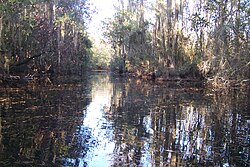
The Okefenokee Swamp is a vast, ecologically rich wilderness spanning the border of Georgia and Florida. From its earliest inhabitants to its current status as a globally recognized treasure, the swamp has survived attempts at drainage, industrial exploitation, and devastating wildfires. Today, it stands as a testament to the power of conservation and the enduring value of biodiversity.
Key Facts
- UNESCO Status: Inscribed as a World Heritage Site in July 2026.
- Protected Area: The Okefenokee National Wildlife Refuge covers 403,000 acres.
- Record Fire: The Bugaboo Fire (2007) burned over 600,000 acres, the largest in Georgia and Florida history.
- Mining History: Major titanium mining proposals by DuPont and Twin Pines Minerals were successfully blocked.
- Indigenous Roots: Originally inhabited by the Timucua-speaking Oconi people.
Early Inhabitants and Cultural Heritage
The earliest known residents of the swamp were the Oconi, a Timucua-speaking people who lived within or along the margins of the wetlands. Their mastery of boating in the hazardous swamp environment was so renowned that Spanish friars established the mission of Santiago de Oconi to convert them to Christianity. Later, the Spanish employed the Oconi as ferrymen across the St. Johns River near the northern Florida camino real (royal road).
In more recent history, the swamp was settled by "Swampers," residents primarily of English ancestry. Due to the region's relative isolation, these inhabitants preserved Elizabethan phrases and syntax—speech patterns common in England during the early colonial period—well into the 20th century.
Industrialization and Environmental Struggles
The late 19th and early 20th centuries brought attempts to tame and exploit the swamp. The Suwannee Canal was dug in a failed effort to drain the wetlands. Following the bankruptcy of the Suwannee Canal Company, the Hebard family of Philadelphia purchased much of the land, conducting extensive cypress logging from 1909 to 1927.
Other logging companies operated railroad lines into the swamp until 1942. Evidence of this era remains today, including remnants of railroad tracks and artifacts from a 1920s logging town at Billy's Island, which once housed 600 residents.
The Impact of Wildfires
Fire is a natural part of the swamp's ecology, but some events have been catastrophic in scale. The most significant was the Bugaboo Fire of 2007. Triggered by a lightning strike and merged with a fire caused by a fallen power line near Waycross, Georgia, it consumed more than 600,000 acres (935 square miles).
Other major fires include the 2011 Honey Prairie Fire, which burned 309,200 acres, and the 2017 West Mims Fire, which consumed approximately 152,000 acres.
The Battle Against Titanium Mining
For decades, the swamp has faced threats from mineral extraction. In the late 1990s, DuPont planned a 50-year titanium mining operation. However, intense public and government opposition regarding environmental risks forced the company to abandon the project in 2000. This led to the donation of 16,000 acres to The Conservation Fund, with nearly 7,000 of those acres eventually joining the National Wildlife Refuge.
A similar conflict arose in 2018 when Twin Pines Minerals LLC proposed mining titanium and zirconium. Despite a Trump administration rule in 2020 that reduced Clean Water Act protections for about 400 acres of the site, the project faced massive opposition from over 60,000 citizens. After warnings from the U.S. Fish and Wildlife Service and a temporary block by Senator Jon Ossoff, the threat ended on June 20, 2025, when The Conservation Fund purchased all 7,700 acres owned by Twin Pines Minerals for a reported US$60 million.
Global Recognition as a World Heritage Site
The culmination of decades of effort by Tribal, local, state, and federal partners occurred in July 2026. The UNESCO World Heritage Committee inscribed the Okefenokee National Wildlife Refuge on the World Heritage List during its 47th session in Busan, South Korea. Recognized for its biodiversity and ongoing ecological processes, it became Georgia's first UNESCO World Heritage Site and the 27th in the United States.
The refuge continues to be managed by the United States Fish and Wildlife Service, ensuring the protection of its unique natural value.
| Event/Entity | Date/Period | Key Detail |
|---|---|---|
| Cypress Logging (Hebard Family) | 1909–1927 | Extensive logging operations |
| Bugaboo Fire | 2007 | 600,000+ acres burned |
| DuPont Mining Project | 1996–2000 | Abandoned due to environmental protests |
| Twin Pines Minerals Purchase | June 20, 2025 | $60 million deal to end mining plans |
| UNESCO Inscription | July 2026 | Recognized for biodiversity and ecology |
Frequently Asked Questions
Who were the original inhabitants of the Okefenokee Swamp?
The earliest known inhabitants were the Oconi, a Timucua-speaking people known for their exceptional boating skills in the swamp.
What was the Bugaboo Fire?
The Bugaboo Fire of 2007 was the largest wildfire in the history of both Georgia and Florida, burning more than 600,000 acres.
Why was the Twin Pines Minerals project stopped?
The project was halted following severe warnings from the U.S. Fish and Wildlife Service and massive public opposition, eventually ending when The Conservation Fund purchased the land in 2025.
What is the significance of the UNESCO World Heritage designation?
The designation recognizes the refuge's outstanding universal value for its biodiversity and ecological processes, making it Georgia's first site to receive this honor.
What happened to the logging towns in the swamp?
While most operations ended by 1942, remnants of railroad lines and logging equipment from a 1920s town of 600 residents still exist at Billy's Island.