Oil Spills: Environmental Impacts, Cleanup Methods, and Global History
An oil spill is the release of liquid petroleum hydrocarbons into the environment, primarily affecting marine ecosystems. While most commonly associated with the ocean or coastal waters, these spills can also occur on land. These incidents are a significant form of pollution resulting from human activity, ranging from the leakage of crude oil from tankers and offshore platforms to the spill of refined products like gasoline, diesel, and heavy bunker fuel used by large ships.
The consequences of such spills are far-reaching, impacting not only the natural world but also the economic and social stability of affected regions. Because oil is persistent and toxic, the recovery process is often a long-term struggle that can span weeks, months, or even years.
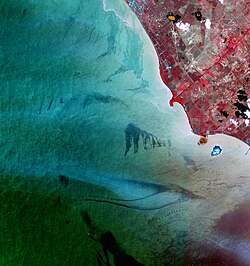
Key Facts
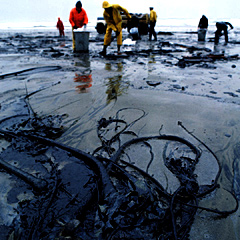
- Sources: Oil spills originate from tankers, drilling rigs, offshore platforms, pipelines, and oily waste.
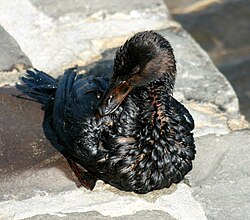
- Wildlife Impact: Oil destroys the insulating properties of bird plumage and mammal fur, leading to hypothermia and loss of buoyancy.
- Human Health: Spills can contaminate critical drinking water supplies for hundreds of thousands of people.
- Trend: Total oil volume lost from major spills has decreased significantly from 1,134,000 tonnes in the 1990s to approximately 28,000 tonnes in the early 2020s.
- Worst Affected Areas: The Niger Delta is cited as a primary example of ecocide, with over 7,000 spills between 1970 and 2000.
Environmental and Human Consequences
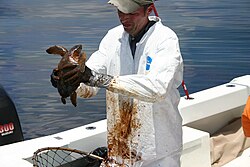
Impact on Wildlife
Marine animals suffer devastating physical effects when exposed to oil. For birds and mammals, the oil penetrates the structure of their plumage or fur. This destroys their natural insulation, making them vulnerable to temperature fluctuations and reducing their ability to float (buoyancy), which often leads to drowning or death from cold.
Human and Social Impacts
Beyond the shoreline, oil spills threaten human health by contaminating drinking water. Notable examples include 2013 incidents in Miri, Malaysia, affecting 300,000 people, and in Coca, Ecuador, affecting 80,000 people. In 2000, an oil spill also contaminated springs in Clark County, Kentucky.
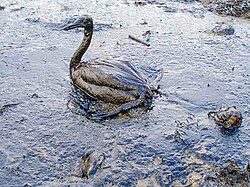
Economic Disruptions
The economic fallout of a spill is typically felt in three main areas: a sharp decline in tourism, a reduction in fishing yields, and the disruption of port activities.
Cleanup and Recovery Strategies
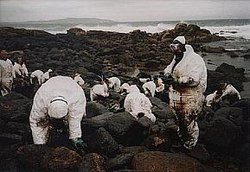
Cleaning up an oil spill is a complex operation that depends on the type of oil, water temperature (which influences evaporation and biodegradation), and the geography of the shoreline.
Cleanup Equipment and Methods
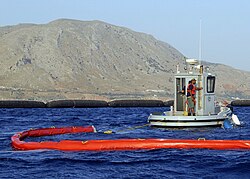
- Booms: Large floating barriers used to contain oil and lift it off the water's surface.
- Skimmers: Mechanical devices that skim oil from the surface of the water.
- Sorbents: Materials that absorb oil or adsorb small droplets.
- Chemical and Biological Agents: Substances, such as dispersants, that help break down the oil into smaller droplets.
- Vacuums: Used to remove oil from the water surface and sandy beaches.
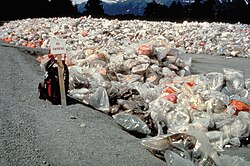
- Manual Labor: Shovels and road equipment are often used for beach cleanup.
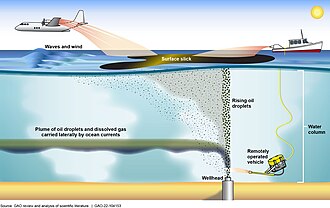
The Role of Dispersants
Chemical dispersants may be deployed via boats, planes, or underwater vehicles to break up oil slicks. While they help remove oil from the surface, their use is often a subject of political and scientific debate regarding their own toxicity.
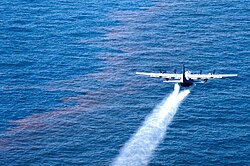
Measuring and Preventing Spills
Estimating Spill Volume
Experts estimate the volume of a spill by observing the appearance and thickness of the oil film on the water. The following table illustrates how visual cues correlate to oil thickness and quantity.
| Appearance | Thickness (mm) | Thickness (nm) | Gal/sq mi | L/ha |
|---|---|---|---|---|
| Barely visible | 0.000038 | 38 | 25 | 0.37 |
| Silvery sheen | 0.000076 | 76 | 50 | 0.73 |
| First trace of color | 0.00015 | 150 | 100 | 1.5 |
| Bright bands of color | 0.0003 | 300 | 200 | 2.9 |
| Colors begin to dull | 0.001 | 1000 | 666 | 9.7 |
| Colors are much darker | 0.002 | 2000 | 1332 | 19.5 |
Prevention and Response
Effective spill response procedures require pre-planned evacuation zones, the availability of fire suppression equipment, and designated disposal containers for contaminated cleanup materials.
Historical Major Oil Spills
The history of oil spills is marked by several catastrophic events. The Kuwaiti Oil Fires of 1991 represent one of the largest releases of oil in history, with 136,000 tonnes lost. Other significant events include the Deepwater Horizon spill in the Gulf of Mexico and the Ixtoc I spill in Mexico.
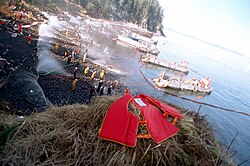
In the Niger Delta, the scale of pollution is systemic; between 1956 and 2006, up to 1.5 million tons of oil were spilled, leading to long-term ecological devastation.
Frequently Asked Questions
How does oil affect marine birds?
Oil coats the feathers of birds, destroying their insulating properties and making them less buoyant. This leaves them vulnerable to hypothermia and increases the risk of drowning.
What are booms and skimmers?
Booms are floating barriers used to contain oil in one area, while skimmers are devices that physically remove the oil from the water's surface.
Can oil spills affect drinking water?
Yes. Oil spills can contaminate groundwater and surface water supplies, as seen in historical incidents in Malaysia, Ecuador, and the United States.
Are oil spills becoming less frequent?
While incidents still occur, the total volume of oil lost from major spills has decreased substantially from the 1990s through the early 2020s.
What is the Environmental Sensitivity Index (ESI)?
ESI mapping is a tool used in spill response to categorize shorelines and biological resources based on their sensitivity to oil and their ability to recover.