Observatories: From Ancient Stone Circles to Space-Based Telescopes
An observatory is a specialized location designed for monitoring terrestrial, marine, or celestial events. While many people immediately associate the term with stargazing, observatories are critical tools across a wide array of scientific disciplines, including climatology, geophysics, oceanography, and volcanology. In some contexts, such as in French usage since 1976, the term observatoire has expanded to describe any institution that compiles and presents data on a specific subject or geographic region.
Key Facts
- Ideal Optical Sites: High elevations, dry air, and dark skies are essential to minimize light pollution and atmospheric turbulence.
- Radio Astronomy: Radio observatories avoid electromagnetic interference (EMI) and can be placed in valleys for shielding.
- Highest Point: The University of Tokyo Atacama Observatory in Chile is currently the highest, sitting at 5,640 meters.
- Diverse Types: Beyond astronomy, observatories monitor neutrinos, magnetic fields, seismic activity, and weather patterns.
- Atmospheric Advantage: Airborne observatories sit above most of the atmosphere, allowing them to detect infrared light that water vapor otherwise absorbs.
Astronomical Observatories
Astronomical observatories are the most well-known types of these facilities, evolving from simple observation posts to complex research institutes.
Ground-Based Optical Observatories
To achieve the best astronomical "seeing"—a term referring to the stability of the atmosphere—optical telescopes are placed far from cities to avoid light pollution. High-altitude sites are preferred because the thinner atmosphere reduces turbulence. Prime locations include the southwestern United States, Hawaii, the Canary Islands, the Andes, and Mexico's Sierra Negra. Notable facilities include the Mauna Kea and Kitt Peak observatories in the US, and the Paranal and Cerro Tololo observatories in Chile.
Research from 2009 indicates that Ridge A in central Eastern Antarctica is the best possible ground-based location on Earth due to minimal atmospheric disturbance and superior visibility.
Radio Observatories
Since 1933, radio telescopes have allowed scientists to observe the universe via the radio portion of the electromagnetic spectrum. These facilities include control centers and data reduction centers. To avoid electromagnetic interference (EMI) from TV, radio, and radar, they are located in remote areas. Unlike optical sites, radio observatories can be placed in valleys to use the terrain as a shield against EMI. Major examples include the Very Large Array (USA), Jodrell Bank (UK), and Chajnantor (Chile).
Altitude Records
The pursuit of thinner air has led to the construction of observatories at extreme heights. The Mauna Kea Observatory in Hawaii sits at 4,205 meters. While the Chacaltaya Astrophysical Observatory in Bolivia held the record for decades at 5,230 meters, it was surpassed in 2009 by the University of Tokyo Atacama Observatory in Chile, which reaches 5,640 meters.
The Evolution of Observation
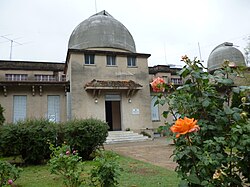
The history of observatories is split between "proto-observatories" (ancient observation posts) and "true observatories" (specialized research institutes). Proto-observatories include Stonehenge in Great Britain, Newgrange in Ireland, and Chankillo in Peru. The transition to formal research institutes began centuries ago, with the Al-Shammisiyyah Observatory in Baghdad (825) and the Mahodayapuram Observatory in India (869) among the earliest.
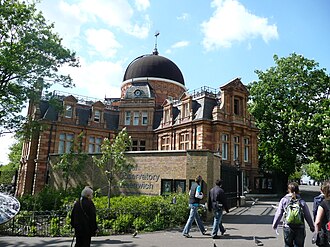
By the 17th and 18th centuries, European institutions like the Paris Observatory (1667) and the Royal Greenwich Observatory (1675) became centers of scientific precision.
Beyond the Ground: Space and Airborne Observatories
To completely bypass the limitations of the Earth's atmosphere, scientists have moved their instruments upward.
Airborne Observatories
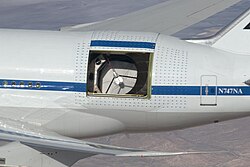
Airborne facilities, such as the Stratospheric Observatory for Infrared Astronomy (SOFIA), use airplanes to reach heights where they are above most water vapor. This is crucial for observing infrared light, which is otherwise absorbed by the atmosphere. These are more cost-effective to repair and update than space-based systems.
Space-Based Observatories
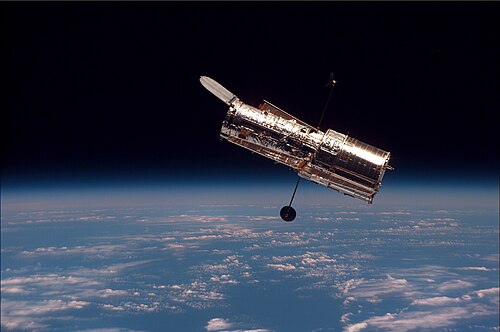
Space telescopes provide the clearest possible view of the universe by operating entirely outside the atmosphere.
Specialized Scientific Observatories
Observatories are not limited to light; they monitor a vast array of physical phenomena.
Neutrino and Gravitational Wave Observatories
Neutrino observatories, such as IceCube, are often located underground, underwater, or under ice to shield them from interference. Similarly, gravitational wave observatories like LIGO detect ripples in spacetime.
Magnetic and Seismic Observatories
Magnetic observatories measure the intensity and direction of Earth's magnetic field using tools like magnetometers and inclinometers. These must be far from human activity to avoid anthropogenic disturbances. Seismic observatories, such as the World-Wide Standardized Seismograph Network, monitor Earth's internal movements.
Marine and Meteorological Observatories
Marine observatories focus on tides, geomagnetism, and meteorology to support navy and civil shipping. Meteorological observatories, such as the Mauna Loa Observatory, track weather patterns and atmospheric changes.
| Observatory Type | Primary Focus | Key Requirement |
|---|---|---|
| Optical | Visible Light / Stars | Dark skies, high altitude |
| Radio | Radio Spectrum | Low EMI (Electromagnetic Interference) |
| Airborne | Infrared / X-ray | Above water vapor/atmosphere |
| Magnetic | Earth's Magnetic Field | Isolation from human activity |
| Neutrino | Subatomic Particles | Deep underground/ice/water |
| Marine | Tides and Nautical Weather | Coastal or oceanic access |
Frequently Asked Questions
Why are most optical observatories built on mountains?
High elevations place the telescope above a significant portion of the Earth's atmosphere. This reduces atmospheric turbulence (improving "seeing") and minimizes the amount of water vapor and dust that can distort light.
What is the difference between a proto-observatory and a true observatory?
Proto-observatories were ancient observation posts, often consisting of stone alignments (like Stonehenge), used to track celestial movements. True observatories are specialized research institutes with dedicated facilities for scientific study.
Why can radio observatories be placed in valleys?
Unlike optical telescopes, which need a clear view of the sky and high altitude, radio telescopes need to avoid electromagnetic interference (EMI). Valleys can act as natural shields, blocking out radio signals from cities and electronics.
What is the advantage of an airborne observatory over a space telescope?
Airborne observatories are generally less expensive to deploy and can be brought back to Earth for repairs, maintenance, and instrument updates much more quickly than telescopes in orbit.
What do magnetic observatories actually measure?
They precisely measure the total intensity, strength, and direction of the Earth's magnetic field at standard intervals, using equipment such as magnetometers and variometers.