Nuri (KSLV-II): South Korea's First Fully Domestic Orbital Launch Vehicle
The Nuri, also known as the Korea Space Launch Vehicle-II (KSLV-II), represents a historic milestone in aerospace engineering. As an expendable, three-stage-to-orbit small-to-medium lift launch vehicle, Nuri is the first orbital rocket developed and manufactured entirely within South Korea. Designed by the Korea Aerospace Research Institute (KARI), it serves as the successor to the Naro-1 (KSLV-I), marking the nation's transition to full technological independence in space access.
Key Facts
- Origin: Entirely developed and manufactured in South Korea.
- Capability: Can deliver 1,900 kg to a 700 km Sun-synchronous orbit (SSO).
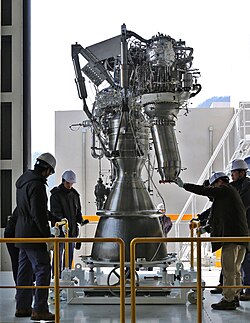
- Engine Technology: Powered by domestically produced KRE-075 and KRE-007 liquid-propellant engines.
- Global Standing: Made South Korea the seventh country capable of placing a satellite of at least one ton into orbit.
- Project Cost: Approximately ₩ 1.96 trillion (including the spaceport).
Development and History
The South Korean government initiated the Nuri project in October 2010 with the goal of creating a reliable, cost-competitive rocket for the commercial launch market. The development process spanned over a decade, involving rigorous testing to overcome technical hurdles such as combustion instability in the KRE-075 burner.
A critical precursor to the full rocket was the Test Launch Vehicle (TLV). This single-stage craft was used to qualify the KRE-075 engine. On November 28, 2018, the TLV successfully reached an altitude of 209 km, confirming the engine's performance before it was integrated into the full KSLV-II design.
Nuri's journey to orbit began on October 21, 2021. While the payload reached its targeted apogee of 700 km, a premature shutdown of the third stage prevented the payload from achieving orbital speed. However, the second flight on June 21, 2022, was a resounding success. It successfully deployed a performance verification satellite (PVSAT) and several cube satellites into a 700 km SSO, proving the vehicle's viability.
Technical Specifications
Nuri is a massive structure standing 47.2 meters tall with a diameter of 3.5 meters and a total mass of 200,000 kg. It utilizes a three-stage configuration, all powered by liquid oxygen (LOX) and Jet A-1 fuel.
Stage Breakdown
- First Stage: Uses four KRE-075 engines to generate massive thrust (up to 3,380 kN in vacuum) for an initial burn of 127 seconds.
- Second Stage: Employs a single KRE-075 vacuum engine, featuring a wider nozzle for increased efficiency in space, burning for 148 seconds.
- Third Stage: Uses a single KRE-007 engine for the final push into orbit, with a burn time of 498 seconds.
Performance Summary
| Target Orbit | Altitude | Maximum Payload Mass |
|---|---|---|
| Low Earth Orbit (LEO) | 200 km | 3,300 kg |
| Sun-synchronous Orbit (SSO) | 700 km | 1,900 kg |
| Geostationary Transfer Orbit (GTO) | N/A | 1,000 kg |
Future Outlook and Strategic Goals
Nuri is slated to launch various Earth observation satellites, including the KOMPSAT series, and LEO reconnaissance satellites. Beyond domestic needs, South Korea intends to enter the commercial launch market, offering competitive pricing (estimated at US$30 million per launch) to serve Southeast Asian nations.
While an upgraded version (KSLV-IIA) was once considered, the Ministry of Science and ICT canceled those plans in 2021 in favor of a more ambitious project: the KSLV-III. Expected by 2030, the KSLV-III will be a high-weight rocket designed to narrow the technology gap with other global space powers. Additionally, South Korea is exploring the development of a miniaturized, low-cost version of Nuri for military satellite deployment.
Frequently Asked Questions
What makes Nuri different from the Naro-1?
Unlike Naro-1, which relied on some foreign technology, Nuri is the first orbital launch vehicle entirely designed, manufactured, and tested using domestic South Korean technology.
What is the purpose of the KRE-075 engine?
The KRE-075 is a liquid-propellant engine that powers both the first stage (using four engines) and the second stage (using one vacuum-optimized engine) of the Nuri rocket.
How many launches has Nuri completed?
As of the most recent data, Nuri has had 4 total launches, with 3 successes and 1 failure.
What is a Sun-synchronous orbit (SSO)?
An SSO is a specific type of Low Earth Orbit where the satellite passes over any given point of the Earth's surface at the same local solar time, which is ideal for Earth observation and reconnaissance.
Will Nuri be used for Moon exploration?
Yes, Nuri is planned to support South Korea's Moon exploration missions by delivering orbiters and landers into space.