Nuclear Power Safety: Risks, Regulations, and Waste Management in the US
The safety and sustainability of nuclear energy in the United States rely on a complex intersection of engineering, strict regulatory oversight, and long-term waste strategies. While nuclear power provides a significant source of energy, the industry faces ongoing challenges ranging from equipment degradation and seismic risks to the critical need for a permanent waste disposal solution.
Key Facts
- Regulatory Gaps: Over 25% of U.S. nuclear plant operators have failed to properly report equipment defects to regulators.
- Waste Crisis: The cancellation of the Yucca Mountain repository has forced a reliance on temporary dry cask storage.
- Seismic Vulnerability: One-third of U.S. reactors are boiling water reactors, with several located in seismically active zones.
- Security Measures: Containment structures are designed to withstand extreme impacts, including passenger jetliners.
- Public Health: Potassium iodide is recommended for those within 10 miles of a plant to protect the thyroid during a radiological emergency.
Radioactive Waste Storage Challenges
The management of spent nuclear fuel—the radioactive material remaining after uranium has been used in a reactor—remains one of the most contentious issues in the industry. Following the Fukushima Daiichi disaster, experts warned Congress that spent-fuel pools at U.S. plants are overfilled, posing a risk of releasing cesium-137 in the event of a fire.
With the Yucca Mountain repository in Nevada cancelled, the industry has shifted toward dry cask storage. This involves sealing waste in metal casks filled with inert gas. However, concerns persist regarding the longevity of these casks, particularly in coastal regions where salt air may cause corrosion-related cracking within 30 years, despite hopes for a 100-year lifespan.
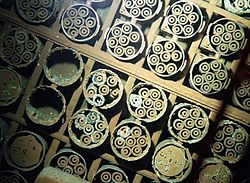
At decommissioned sites like Maine Yankee, Connecticut Yankee, and Rancho Seco, spent fuel remains in concrete-and-steel silos. This ongoing need for monitoring and security often prevents these sites from being repurposed for other industrial uses. Consequently, nine states have implemented moratoria on new nuclear construction until a permanent storage solution is established.
Reactor Design and Environmental Risks
Seismic and Flood Hazards
A significant portion of the U.S. fleet consists of boiling water reactors. Eight plants are located along the seismically active West Coast, and twelve reactors of a similar vintage to the Fukushima plant are in high-risk areas. Risk is measured by Peak Ground Acceleration (PGA); plants such as Diablo Canyon, Sequoyah, and Vogtle have a 2% or greater chance of experiencing PGA over 0.15g within the next 50 years.
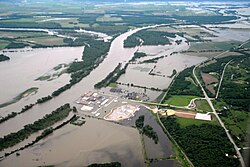
Beyond earthquakes, flood risks are a point of contention. Engineers Larry Criscione and Richard H. Perkins have accused the Nuclear Regulatory Commission (NRC) of downplaying risks for plants located downstream from large dams and reservoirs.
Containment and Aging
The General Electric (GE) Mark I containment design has faced long-term criticism for having a relatively weak containment vessel. Experts, including David Lochbaum of the Union of Concerned Scientists, note that while U.S. plants may not face the exact tsunami sequence of Fukushima, they remain vulnerable to other severe natural disasters or terrorist attacks.
To combat the natural aging of reactors, technicians use ultrasonic waves to detect microscale defects in hot metal parts, preventing small cracks from evolving into major structural failures.
Security and Human Factors
Nuclear security involves multiple layers, including a Protected Area where only FBI background-checked individuals may enter unescorted. While the NRC does not require plants to defend against the most sophisticated weaponry, containment structures are built as missile shields. Tests at Sandia National Laboratories indicate that reinforced concrete is highly resistant to fire and aircraft impact.
Public trust is closely tied to residency and education. Data suggests that people who have lived near a plant longer, or who have a better understanding of plant procedures, tend to worry less about safety and security threats.
Regulatory Framework and Risk Assessment
In the U.S., an Operating License carries the force of law. This includes the Final Safety Analysis Report (FSAR) and Technical Specifications. Deliberately violating these approved procedures is considered a criminal act.
Plants are designed to handle Design Basis Events (DBE)—anticipated occurrences like a loss-of-coolant accident (LOCA). However, the Fukushima disaster was a "beyond design basis event," where the tsunami exceeded the plant's design capacity. To better predict these risks, the NRC uses Probabilistic Risk Assessment (PRA) to calculate core damage frequencies.
| Reactor Design | Max Core Damage Frequency (per plant/year) |
|---|---|
| BWR/4 (Typical) | 1 × 10⁻⁴ |
| BWR/6 (Typical) | 1 × 10⁻⁴ |
| ABWR | 2 × 10⁻⁵ |
| ESBWR | 3 × 10⁻⁶ |
| AP1000 | 5.09 × 10⁻⁶ |
| EPR (European) | 4 × 10⁻⁶ |
Frequently Asked Questions
What is the purpose of potassium iodide in a nuclear emergency?
Potassium iodide (KI) is a non-radioactive form of iodine that blocks the thyroid gland's ability to absorb radioactive iodine, which may be released during a severe accident. It should only be taken when directed by public health officials.
What is the difference between a Design Basis Event and a Beyond Design Basis Event?
A Design Basis Event is a condition (like a loss-of-coolant accident) that a plant is specifically engineered to withstand. A Beyond Design Basis Event, such as the Fukushima tsunami, is an occurrence more powerful than what the plant was designed to accommodate.
Why is the U.S. using dry cask storage instead of a permanent repository?
Because the Yucca Mountain nuclear waste repository in Nevada was cancelled, the U.S. lacks a permanent central location for waste, forcing plants to use sealed metal casks as a temporary solution.
Can spent nuclear fuel be recycled in the United States?
Currently, it is not U.S. policy to recycle spent nuclear fuel. The Blue Ribbon Commission on America's Nuclear Future stated in 2012 that existing technology was inadequate due to cost and nuclear proliferation risks.
How do technicians find cracks in reactor components?
Quality Assurance Technicians and weld inspectors use ultrasonic waves to scan hot metal parts for microscale defects before they become significant cracks.