Nuclear Reprocessing: Technologies, Benefits, and the Future of the Fuel Cycle
Nuclear reprocessing is the specialized chemical process used to separate fission products (the byproducts of nuclear fission) and actinides (heavy elements like uranium and plutonium) from spent nuclear fuel. While originally developed to extract plutonium for nuclear weapons, the advent of commercial nuclear power shifted the focus toward recycling materials for energy production. Today, reprocessing plays a critical role in discussions regarding waste management, resource efficiency, and the closing of the nuclear fuel cycle.
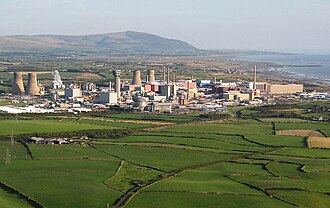
Key Facts
- Primary Goal: To separate recyclable materials like plutonium and uranium from waste products in spent fuel.
- Main Method: The PUREX process is currently the dominant chemical-based method used worldwide.
- Fuel Recycling: Reprocessed plutonium can be converted into MOX (Mixed Oxide) fuel for use in thermal reactors.
- Efficiency: Using breeder reactors to employ all actinides can potentially multiply the energy extracted from natural uranium by approximately 60 times.
- Regulation: Because reprocessing can produce weapons-grade material, it is strictly regulated to prevent nuclear proliferation.
The Science of Separation
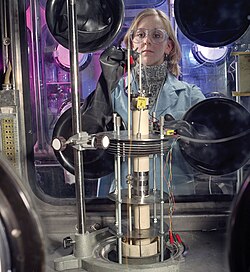
Spent nuclear fuel is highly radioactive, requiring advanced facilities and specialized personnel to manage the extreme conditions. Various technologies exist to handle these materials, each with unique chemical approaches.
The PUREX Process
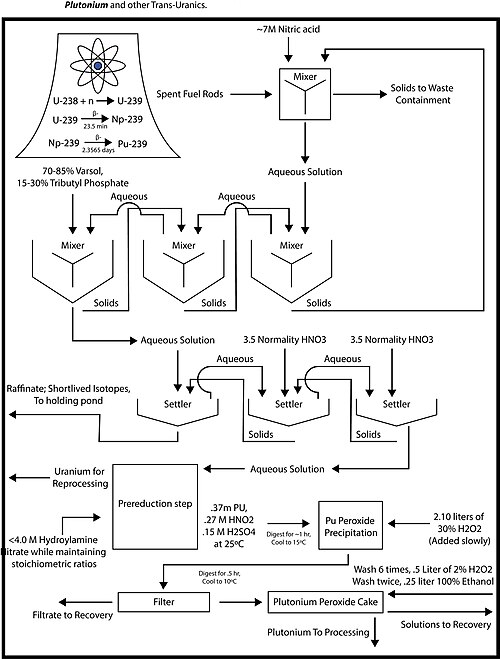
The PUREX (Plutonium Uranium Reduction Extraction) process is the most widely used commercial method. It relies on chemical separation to isolate plutonium and uranium from the rest of the spent fuel. While highly effective, it is part of a broader family of solvent extraction and volatility methods.
Alternative Separation Technologies
Beyond PUREX, several other methods are utilized or researched to improve efficiency and safety:
- Fluoride Volatility: This method uses extremely reactive fluorine gas to drive off certain elements.
- Voloxidation: A process involving heating to drive off volatile elements, such as technetium heptoxide, which can reduce contamination in other processes.
- Electrochemical Methods: These involve using electricity to separate elements, often in molten salt environments.
Pyroprocessing: An Advanced Alternative
Pyroprocessing is a highly developed alternative to traditional chemical methods. Often associated with the Integral Fast Reactor (IFR) concept, this method involves dissolving spent fuel in molten salt. Through electrorefining or electrowinning, recyclable actinides—primarily plutonium and uranium—are extracted.
![The most developed, though commercially unfielded, alternative reprocessing method, is Pyroprocessing,[36] suggested as part of the depicted metallic-fueled, Integral fast reactor (IFR) a sodium fast reactor concept of the 1990s. After the spent fuel is dissolved in molten salt, all of the recyclable actinides, consisting largely of plutonium and uranium though with important minor constituents, are extracted using electrorefining/electrowinning. The resulting mixture keeps the plutonium at all times in an unseparated gamma and alpha emitting actinide form, that is also mildly self-protecting in theft scenarios.[37]](/images/e3/bf/e3bf1d0337fe0b79635dcb527dc587d1f365a8d937c04163352ff75354b66ded.jpg)
A significant advantage of pyroprocessing is that the resulting mixture keeps plutonium in an unseparated form alongside other gamma and alpha-emitting actinides. This makes the material "self-protecting" and more resistant to theft, providing an inherent layer of proliferation resistance.
Material Disposition and Waste Management
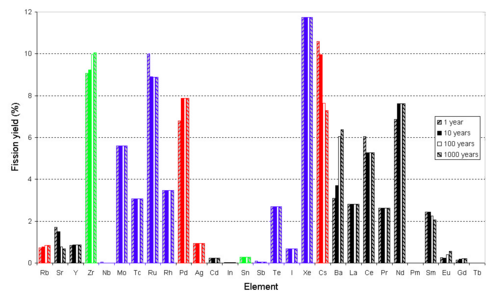
Reprocessing allows for the categorization and specialized handling of different nuclear components, which can help reduce the volume of high-level waste requiring long-term geological storage.
| Material Type | Common Disposition |
|---|---|
| Plutonium, Minor Actinides, Reprocessed Uranium | Fission in fast/fusion reactors or use as MOX fuel |
| Reprocessed Uranium, Filters | Intermediate-level waste storage |
| Long-lived Fission/Activation Products | Nuclear transmutation or geological repository |
| Medium-lived Fission Products (Cs, Sr) | Medium-term storage (potential heat use via Stirling engines) |
| Useful Radionuclides, Rare Earths, Noble Metals | Industrial and medical applications |
| Cladding (Zircaloy) | Re-use for cladding or intermediate-level waste |
Global Landscape and Economics
The economics of reprocessing are complex. While it is generally more expensive than the "once-through" fuel cycle (where fuel is used once and then disposed of), reprocessing offers the benefits of increased fuel utilization and decreased waste volumes. Currently, reprocessing is performed routinely in Europe, Russia, and Japan. In the United States, policy has shifted toward scientific research rather than large-scale commercial reprocessing.
Frequently Asked Questions
What is the difference between the once-through cycle and reprocessing?
In a once-through cycle, spent nuclear fuel is treated as waste and sent directly to storage. In reprocessing, the fuel is chemically treated to recover usable materials like uranium and plutonium to be used again in new fuel.
Can reprocessing help reduce nuclear waste?
Yes. By extracting actinides and other long-lived elements for reuse in reactors, the volume and longevity of high-level waste that requires geological disposal can be significantly reduced.
Why is nuclear reprocessing a proliferation concern?
Because certain reprocessing methods can isolate pure plutonium, there is a risk that the material could be diverted for use in nuclear weapons. Consequently, these facilities are subject to intense international regulation and monitoring.
What is MOX fuel?
MOX, or Mixed Oxide fuel, is a type of nuclear fuel created by mixing reprocessed plutonium with uranium. It allows the energy stored in plutonium to be harvested in conventional thermal reactors.
How does a breeder reactor relate to reprocessing?
Breeder reactors are designed to produce more fissile material than they consume. They can utilize the full range of actinides recovered through reprocessing, effectively "closing" the fuel cycle and maximizing energy extraction from natural uranium.