Nuclear Power in Italy: A History of Ambition and Abandonment
Italy's relationship with nuclear energy has been a volatile journey of rapid expansion, strategic pivots, and ultimate rejection. From the optimistic post-war era to the modern era of energy imports, the nation has cycled through periods of intense investment and total phase-outs, driven by shifting political landscapes and global nuclear events.
The Early Years and Infrastructure Growth
The foundation of Italian nuclear research began in late 1946 with the creation of Cise, a small research center. This was followed by the establishment of the Cnrn (National Committee for Nuclear Research), which later became the autonomous Cnen (National Committee for Nuclear Energy) in 1960.
During the 1950s, there was a widespread belief that nuclear energy would soon provide a safe and economical solution for all the country's energy needs. Between 1956 and 1958, Italy ordered three different reactors from three separate companies: Westinghouse, General Electric, and Npcc. These plants were constructed in Latina, Sessa Aurunca, and Trino Vercellese, with all three completed by 1964.
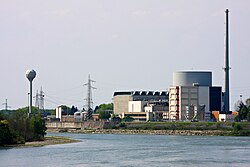
Initially, power plants were built by various private companies. However, the 1962 nationalization of the electricity sector led to the creation of Enel, a single corporation responsible for the production and distribution of electricity. This centralization is often cited as a primary reason for the subsequent slowdown in nuclear investment. Only one additional reactor, the Caorso power plant, was initiated during the following decade, starting in 1970 and finishing in 1978.
Parallel to civilian energy, Italy pursued a nuclear weapons program under the control of the Italian Navy, utilizing the CAMEN (later CISAM) facility near Pisa. This program produced the IRBM Alfa and other air vectors but was halted in the 1970s as Italy joined NATO nuclear sharing.
The Oil Crisis and the National Energy Plan
The 1973 oil crisis exposed Italy's dangerous dependency on imported oil, prompting a strategic shift toward energy independence. In 1975, the government approved the first PEN (National Energy Plan), which aimed to drastically reduce fossil fuel reliance through massive nuclear investment. The original goal was an installed nuclear capacity of over 46 GW by 1990.
Despite these ambitions, subsequent plans were downsized. By 1986, the only plant still under construction was located in Montalto di Castro.
The 1987 Referendum and Phase-Out
The 1986 Chernobyl disaster sparked a national debate that culminated in a nuclear power referendum in November 1987. Because Italian referendums are abrogative (meaning they can only cancel existing acts rather than create new programs), the voters were asked to decide on three technical issues:
- The ability of the Inter-ministries Committee for the Economical Programming (CIPE) to decide plant locations if Regions failed to do so.
- Rewards for municipalities hosting nuclear or coal plants.
- The ability of Enel to enter international agreements for building and managing nuclear plants.
Voters responded with a "Sì" (Yes) on all three counts. Consequently, the government decided in 1988 to phase out all existing plants. This led to the early closure of the Caorso and Enrico Fermi plants in 1990 and the termination of work on the nearly completed Montalto di Castro station, which was later converted into the Alessandro Volta fossil fuel power station.
As a result of this exit from nuclear energy, Italy increased its reliance on imports, receiving approximately 10% of its electricity from France by 2007.
Attempts at Restoration (2007–2011)
In 2007 and 2008, a new debate emerged. The CEO of Eni, Paolo Scaroni, criticized Italy's nuclear stance, and the think tank Energy Lab conducted feasibility studies for new plants. Following the 2008 election victory of the People of Freedom party, Minister Claudio Scajola announced plans to start construction of a new plant by 2013.
Enel S.p.A. considered three licensed sites: Garigliano, Latina, or Montalto di Castro. To support this, Italy signed an agreement with France in 2009 to share expertise in reactor design, and Enel and Électricité de France formed a joint venture, Sviluppo Nucleare Italia Srl, to study the use of Areva's European Pressurized Reactors.
However, these plans faced fierce opposition from ten Italian regions, including Tuscany, Lazio, and Apulia, who challenged the legality of the energy bill. While the Constitutional Court rejected their appeal in 2010, political hurdles and the rejection of a key nomination by Parliament stalled the process.
The 2011 Referendum and Final Decision
The 2011 nuclear accidents in Japan led the Italian government to place a one-year moratorium on its nuclear revival plans. On June 13, 2011, a second referendum was held. With a 54.79% turnout, 94% of voters rejected the use of nuclear power, effectively cancelling all planned future plants.
Key Facts
- Initial Expansion: Three reactors (Trino Vercellese, Sessa Aurunca, and Latina) were completed by 1964.
- Nationalization: The creation of Enel in 1962 shifted the electricity sector from private to public control.
- Ambitious Goals: The 1975 National Energy Plan originally targeted 46 GW of nuclear capacity by 1990.
- The 1987 Shift: A referendum following the Chernobyl disaster led to the phase-out of all nuclear plants by 1990.
- Final Rejection: A 2011 referendum saw 94% of voters reject nuclear power following the Fukushima accidents.
| Period/Year | Key Event | Outcome |
|---|---|---|
| 1946–1960 | Establishment of Cise, Cnrn, and Cnen | Foundation of nuclear research infrastructure. |
| 1956–1964 | Construction of first three reactors | Initial operational nuclear capacity. |
| 1975 | First National Energy Plan (PEN) | Goal of 46 GW capacity by 1990. |
| 1987 | First Nuclear Referendum | Decision to phase out nuclear energy. |
| 1990 | Closure of Enrico Fermi and Caorso | End of active nuclear power generation. |
| 2008–2010 | Restoration Attempt | Proposed new plants and French partnership. |
| 2011 | Second Nuclear Referendum | 94% rejection of nuclear power. |
Frequently Asked Questions
Why did Italy stop investing in nuclear power in the 1960s?
The nationalization of the electricity sector in 1962 and the creation of Enel are believed to have caused a halt in nuclear investments, as the sector shifted from private to public management.
What was the impact of the 1987 referendum?
The referendum led the Italian government to phase out all existing nuclear plants, resulting in the early closure of the Enrico Fermi and Caorso plants in 1990 and the abandonment of the Montalto di Castro station.
Did Italy ever attempt to build nuclear weapons?
Yes, Italy initiated a nuclear weapons program under the control of the Italian Navy, utilizing the CAMEN (later CISAM) facility. This program was stopped in the 1970s when Italy joined NATO nuclear sharing.
What happened to the Montalto di Castro Nuclear Power Station?
Construction was halted due to the 1987 referendum. The facility was subsequently converted into the Alessandro Volta fossil fuel power station.
Why was the 2011 referendum so decisive?
Following the nuclear accidents in Japan, public sentiment shifted strongly against nuclear energy. The referendum saw a 94% vote against the use of nuclear power, cancelling all previous plans for a nuclear revival.