Novosibirsk: The Vibrant Heart of Siberia
Located in southwestern Siberia on the banks of the Ob River, Novosibirsk stands as a titan of North Asia. As the administrative center of both the Novosibirsk Oblast and the Siberian Federal District, it is the third-most populous city in Russia, trailing only Moscow and Saint Petersburg. It holds the distinction of being the largest Russian city that does not possess the status of a federal subject.
From its origins as a railway settlement to its current status as a global hub for science and culture, Novosibirsk blends industrial strength with academic prestige and artistic flair.

Key Facts
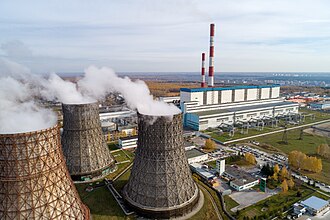
- Population: 1,633,595 (2021 Census).
- Founded: 1893; granted city status in 1904.
- Geography: Situated in southwestern Siberia on the Ob River.
- Status: Largest city in North Asia and 3rd largest in Russia.
- Climate: Continental, with extreme temperature variations.
- Key Infrastructure: Home to the first metro system in Siberia.
History and Evolution
The city was originally known as Novonikolayevsk. Following the start of Lenin's New Economic Policy (1921–1928), the city underwent significant reconstruction. It served as the administrative center for various governorates and krais before officially becoming Novosibirsk (meaning "New Siberian town") on September 12, 1926.
The city's growth was explosive. By 1934, the population reached 287,000, establishing it as the largest city in Siberia. This era saw the introduction of tram rails and the construction of the Kommunalny bridge over the Ob River in 1935.
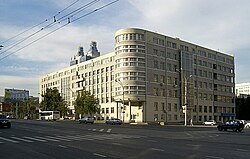
![View of the part of Student Brigades Square and the intersection of Oktyabrskaya Highway, Serebrennikovskaya Street and Oktyabrskaya Street, as seen in 2017. In the lower left-hand corner, the part of the building of the Novosibirsk Globus Theatre is visible. In the center of the picture is the building at 50 Kommunisticheskaya Street, popularly known as "Batman" and "Plug".[30]](/images/59/eb/59eb2d99a1c4d1e589d53fe4c61b44e20279c6eb73545ae45973c6ada6468db7.jpg)
Geography and Climate
Novosibirsk is characterized by its vast area of 502.7 km² and an elevation of 153 meters. The city experiences a harsh continental climate, where winters are severe and summers can be surprisingly warm.
| Metric | Winter (Jan) | Summer (Jul) | Annual Average |
|---|---|---|---|
| Mean Daily Max (°C) | −12.6 | 25.4 | 7.4 |
| Daily Mean (°C) | −17.0 | 19.5 | 2.0 |
| Mean Daily Min (°C) | −21.2 | 13.9 | −2.8 |
| Precipitation (mm) | 25 | 68 | 465 |

Urban Infrastructure and Transportation
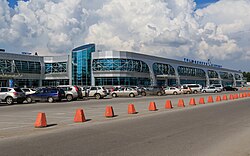
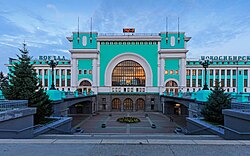
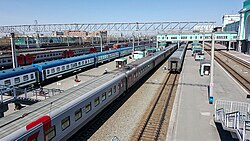
Novosibirsk is a major transportation hub, facilitating movement across the vast Siberian landscape. The city is served by Tolmachevo Airport and the Novosibirsk-Glavny railway station, a critical node for transcontinental travel.
Public Transit Systems
- Metro: Opened in 1985, it was the first metro system in Siberia. It currently features two lines (Leninskaya and Dzerzhinskaya) with 13 stations.
- Trams and Trolleybuses: Trams have operated since 1934, while the trolleybus system was launched in 1957.
- Buses and Waterbuses: A comprehensive bus network has existed since 1923, and waterbuses operate along the Ob River to locations like Korablik Island.
Economy and Education
The city is an industrial and technological powerhouse. It hosts the headquarters of major firms such as RATM Holding, 2GIS, and the Novosibirsk Aircraft Production Association Plant (NAPO), a subsidiary of Sukhoi.
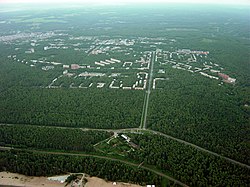
Education is a cornerstone of the city's identity. Novosibirsk is home to numerous prestigious institutions, most notably Novosibirsk State University (founded 1959) and the specialized research hub of Akademgorodok (Academic Town).
Culture, Arts, and Sport
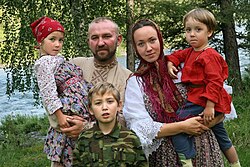
The city's cultural crown jewel is the Novosibirsk Opera and Ballet Theatre, one of the largest theaters of its kind. The city also boasts a rich array of museums, including the State Art Museum and the Museum of Cossacks Glory.
Sports and Recreation
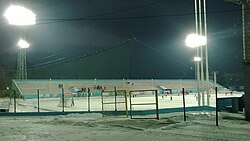
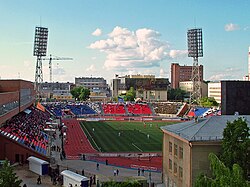
Novosibirsk is a center for professional athletics, with top-tier clubs in ice hockey (Sibir Novosibirsk), bandy (Sibselmash), and volleyball (Lokomotiv). The city is also renowned for hosting national and international Ice Speedway events.
Frequently Asked Questions
What is the population of Novosibirsk?
According to the 2021 census, the population was 1,633,595, making it the third-largest city in Russia.
When was the Novosibirsk Metro established?
The Novosibirsk Metro opened in 1985, becoming the first metro system to be built in Siberia.
What is Akademgorodok?
Akademgorodok is a world-renowned scientific hub and residential area associated with Novosibirsk State University and various research institutes.
What are the main transportation hubs in the city?
The primary hubs are Tolmachevo Airport for air travel and Novosibirsk-Glavny for railway transport.
Which is the most famous cultural landmark in Novosibirsk?
The Novosibirsk Opera and Ballet Theatre is the city's most prominent cultural landmark.