Norwegian Dependencies: The Remote Territories of the Southern Hemisphere
Norway maintains sovereignty over three distinct territories known as biland, or dependencies. Unlike integral parts of the kingdom, these dependencies are unincorporated areas located entirely within the Southern Hemisphere. These territories—Bouvet Island, Peter I Island, and Queen Maud Land—are uninhabited by permanent populations and serve primarily as hubs for scientific research and environmental preservation.
It is important to distinguish these from Svalbard and Jan Mayen. While Svalbard is regulated by an international treaty and Jan Mayen is an integral part of Norway, the dependencies are separate entities under Norwegian sovereignty. This specific legal status means they are not part of the Kingdom of Norway proper, allowing them to be ceded without violating the Norwegian Constitution.
Key Facts
- Total Area: Approximately 2,700,203 square kilometers.
- Population: No permanent residents; roughly 40 scientists reside there seasonally.
- Administration: Managed by the Polar Affairs Department of the Ministry of Justice and Public Security in Oslo.
- Legal Framework: Norwegian criminal, private, and procedural laws apply.
- Environmental Status: All activities in Antarctica must comply with international environmental law.
Government and Legal Administration
The administration of these territories is centralized in Oslo through the Polar Affairs Department. Under the Dependency Act of March 24, 1933, the Norwegian state owns all land within these territories. The law strictly prohibits the detonation or storage of nuclear products across all three dependencies.
For territories located south of 60°S—specifically Peter I Island and Queen Maud Land—the Antarctic Treaty System applies. While this system does not nullify Norwegian claims, it governs how the land is used. Since 1995, any Norwegian citizen planning activity in these regions must report to the Norwegian Polar Institute to ensure compliance with international environmental laws regarding waste, pollution, and nature protection.
The Three Dependencies
Bouvet Island (Bouvetøya)
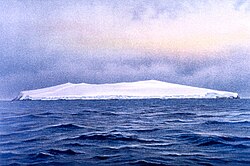
Bouvet Island is widely recognized as the most remote island in the world. This sub-Antarctic volcanic island is located in the South Atlantic or Southern Ocean, roughly 2,200 kilometers south-southwest of South Africa. The island is 49 square kilometers in size, with 93% of its surface covered by a glacier and its center consisting of an inactive volcanic crater.
Landing on Bouvet Island is notoriously difficult due to steep coasts and high seas. The only accessible landing point is Nyrøysa, a coastal area created by a rock slide in the late 1950s, which now hosts a weather station. The island was claimed in 1927 and declared a nature reserve for seals in 1935.
Peter I Island
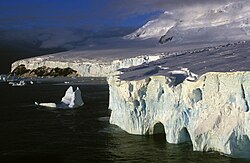
Located 450 kilometers off the coast of Ellsworth Land, Peter I Island is a volcanic shield island covering 154 square kilometers. It is almost entirely encased in ice, with glaciers covering 95% of its surface. The island is characterized by vertical cliffs and a 40-meter-high ice front.
Access is limited to only three landing points and is only possible during the brief window when the island is not surrounded by pack ice. Its highest point is a prominent peak reaching 1,640 meters, named after Lars Christensen. Claimed in 1929, it is the only Norwegian claim that is not a sector.
Queen Maud Land
Queen Maud Land is a massive Antarctic sector covering 2.7 million square kilometers, representing one-sixth of the entire Antarctic continent. It is bounded by the British Antarctic Territory to the west and the Australian Antarctic Territory to the east, spanning from 20° west to 45° east.
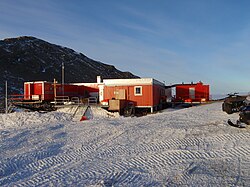
The landscape is dominated by the Antarctic ice sheet and a towering coastal ice wall. However, some mountain ranges break through the ice, providing breeding grounds for birds and supporting limited flora. The region is divided into five coasts: Princess Martha, Princess Astrid, Princess Ragnhild, Prince Harald, and Prince Olav.
While there is no permanent population, the area hosts 12 active research stations. Six of these operate year-round, housing an average of 40 scientists. The primary gateway for intercontinental flights from Cape Town is the Troll Airfield, located near the Norwegian Troll research station.
Territory Summary
| Territory | Type | Area | Key Feature | Claimed |
|---|---|---|---|---|
| Bouvet Island | Volcanic Island | 49 km² | Most remote island in the world | 1927 |
| Peter I Island | Volcanic Island | 154 km² | 95% glacier coverage | 1929 |
| Queen Maud Land | Antarctic Sector | 2.7 million km² | Contains Troll research station | 1938 |
Frequently Asked Questions
Who lives in the Norwegian dependencies?
There are no permanent residents in any of the dependencies. The only inhabitants are scientists and researchers, with an average of around 40 people present across various stations depending on the season.
How are these territories governed?
They are managed by the Polar Affairs Department of the Ministry of Justice and Public Security in Oslo. Norwegian criminal, private, and procedural laws apply to these areas.
What is the difference between a dependency and an integral part of Norway?
A dependency (biland) is under Norwegian sovereignty but is not part of the Kingdom of Norway. This means it can be ceded without violating the first article of the Constitution of Norway.
Are these territories part of the Antarctic Treaty?
Yes, Peter I Island and Queen Maud Land are south of 60°S and are therefore part of the Antarctic Treaty System, which governs international activity and environmental protection in the region.
What is the significance of the .bv domain?
Bouvet Island was assigned the ISO 3166-2 code BV, which allowed it to be awarded its own country code top-level domain, .bv, on August 21, 1997.