Antarctic Treaty Secretariat: Managing the Governance of the Frozen Continent
The Antarctic Treaty Secretariat (ATS) serves as the essential administrative backbone for the international governance of Antarctica. Established to ensure that the frozen continent remains a place of peace and scientific cooperation, the ATS operates as a subsidiary body of the Antarctic Treaty Consultative Meeting (ATCM). While the Antarctic Treaty was originally signed in 1959 and entered into force in 1961, the need for a permanent administrative hub grew as the complexity of environmental protection and international coordination increased.
Key Facts
- Founded: 1 September 2004.
- Headquarters: Buenos Aires, Argentina.
- Official Languages: English, French, Russian, and Spanish.
- Leadership: Led by an Executive Secretary appointed by the ATCM.
- Staffing: A lean team consisting of the Executive Secretary, a Deputy Executive Secretary, and eight general staff members.
- Funding: Financed by contributions from Consultative Parties.
Mission and Core Functions
The primary mission of the Secretariat is to support the ATCM and the Committee for Environmental Protection (CEP)—the body responsible for overseeing the environmental safeguards of the region. By assisting these entities, the ATS strengthens the Antarctic Treaty System and ensures all regional activities align with the principles of the original Treaty and its Protocol on Environmental Protection.
Under the direction of the ATCM, the Secretariat performs several critical tasks as specified in Measure 1 (2003):
- Providing logistical and administrative support for annual ATCM and CEP meetings.
- Facilitating the mandatory exchange of information between Parties regarding the Treaty and the Protocol.
- Compiling, archiving, and managing all official ATCM-related documentation.
- Disseminating information to the public and stakeholders about the Antarctic Treaty System and activities in Antarctica.
Organizational Structure and Leadership
The ATS is led by an Executive Secretary, who must be a national of a Consultative Party. This leader is appointed for a four-year term and may be re-elected once. The Secretariat is designed to be cost-effective, maintaining a small but specialized staff of nine people who operate under established Staff Regulations.
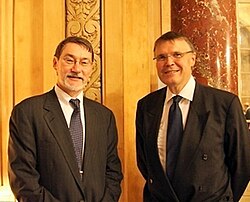
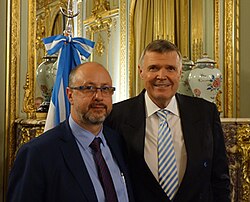
The leadership history of the ATS reflects its international nature:
- Johannes Huber (Netherlands): The inaugural Executive Secretary (2004–2009).
- Dr. Manfred Reinke (Germany): Served two terms from 2009 to 2017.
- Albert Lluberas Bonaba (Uruguay): Appointed in 2017 and re-elected in 2021, with a mandate extending to 2025.
Financing the Secretariat
The ATS is funded through a dual-contribution system from the Consultative Parties. Half of the budget is split equally among all Consultative Parties. The remaining half is calculated based on the scale of each party's national activities in Antarctica and their respective payment capacity. Additionally, any Contracting Party, whether Consultative or Non-Consultative, may provide voluntary contributions. The final budget is approved annually by the Consultative Parties during the ATCM.
Historical Evolution
For the first three decades of the Antarctic Treaty's existence, administrative duties were handled by a non-permanent secretariat that rotated among host countries. However, the adoption of the Madrid Protocol (the Protocol on Environmental Protection to the Antarctic Treaty) introduced complex coordination requirements that made a permanent office necessary.
The path to a permanent headquarters involved several years of diplomatic debate. During the 1992 meeting in Venice (ATCM XVII), consensus was reached on the need for a Secretariat. While the United States proposed Washington D.C. and Australia later suggested Hobart, the majority of Consultative Parties eventually supported the Argentine capital. In 2001, at ATCM XXIV in Saint Petersburg, the parties officially chose Buenos Aires. The relationship between the ATCM and the Argentine Republic was later formalized in a 2010 Headquarters Agreement.
| Executive Secretary | Country | Term Start | Term End |
|---|---|---|---|
| Johannes "Jan" Huber | Netherlands | 1 September 2004 | 31 August 2009 |
| Manfred Reinke | Germany | 1 September 2009 | 31 August 2017 |
| Albert Alexander Lluberas Bonaba | Uruguay | 1 September 2017 | Present |
Frequently Asked Questions
Where is the Antarctic Treaty Secretariat located?
The Secretariat is headquartered at 757 Maipú Street in the Autonomous City of Buenos Aires, Argentina.
What is the relationship between the ATS and the ATCM?
The ATS is a subsidiary body of the Antarctic Treaty Consultative Meeting (ATCM), meaning it performs its duties under the direction and supervision of the ATCM.
How is the Executive Secretary chosen?
The Executive Secretary is appointed by the ATCM from candidates who are nationals of Consultative Parties for a four-year term, with the possibility of one re-election.
How is the ATS funded?
Funding comes from Consultative Parties via two methods: equal contributions for half the budget, and contributions based on national activity levels and payment capacity for the other half. Voluntary contributions are also accepted.
Why was a permanent Secretariat created?
While the treaty originally used a rotating administrative system, the adoption of the Madrid Protocol introduced organizational and coordination challenges that required a permanent, centralized office to manage.