North Holderness Light Railway: The Line That Never Was
In the late 19th century, the expansion of the British rail network often reached into rural agricultural heartlands through the creation of light railways. One such ambitious project was the North Holderness Light Railway, a proposed line in the East Riding of Yorkshire, England. Designed to connect the market town of Beverley with the rural reaches of North Frodingham, this project represents a fascinating chapter of "what might have been" in British transport history.
The Vision and Approval
The project was spearheaded by the North Eastern Railway (NER). In September 1898, the scheme received official approval via the North Holderness Light Railway Order 1898. This authorization was granted under the Light Railways Act 1896, a piece of legislation designed to simplify the process of building cheaper, lower-speed lines to serve remote areas.
The proposed line was planned to extend for 12.5 miles (20.1 km). It would have branched off from a junction on the Hull to Scarborough Line, located just north of the Beverley railway station, cutting through the agricultural landscapes of the Holderness area.
Proposed Route and Infrastructure
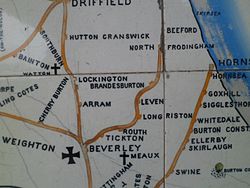
The railway was intended to provide vital connectivity for several small villages. The planned itinerary included stations at the following locations:
- Tickton
- Routh
- Long Riston
- Leven
- Brandesburton
- North Frodingham
At the terminus in North Frodingham, the line was intended to share a station with another proposed project: the Bridlington and North Frodingham light railway. This second line, which would have run to Carnaby on the Hull to Scarborough Line, also remained unbuilt.
From Rails to Roads: The Shift to Bus Services
Despite the initial approval, the North Eastern Railway abandoned the plans for the line in 1903. In a pioneering move for the era, the NER decided to provide a bus service as an alternative to the railway. Starting on September 7, 1903, buses began running from Beverley to North Frodingham, with the route continuing onward to Driffield.
This was a significant milestone in transport history, as it was only the second bus service to be operated by a British railway company. The service remained under the management of the NER and its successor, the London and North Eastern Railway, until 1933, when it was sold to a local bus operator.
Later Reconsiderations and Legacy
The dream of a railway in North Holderness did not vanish immediately. Plans were later reconsidered, though engineers suggested using a narrow gauge (a track width narrower than the standard 4 ft 8.5 in) to better navigate the region's marshy terrain. In 1919, Darlington Works went as far as designing a 2 ft (610 mm) gauge tank locomotive for the line.
While the tracks were never laid, evidence of the plan survives. Tiled maps of the North Eastern Railway network, which include the proposed route, can still be found at stations in Beverley, Hartlepool, Middlesbrough, Saltburn, Scarborough, Tynemouth, Whitby, and York. An example of these maps is also preserved at the National Railway Museum.
Key Facts
- Proposed Length: 12.5 miles (20.1 km).
- Approval Date: September 1898.
- Proposed Termini: Beverley and North Frodingham.
- Alternative Transport: Replaced by a bus service starting September 7, 1903.
- Narrow Gauge Plan: A 2 ft (610 mm) gauge locomotive was designed in 1919.
| Feature | Details |
|---|---|
| Operating Company | North Eastern Railway (NER) |
| Legal Basis | Light Railways Act 1896 |
| Proposed Stations | Tickton, Routh, Long Riston, Leven, Brandesburton, North Frodingham |
| Outcome | Abandoned in 1903; replaced by bus service |
| Historical Evidence | Tiled network maps and a 1919 locomotive design |
Frequently Asked Questions
Why was the North Holderness Light Railway never built?
The North Eastern Railway abandoned the plans in 1903, opting instead to provide a more flexible bus service to connect the region.
What was the significance of the bus service that replaced the railway?
It was the second bus service ever operated by a British railway company, marking an early shift from rail to road transport by major carriers.
Which villages would have been served by the line?
The line would have served Tickton, Routh, Long Riston, Leven, Brandesburton, and North Frodingham.
Why was a narrow gauge considered for the line in 1919?
A narrower gauge was proposed because the route had to cross marshy land, which would have been more challenging for a standard gauge railway.
Where can I see evidence of the proposed route today?
Tiled maps showing the route are still extant at several stations, including Beverley, York, and Scarborough, as well as at the National Railway Museum.