North German Confederation Constitution: The Blueprint for a Unified Germany
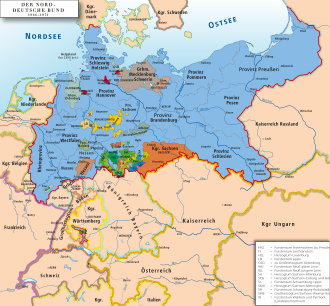
The Constitution of the North German Confederation (German: Verfassung des Norddeutschen Bundes) served as the legal foundation for a pivotal transitional state that existed from July 1, 1867, to December 31, 1870. More than just a local governing document, this constitution acted as the architectural prototype for the later Constitution of the German Empire of 1871.
Emerging from the geopolitical shifts of the mid-19th century, the constitution established a confederal parliamentary semi-constitutional monarchy. It balanced democratic elements, such as universal suffrage, with the rigid authority of the Prussian crown, ensuring that while the state appeared modern, power remained concentrated in the hands of the Prussian elite.
Key Facts
- Ratification Date: April 16, 1867.
- Head of State: The King of Prussia.
- Legislative Bodies: The Bundesrat (Upper House) and the Reichstag (Lower House).
- Voting System: Universal, equal, direct, and secret manhood suffrage for the Reichstag.
- Prussian Influence: Prussia held 17 of 43 votes in the Bundesrat, granting it a hegemonic position.
- Lifespan: In effect from July 1, 1867, until its replacement on January 1, 1871.
Historical Background and Development
Following the failed revolutions of 1848–49, the Prussian government recognized a growing desire among the German people for unification. To prevent a democratic uprising and preserve the existing social order, Prussia positioned itself as the leader of the unification movement.
The catalyst for the Confederation was the Austro-Prussian War, which ended in July 1866. The subsequent Treaty of Prague dissolved the previous German Confederation, allowing Prussia to annex several smaller states and form the North German Confederation via the Treaty of August 18, 1866.
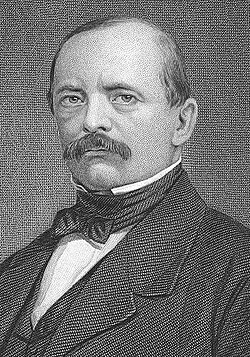
The drafting process was heavily managed by Otto von Bismarck. After several iterations—including a 65-article draft by aide Lothar Bucher and a 69-article version for the Prussian cabinet—the final text was submitted to the constituent Reichstag on March 4, 1867, where it underwent further significant changes before ratification.
Government Structure and Power Dynamics
The Bundesrat and the Chancellor
The Bundesrat (Federal Council) was the upper house consisting of representatives from the constituent states. It held equal legislative power with the Reichstag, meaning no law could pass without its consent. However, Prussia dominated this body with 17 of the 43 total votes. Because constitutional amendments required a two-thirds majority, Prussia held a functional veto over any changes to the constitution.
The Federal Chancellor was appointed by the King of Prussia. The Chancellor presided over the Bundesrat and acted as the essential link between the crown and the government; all royal decrees required the Chancellor's countersignature, making him responsible for their execution.
The Reichstag
The Reichstag served as the democratic lower house. While it participated in legislation, it was not a full parliament. It lacked the right of self-assembly—only the King could convene or close its sessions—and the Bundesrat could dissolve it with the King's agreement.
Notably, the Reichstag was elected via universal manhood suffrage. Bismarck adopted this progressive voting system partly for strategic foreign policy reasons, hoping that Russia and Austria would ignore the rise of a new European power if its internal politics seemed too radical or unstable.
The King of Prussia
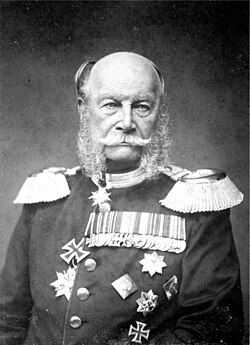
As the Presidium (Head of State), the King of Prussia wielded immense power. He was the commander-in-chief of the federal army and navy and held sole responsibility for declaring war and concluding peace. He appointed the Federal Chancellor and supervised the execution of federal laws.
While the King did not have a direct legislative veto, his control over the Prussian votes in the Bundesrat ensured his interests were protected. This concentration of power defined the state as a semi-constitutional monarchy.
Military, Finance, and Justice
Military Command
The military was strictly centralized. All troops were under the supreme command of the King of Prussia as the Bundesfeldherr (Federal Field Commander). While soldiers swore allegiance to their local princes, they were required to obey the King of Prussia. The army was standardized in administration and equipment, with Prussian military legislation applied across all member states.
Financial Administration
The Confederation utilized a split tax system. Direct taxes, such as income tax, remained under the control of individual states. The federal treasury was funded primarily through customs and excise duties. If these funds were insufficient, states were required to provide additional contributions.
Judicial Evolution
A significant constitutional milestone occurred in 1869 with the establishment of the Federal Supreme Commercial Court (Bundesoberhandelsgericht) in Leipzig. This created a unified federal jurisdiction for commercial matters, replacing the fragmented state-level courts.
Summary of the North German Constitution
| Feature | Detail |
|---|---|
| System of Government | Confederal parliamentary semi-constitutional monarchy |
| Head of State | King of Prussia |
| Legislative Branches | Bundesrat (Upper) and Reichstag (Lower) |
| Suffrage | Universal, equal, direct, and secret manhood suffrage |
| Military Control | Supreme command held by the King of Prussia |
| Revenue Source | Customs and excise duties (Federal); Income tax (State) |
Transition to the German Empire
During the Franco-Prussian War in 1870, the North German Confederation began negotiations with the southern German states. This led to the Constitution of the German Confederation on January 1, 1871, which was almost immediately replaced in May 1871 by the Constitution of the German Empire.
The Imperial Constitution was a slightly modified version of the 1867 document. It renamed the state the German Empire, designated the head of state as the German Emperor, and included specific clauses for Bavaria and Württemberg. This framework remained in place until the end of World War I in November 1918.
Frequently Asked Questions
What was the role of the Bundesrat?
The Bundesrat was the upper house of the legislature, representing the constituent states. It held equal power with the Reichstag, meaning no law could be enacted without its approval. Prussia dominated this body, holding 17 of the 43 votes.
Why did Bismarck implement universal manhood suffrage?
Bismarck used universal manhood suffrage for the Reichstag partly to appease the population and partly for foreign policy. He believed that by adopting a democratic voting system, Austria and Russia would be less likely to intervene in the emergence of a new power in Europe.
How did the King of Prussia maintain control?
The King maintained control by appointing the Federal Chancellor, serving as the supreme commander of the military, and exercising hegemonic influence over the Bundesrat through Prussia's large voting bloc.
What happened to the North German Confederation in 1871?
It served as the foundation for the German Empire. After unification talks with southern German states during the Franco-Prussian War, the Confederation was replaced by the German Empire on January 1, 1871.
Who was the Federal Chancellor?
The Federal Chancellor was appointed by the King of Prussia. He presided over the Bundesrat and was required to countersign all royal orders and decrees, thereby assuming responsibility for them.