Bundesrat of the German Empire
The Bundesrat (German for 'Federal Council') served as the highest legislative body of the German Empire from 1871 to 1918. Unlike the Reichstag, which was a popularly elected parliament, the Bundesrat was composed of members appointed by the governments of Germany's constituent states. This structure ensured that the individual states could protect their interests within the broader imperial framework.
Under the Constitution of the German Empire, the Bundesrat acted as a critical check on power. For any law to come into force, it required the approval of both the Reichstag and the Bundesrat. Beyond simple legislation, the body handled administrative regulations and resolved judicial disputes between member states.
Key Facts
- Duration: Active from 1871 until its disbandment in 1918.
- Composition: Appointed representatives from constituent states, totaling 61 votes by 1911.
- Prussian Influence: The Kingdom of Prussia held the most power with 17 votes, enough to block constitutional amendments.
- Leadership: Chaired by the Imperial Chancellor, who was appointed by the Emperor.
- Legal Role: Combined legislative, executive, and limited judicial powers.
The Role of the Chancellor
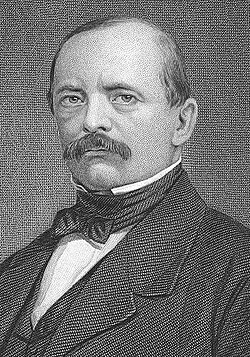
Constitutionally, the chancellor's role within the Bundesrat was limited; he chaired meetings and implemented resolutions but held no personal vote or seat in the chamber. However, in practice, the chancellor almost always served as the minister president of Prussia. This dual role allowed him to act as a member of the Bundesrat and introduce legislation through the Prussian delegation.
This arrangement was a strategic choice by Otto von Bismarck. While Emperor Wilhelm I initially wanted to rename the body the "Reichsrat," Bismarck insisted on the name "Bundesrat" to emphasize the federal nature of the Empire.
Powers and Responsibilities
The Bundesrat was a constitutional hybrid, exercising a wide array of powers that spanned three different branches of government.
Legislative and Executive Functions
The body operated on equal footing with the Reichstag regarding legislation. Its specific duties included:
- Approving declarations of war and certain state treaties.
- Deciding, alongside the emperor, whether to dissolve the Reichstag.
- Enacting legal ordinances and general administrative regulations.
- Initiating a Reichsexecution, a process where the emperor forced a member state to fulfill its imperial duties.
Judicial Functions
Because the German Empire lacked a dedicated constitutional court, the Bundesrat performed quasi-judicial tasks. It resolved non-private legal disputes between constituent states, settled internal constitutional conflicts within states, and provided judicial assistance when justice was denied within a member state.
Membership and Voting Structure
Voting in the Bundesrat was based on the state, not the individual. If a state held multiple votes, those votes had to be cast uniformly. A simple majority of votes cast was required for a motion to pass, with the chancellor holding a decisive tie-breaking vote.
| Federal State | Number of Votes |
|---|---|
| Kingdom of Prussia | 17 |
| Kingdom of Bavaria | 6 |
| Kingdom of Saxony | 4 |
| Kingdom of Württemberg | 4 |
| Grand Duchy of Baden | 3 |
| Grand Duchy of Hesse | 3 |
| Alsace–Lorraine | 3 |
| Other States (Combined) | 24 |
| Total | 61 |
Internal Organization
The Bundesrat conducted its business through full sessions and specialized committees. While Prussia chaired most committees, Bavaria successfully negotiated the chairmanship of the Foreign Affairs Committee upon joining the Federation in 1870.
Permanent committees included those for the Land Army and Fortresses, Naval Affairs, Customs and Taxation, Trade and Transport, Railways, Mail and Telegraphs, the Judiciary, Accounts, and Foreign Affairs.
The First World War and Dissolution
The outbreak of World War I in 1914 led to a significant shift in power. Through the War Enabling Act, the Reichstag transferred some of its legislative co-determination rights to the Bundesrat to allow for faster economic measures during the conflict.
The body's end came during the German Revolution of 1918–1919. On November 14, 1918, a decree issued by the Council of the People's Deputies stripped the Bundesrat of its legislative and executive powers, leaving it only with administrative duties. It was eventually succeeded by the Reichsrat of the Weimar Republic in August 1919.
Frequently Asked Questions
How did the Bundesrat differ from the Reichstag?
The Reichstag was a popularly elected parliament representing the people, while the Bundesrat was a council of appointed representatives from the constituent states representing state governments.
Could the Bundesrat block laws passed by the Reichstag?
Yes. The Constitution of the German Empire required that both the Bundesrat and the Reichstag approve laws before they could be enacted.
Why was Prussia so influential in the Bundesrat?
Prussia held 17 votes, the largest share of any state. This was sufficient to block constitutional amendments, which required 14 negative votes to be stopped.
What was the "War Enabling Act"?
Passed in 1914, this act allowed the Bundesrat to take economic measures and emergency decrees without the full legislative process normally required by the Reichstag.
Who chaired the Bundesrat?
The Imperial Chancellor chaired the Bundesrat. While he had no personal vote, he could influence the body through his role as the minister president of Prussia.