Nora Barlow: The Botanist and Scholar Who Preserved the Darwin Legacy
Emma Nora Barlow, born Emma Nora Darwin, was a pioneering British botanist and geneticist whose life spanned over a century. As the granddaughter of the legendary naturalist Charles Darwin, she occupied a unique position in scientific history—not only as a researcher in the emerging field of genetics but also as the dedicated scholar who ensured her grandfather's most vital works were preserved and presented accurately for future generations.
Living from 1885 to 1989, Barlow bridged the gap between the classical naturalism of the Victorian era and the modern era of molecular genetics. Her contributions ranged from studying the complex reproductive structures of flowers to editing definitive editions of Darwin's most important writings.
Key Facts
- Scientific Fields: Plant genetics and botany.
- Primary Research: Heterostylism (the variation in flower structure) within the primrose family.
- Major Institutions: University of Cambridge and the John Innes Institute.
- Notable Achievement: Edited the unexpurgated version of The Autobiography of Charles Darwin.
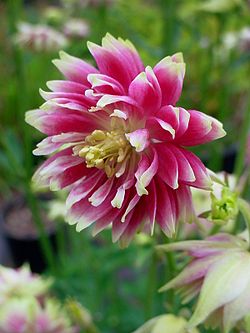
- Botanical Legacy: An Aquilegia cultivar is named in her honor.
Scientific Career and Research
Barlow’s academic journey began at the University of Cambridge, where she studied botany under Frederick Blackman. Between 1904 and 1906, she transitioned into the then-nascent field of genetics—the study of heredity and variation in organisms—under the guidance of William Bateson. During this period, she was an active member of the Cambridge University Genetics Society.
Studies in Plant Genetics
A significant portion of Barlow's early research focused on heterostylism, a phenomenon where plants of the same species exhibit different physical forms (such as varying stamen and style lengths) to facilitate cross-pollination. Working with Bateson, she published influential papers in 1913 and 1923 regarding the inheritance of these forms in primrose species, drawing upon the foundational observations made by her grandfather.
Even after her marriage, Barlow remained deeply connected to the scientific community. She served as a research assistant at the John Innes Institute and continued her studies through controlled cross-pollinations, including work with Aquilegia (columbine). In 1919, she became one of the founding members of the Genetics Society, maintaining professional ties with prominent scientists like Ronald Fisher.
Preserving the Darwinian Legacy
In her later years, Barlow became a preeminent Darwinian scholar. She dedicated much of her life to the Darwin Industry, a movement of scholarly research into the life and scientific discoveries of Charles Darwin. Her editorial work was crucial in correcting historical omissions.
One of her most significant contributions was publishing an unexpurgated version of The Autobiography of Charles Darwin. Previously, the text had been edited by her cousin, Francis Darwin, who had removed certain personal and religious passages. By restoring these elements, Barlow provided a more complete and authentic portrait of the naturalist.
Major Editorial Works
- Charles Darwin's Diary of the Voyage of HMS Beagle (1933)
- Charles Darwin and the Voyage of the Beagle (1946)
- The Autobiography of Charles Darwin, 1809–1882 (1958)
- Darwin's Ornithological Notes (1963)
- Darwin and Henslow: The Growth of an Idea (1967)
Personal Life and Family
Born to Sir Horace Darwin and The Hon. Ida, Lady Darwin, Nora grew up in a family deeply rooted in science. In 1911, she married Alan Barlow, the son of the Royal Physician Sir Thomas Barlow. The couple had six children, including Sir Thomas Erasmus Barlow, 3rd Baronet.
Her life was marked by both scientific achievement and personal resilience. She navigated the loss of her brother, Erasmus, during the Second Battle of Ypres in 1915, and later provided care for her cousin Gwen Raverat's daughters. Following her husband's knighthood in 1938, she became known as Lady Barlow.
Summary of Life and Contributions
| Category | Details |
|---|---|
| Lifespan | 1885 – 1989 (103 years) |
| Education | University of Cambridge |
| Spouse | Alan Barlow |
| Key Research Subject | Heterostylism in primroses |
| Scientific Societies | Genetics Society (Founder) |
Frequently Asked Questions
What was Nora Barlow's primary scientific focus?
Her primary research focused on plant genetics, specifically the phenomenon of heterostylism within the primrose family.
How did she contribute to Charles Darwin's legacy?
She acted as a key editor for his works, most notably publishing an unexpurgated version of his autobiography and editing various collections of his letters and notebooks.
Is there a plant named after her?
Yes, a cultivar of Aquilegia vulgaris (columbine) named 'Nora Barlow' was discovered in her garden in the early 1980s.
What was her connection to the John Innes Institute?
She worked as a research assistant at the institute starting in 1905 and continued to visit every summer to observe plant growth.
Was she involved in the founding of any scientific societies?
Yes, she was among the founders of the Genetics Society in 1919.