Ninian Smart: A Pioneer of Global Religious Studies
Ninian Smart was a transformative figure in academia who helped shift the study of faith from a narrow theological focus to a broad, multidisciplinary field known as Religious Studies. By treating religions as complex worldviews rather than mere sets of doctrines, Smart championed a value-free approach to understanding the diverse spiritual traditions of humanity.
Key Facts
- Academic Legacy: Established the first major department of Religious Studies at Lancaster University.
- Global Reach: Held prestigious professorships at both Lancaster University and the University of California, Santa Barbara.
- Core Philosophy: Promoted the concept of religions as "worldviews," avoiding the elevation of any single "truth" as a criterion for authenticity.
- Activism: Advocated for the inclusion of world religions in the UK state school curriculum.
- Major Honors: Served as President of the American Academy of Religion and received numerous honorary doctorates.
Academic Journey and Career Milestones
Smart's career began in the early 1950s at the University of Wales, followed by a pivotal year as a visiting lecturer at Yale University. During his time at Yale, he immersed himself in the study of Sanskrit and Pāli—the primary language of Buddhist scriptures—which laid the groundwork for his comparative approach to faith.
In 1961, at the remarkably young age of 34, Smart was appointed the first H. G. Wood Professor of Theology at the University of Birmingham. While his title was in theology, his work began to pivot toward the emerging field of Religious Studies. His influence at Birmingham helped transition the department from an exclusive focus on Christianity to a more inclusive study of world religions, a path continued by his successor, John Hick.
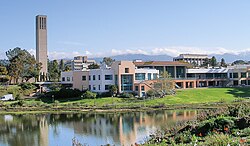
Seeking a tabula rasa (a clean slate) to implement his academic visions, Smart joined Lancaster University in 1967 as the Foundation Professor of Religious Studies. He later balanced his time between the UK and the United States, joining the University of California, Santa Barbara (UCSB) in 1976. At UCSB, he eventually became the first J. F. Rowny Professor in the Comparative Study of Religions and was later named a research professor, the institution's highest academic honor.
Teaching Style and Personality
Beyond his formidable intellect, Smart was beloved by his students for his accessibility. At Lancaster, he was known for engaging in informal, unpretentious debates over a pint at the local bar. At Santa Barbara, he became a campus icon, often wearing his traditional Scottish kilt, riding his bicycle slowly, and sporting a signature bow tie and flower in his lapel.
Contributions to Scholarship and Activism
Smart's intellectual contributions were disseminated through prestigious lecture series and publications. He delivered the Heslington Lectures at the University of York, which evolved into Secular Education and the Logic of Religion (1967), and the renowned Gifford Lectures, published as Beyond Ideology (1981).
His activism was driven by the conviction that global peace depends on an improved understanding of the "religious and cultural Other." He worked extensively to reform the UK's mandatory religious education in state schools, distinguishing between teaching about religion (academic study) and faith-nurture (spiritual guidance).
Smart also engaged with global interfaith movements, serving as president of the Inter Religious Federation for World Peace and participating in the Assembly of the World's Religions. He viewed new religious movements as a natural result of globalization and applied his "worldview" framework to both religious and non-religious ideologies.
Summary of Academic and Professional Appointments
| Institution | Role/Title | Period/Year |
|---|---|---|
| University of Wales | Teacher | 1952–1955 |
| University of Birmingham | H. G. Wood Professor of Theology | 1961 |
| Lancaster University | Foundation Professor of Religious Studies | 1967 |
| UC Santa Barbara | J. F. Rowny Professor | 1988 (Prof. since 1976) |
| American Academy of Religion | President | Late Career |
Honors and Final Years
Throughout his life, Smart was recognized with honorary doctorates from institutions including the University of Glasgow, Stirling University, and the University of Kelaniya in Sri Lanka. He was also granted an Honorary Fellowship from the Queen's College, Oxford, in 1999.
Though he officially retired from Lancaster in 1982 and Santa Barbara in 1998, he remained an active professor emeritus at both. Ninian Smart passed away in 2001 at the age of 73 following a massive stroke.
Frequently Asked Questions
What is the difference between Theology and Religious Studies according to Smart's career?
While theology often focuses on the study of God from within a faith tradition, Smart helped pioneer Religious Studies as a secular, comparative field that examines religions as human phenomena and worldviews without assuming a specific theological truth.
What did Ninian Smart mean by "worldviews"?
Smart used the term "worldviews" to describe religious and non-religious systems of belief. He preferred this term because it does not imply that theism (belief in a god) is an essential element, allowing for the study of diverse ideologies.
How did Smart influence education in the United Kingdom?
He advocated for broadening the public religious education curriculum to include world religions rather than focusing solely on Christianity, and he helped define the boundary between academic instruction and faith-nurture.
Which languages did Ninian Smart study to aid his research?
During his time as a visiting lecturer at Yale University, Smart studied Sanskrit and Pāli, the latter being the language used in Buddhist scriptures.
What was Smart's approach to "truth" in religious studies?
He employed a value-free approach, meaning he refrained from using any single understanding of "truth" as a criterion to judge the authenticity of different religions.