News Letter: A History of Belfast's Oldest Newspaper
Founded in 1737, the News Letter stands as a cornerstone of Irish journalism. From its humble beginnings in a narrow Belfast alley to its role as a witness to global revolutions and local conflict, the publication has documented nearly three centuries of history. Its journey reflects the evolution of the printing industry, the political shifts of Ireland, and the resilience of the press in the face of adversity.
The Founding and Early Years
The newspaper was established by Francis Joy, a man of Huguenot descent—French Protestants who fled religious persecution. Joy arrived in Belfast from the village of Killead in County Antrim, where he established himself as an attorney after marrying the daughter of the town sovereign, the local mayor.
In 1737, Joy acquired a small printing press to settle a debt and used it to launch the town's first newspaper on Bridge Street. The publication was first printed in Joy's Entry, one of the narrow alleys in Belfast's city centre. Today, this location is home to Henry's Pub, named after Henry Joy McCracken, a leading member of the republican Society of the United Irishmen and the grandson of Francis Joy.
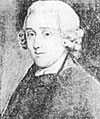
The Joy family expanded their influence by purchasing a paper mill in Ballymena, allowing them to produce enough paper to supply not only their own publication but the entire province of Ulster. While the paper initially published three times weekly, it transitioned to a daily format in 1855.
A Witness to Global History
The archives of the News Letter provide a fascinating glimpse into the past. The earliest surviving edition dates to 3 October 1738 (14 October in the modern calendar), featuring reports on highway robberies and livestock theft. On a global scale, it is one of the few remaining newspapers that reported on the US Declaration of Independence in late August 1776. Over its lifespan, the paper has seen the tenure of 10 monarchs and 77 different prime ministers.
The News Letter During the Troubles
The publication's history is inextricably linked to the political turmoil of Northern Ireland. During the period known as The Troubles—the ethno-nationalist conflict in Northern Ireland—the newspaper became a target of violence.
On 20 March 1972, the IRA bombed the newspaper's offices on Donegall Street. In a calculated move, two false alarms were phoned into Church Street to evacuate people toward the actual bomb. The device detonated at 11:58 am, three minutes after a genuine warning had been issued. The attack resulted in seven deaths and over 140 injuries, including members of the staff. Despite the tragedy, the News Letter continued its operations, publishing the following day.
Today, the paper maintains an editorial line that frequently highlights the scale of paramilitary bloodshed during the Troubles and the fact that the vast majority of those crimes remain unsolved.
Modern Operations and Digital Transition
In the contemporary era, the News Letter has shifted its business model toward a subscription-based system. This includes home delivery for print editions and digital access for mobile devices and laptops. The website employs a paywall, granting users five free articles per week before requiring a subscription.
The paper's digital growth was notable in the second half of 2016, when it became the fastest-growing regional news site in the UK. For researchers and historians, digitised copies dating back to 1828 are available via the British Newspaper Archive, and physical archives are accessible at the Belfast Newspaper Library.
Ownership Changes and the Iconic Media Group
The ownership of the News Letter has undergone significant changes in recent years. After being part of the Johnston Press/JPIMedia business acquired by National World in 2020, the company underwent a major transition in 2024 and 2025.
In December 2024, National World accepted a takeover offer from Media Concierge, a London-based group led by Malcolm Denmark and owner of Iconic Newspapers. The deal valued National World at £65.1 million. By 27 May 2025, the acquisition was effective, and National World was delisted from the London Stock Exchange. The company was renamed Iconic Media Group Limited, and in October 2025, its regional titles were rebranded under the "Iconic" name.
Financial reports for the nine months ending 30 September 2025 showed a turnover of £52.1 million and a pre-tax loss of approximately £3.6 million, attributed to restructuring and acquisition costs. In 2026, the group further expanded by acquiring the 13 titles of the Dungannon-based Alpha Newspaper Group, associated with Lord Kilclooney.
Key Facts
- Founded: 1737 by Francis Joy in Belfast.
- Historical Milestone: Reported on the US Declaration of Independence in August 1776.
- Frequency: Started three times weekly; became a daily in 1855.
- Tragedy: Offices bombed by the IRA on 20 March 1972, killing seven people.
- Current Owner: Iconic Media Group Limited (as of May 2025).
- Digital Access: Archives available from 1828 via the British Newspaper Archive.
| Category | Details |
|---|---|
| Founder | Francis Joy |
| First Printed Location | Joy's Entry, Belfast |
| Earliest Surviving Issue | 3 October 1738 |
| Parent Company | Iconic Media Group Limited |
| Digital Model | Subscription with limited free articles (Paywall) |
Frequently Asked Questions
Who founded the News Letter?
The News Letter was founded in 1737 by Francis Joy, an attorney of Huguenot descent who had moved to Belfast from Killead, County Antrim.
How did the paper survive the 1972 bombing?
Despite a devastating IRA bomb that killed seven people and injured over 140 at the Donegall Street offices, the newspaper demonstrated resilience by publishing its next edition the very next day.
Where can I find old copies of the News Letter?
Digitised copies from 1828 onwards are available at the British Newspaper Archive. Physical copies can be accessed at the Belfast Newspaper Library, attached to the Belfast Central Library.
Who currently owns the News Letter?
The paper is owned by Iconic Media Group Limited, which took over National World (the previous owner) in May 2025.
What is the current digital access model?
The News Letter uses a paywall system where users can read five articles per week for free, while other content requires a paid digital subscription.