Newark Liberty International Airport
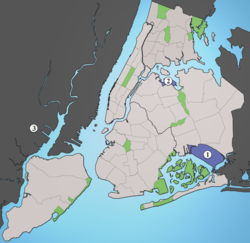
Newark Liberty International Airport (EWR) serves as a critical gateway for the New York metropolitan area and North Jersey. Operated by the Port Authority of New York and New Jersey, this public airport has evolved from its 1928 origins into one of the busiest aviation hubs in the United States. Strategically located to serve millions of passengers annually, it provides essential connectivity between the East Coast of the U.S. and the rest of the world.
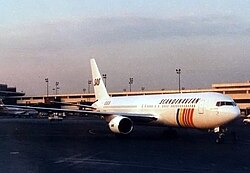
The airport is a primary hub for United Airlines and FedEx Express, facilitating a massive volume of both passenger and cargo traffic. Its proximity to Manhattan and Jersey City makes it a preferred choice for travelers seeking access to the New York City region.
Key Facts
- Opened: October 2, 1928.
- Ownership: Cities of Newark and Elizabeth.
- Operator: Port Authority of New York and New Jersey.
- 2025 Passenger Volume: 47,000,085 passengers.
- Primary Hubs: United Airlines and FedEx Express.
- Total Area: 2,027 acres.
Historical Evolution
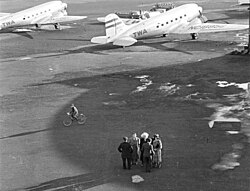
Since its opening nearly a century ago, Newark Airport has witnessed the transformation of global aviation. In its early years, it was a center of activity for pioneering figures; for instance, Albert Einstein was documented at the airport as early as 1939.
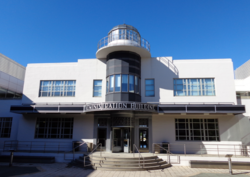
The airport's history is marked by significant milestones, including its role during World War II and subsequent periods of redevelopment. A notable piece of its heritage is Building One, a historic structure that was moved and restored in 2000 to preserve the airport's architectural legacy.
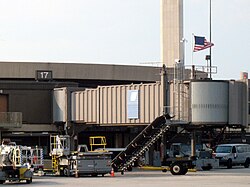
The 21st century brought both tragedy and growth. The airport was a site of profound historical significance during the September 11 attacks, specifically at the old Terminal A, where United Airlines Flight 93 departed. While much of that gate area was demolished by 2022, the jetway for Gate A17 was preserved as a memorial.
Airport Facilities and Infrastructure
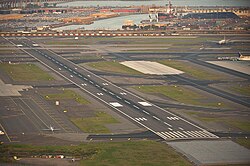
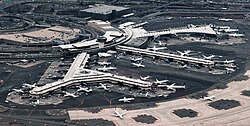
Newark Liberty operates a complex infrastructure designed to handle high-capacity air traffic. The airport features three main runways and a dedicated helipad (H1) for vertical takeoff and landing aircraft.
Runways and Technical Specifications
The runways are constructed from asphalt and concrete, with grooved surfaces to improve safety and traction:
- 4L/22R: 11,000 feet (3,353 m)
- 4R/22L: 9,999 feet (3,048 m)
- 11/29: 6,725 feet (2,050 m)
Terminal Operations
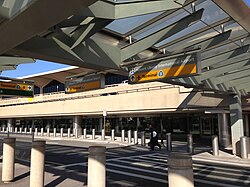
The airport is organized into three primary terminals, each serving different airline groups and passenger needs:
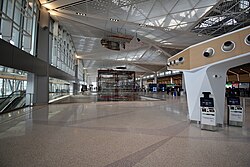
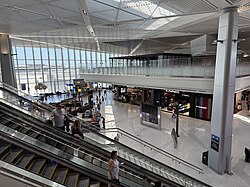
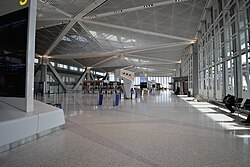
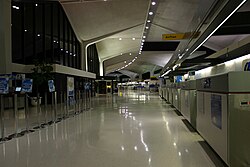
- Terminal A: Recently undergone a massive redevelopment, the new Terminal A (opened in 2023) offers state-of-the-art facilities and a modern passenger experience.
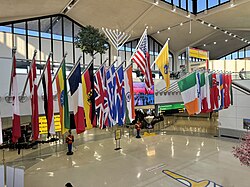
- Terminal B: Serves a diverse array of international and domestic carriers, featuring flags of various served nations.
- Terminal C: A major hub for United Airlines, featuring extensive lounge facilities and high-volume boarding areas.
Transportation and Connectivity
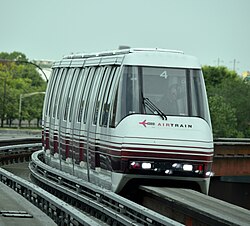
To manage the flow of millions of travelers, EWR integrates several ground transportation options. The AirTrain system provides the primary link between terminals and external transit hubs.
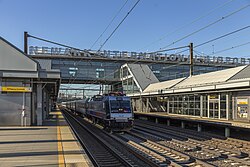
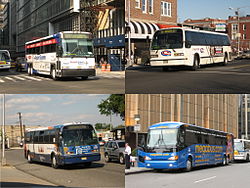
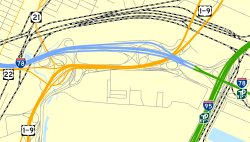
Passengers can access the airport via NJ Transit rail services, as well as various bus lines including Olympia Trails and Trans-Bridge Lines. For motorists, the Newark Airport Interchange manages the complex road access to the facility.
Global Reach and Statistics
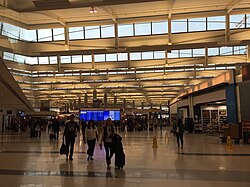
Newark Liberty is a powerhouse of international connectivity. Its top domestic destinations include Orlando, Los Angeles, and San Francisco, while London-Heathrow and Toronto-Pearson lead its international traffic.
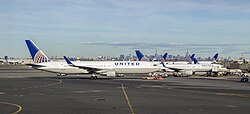
The airport's dominance is highlighted by the carrier share, with United Airlines handling approximately 67.9% of all passengers. In addition to passenger travel, the airport is a vital cargo link, with FedEx Express and UPS Airlines managing hundreds of thousands of tons of freight annually.
| Category | Detail |
|---|---|
| IATA/ICAO Codes | EWR / KEWR |
| Annual Passengers (2025) | 47,000,085 |
| Annual Cargo (2025) | 679,097 US tons |
| Total Runways | 3 |
| Primary Carrier | United Airlines (67.9% share) |
| Elevation | 5 m (16 ft) AMSL |
Frequently Asked Questions
Which airlines have the largest presence at Newark Airport?
United Airlines is the dominant carrier at EWR, holding a 67.9% market share of passengers. Other significant carriers include Spirit, Delta, American, and JetBlue.
What are the main transportation options to get to the airport?
Travelers can use the AirTrain for internal transit, NJ Transit for rail access, and various bus services such as Olympia Trails and Trans-Bridge Lines.
How many runways does Newark Liberty International Airport have?
The airport has three runways: 4L/22R (11,000 ft), 4R/22L (9,999 ft), and 11/29 (6,725 ft).
What is the significance of the new Terminal A?
The new Terminal A represents a multi-billion dollar redevelopment project designed to modernize the passenger experience with upgraded facilities and improved efficiency, replacing the old terminal that operated from 1973 to 2023.
Is Newark Airport a cargo hub?
Yes, it is a major cargo hub, specifically serving as a hub for FedEx Express, and handling significant shipments via UPS Airlines and other cargo carriers.