New Zealand Rock Wren: The Rare Alpine Specialist of the South Island
High among the rugged peaks and rocky outcrops of New Zealand's South Island lives one of the world's most specialized avian species: the New Zealand rock wren (Xenicus gilviventris). Known to the Māori as pīwauwau ("little complaining bird"), mātuitui, or tuke ("twitch"), this small bird is a testament to evolutionary adaptation in extreme environments. As the only truly alpine bird in New Zealand, it has carved out a niche in the high-altitude wilderness where few other species can survive.
The rock wren belongs to the family Acanthisittidae (New Zealand wrens). Along with the rifleman, it is one of only two surviving members of this family. Its closest relatives, the stout-legged wren and the bushwren, are now extinct.
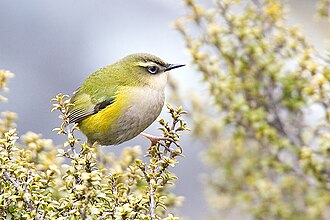
Key Facts
- Conservation Status: Endangered (IUCN 3.1).
- Habitat: Alpine and subalpine zones (900–2500 m) of the South Island.
- Physical Traits: Small, almost tailless, with rounded wings and long legs.
- Diet: Primarily ground-dwelling invertebrates, occasionally berries, seeds, and nectar.
- Behavior: Highly terrestrial; prefers hopping and running over flying.
- Recognition: Voted New Zealand Bird of the Year for 2022.
Physical Description and Characteristics
The New Zealand rock wren is a diminutive bird, typically measuring about 9 centimeters (3.5 inches) in length. It is characterized by its almost tailless appearance and long legs, which it uses to navigate rocky terrain. Because it is a poor flier, it rarely ascends more than 2 meters off the ground or travels more than 30 meters in a single flight.
There is a slight sexual dimorphism in their appearance. Males generally exhibit greenish plumage with yellow flanks and a pale underside, while females tend to be browner. However, these differences can vary depending on the geographic region.
| Feature | Detail |
|---|---|
| Average Length | ~9 cm (3.5 in) |
| Male Weight | ~16 g |
| Female Weight | ~20 g |
| Altitude Range | 900 to 2,500 meters |
| Clutch Size | Approximately 3 eggs |
Distribution and Alpine Habitat
Currently, the rock wren is restricted to the alpine and subalpine zones of the South Island, specifically within the Southern Alps, the Victoria Range of Westland, and the Tasman Mountains of Northwest Nelson. While subfossil remains suggest they once inhabited lowland forests before Polynesian settlement, they are now confined to high-altitude regions where sheltering rocks and dense vegetation provide cover.
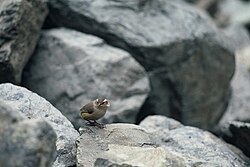
Unlike many other alpine birds, the rock wren does not migrate to lower elevations during the winter. Instead, it survives the harsh cold by foraging and sheltering in rockfalls beneath the snow layer.
Behavior and Breeding
The rock wren is highly terrestrial, spending most of its time hopping and running with a distinctive bobbing motion and frequent wing flicks. Its vocalization consists of three high-pitched notes, and mated pairs are known to perform duets.
Pairs maintain a year-round territory and collaborate to build a large, enclosed nest featuring an entrance tunnel. These nests are famously lined with feathers collected from other bird species. In one instance from the 1930s, a single nest contained 791 feathers, primarily from weka, but also including feathers from the kākāpō, kea, kererū, and kiwi. Because of this habit, researchers sometimes check rock wren nests for kākāpō feathers to track the presence of the endangered parrot.
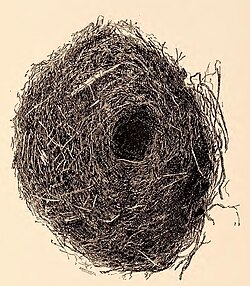
Breeding occurs in late spring, with eggs incubated for three weeks. Once hatched, chicks take approximately 24 days to fledge and remain dependent on their parents for food for at least four weeks.
Conservation Challenges and Recovery
Despite early 20th-century beliefs that the rock wren's remote habitat would protect it from invasive species, the bird is now listed as Endangered. The primary threats are introduced mammals, specifically stoats and mice, which prey on eggs and young birds. A study in the upper Hollyford revealed that stoats were responsible for the predation of most nests.
Population trends have been concerning; for example, the Murchison Mountains saw a 44% decline in abundance over a 20-year period. Additionally, climate change poses a long-term risk, as rising temperatures may allow rats to migrate higher into the mountains.
Conservation efforts have shown promise. Predator trapping has been linked to improved egg hatching and fledgling rates. Furthermore, between 2008 and 2010, 40 rock wrens were translocated to Secretary Island, a rodent-free sanctuary in Fiordland. By 2010, the discovery of unbanded birds indicated that the translocated population was breeding successfully.
Frequently Asked Questions
Why is the New Zealand rock wren considered a poor flier?
The rock wren has evolved rounded wings and long legs suited for a terrestrial lifestyle. It prefers to hop and run across scree and rockfalls, rarely flying more than 2 meters high or 30 meters in distance.
What do New Zealand rock wrens eat?
Their diet consists mainly of invertebrates found on the ground. However, they are opportunistic and will occasionally eat seeds, berries, and nectar from flax flowers.
How do rock wrens survive the winter in the mountains?
Unlike many alpine species that migrate to lower altitudes, rock wrens remain in their high-altitude habitats, sheltering and foraging within rockfalls beneath the snow layer.
Why are their nests important for other species' conservation?
Because rock wrens collect feathers from various other birds to line their nests, conservationists can analyze these feathers to detect the presence of rare or endangered species, such as the kākāpō, in specific areas.
What is the main threat to the rock wren's survival?
The most immediate threats are introduced predators, particularly stoats and mice, which prey on their young and eggs. Climate change is also a concern as it may enable rats to reach higher alpine altitudes.