New York City Landmarks Preservation Commission: A History of Saving the City's Soul
The architectural landscape of New York City is a living museum, where towering glass skyscrapers stand alongside century-old brownstones. This coexistence is not accidental but the result of a long, often contentious struggle to balance urban development with the preservation of history. At the center of this effort is the Landmarks Preservation Commission (LPC), the agency tasked with identifying and protecting the city's most significant architectural and cultural treasures.
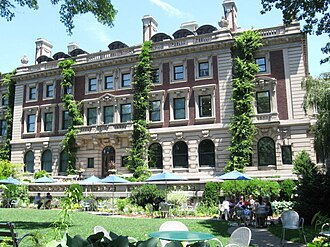
Before the formal establishment of the LPC, preservation was a grassroots effort. As early as 1831, the New York Evening Post voiced opposition to the demolition of a 17th-century house on Pearl Street. For over a century, the survival of historic sites depended entirely on individual advocacy or the creation of house museums. Notable residences like the Andrew Carnegie Mansion and the Morris–Jumel Mansion were saved through these private efforts long before official city protections existed.
The Catalyst for Change
For much of the early 20th century, preservation was largely limited to Colonial-style architecture. Many significant structures were demolished simply because they fell out of architectural favor. However, the 1950s saw a shift in public perception as the city began to recognize the value of architecturally significant structures across various styles.
The turning point came with the demolition of the original Pennsylvania Station between 1963 and 1966. Despite widespread public outcry, the station was razed, an event often described as "architectural vandalism." This loss served as a powerful catalyst, convincing city leaders that a formal legal framework was necessary to prevent the permanent erasure of New York's heritage.
The Creation of the LPC
Mayor Robert F. Wagner Jr. first attempted to address the issue in 1961 with a temporary committee, but it was on April 21, 1962, that he officially formed the Landmarks Preservation Commission. Initially, the LPC had limited enforcement power, which is why it failed to stop the destruction of Pennsylvania Station.
The need for stronger authority became evident when the Brokaw Mansion on the Upper East Side faced potential destruction. In response, LPC member Geoffrey Platt drafted the New York City Landmarks Law. Passed by the City Council on April 7, 1965, and signed by Mayor Wagner on April 20, this law granted the LPC the legal teeth required to designate and protect landmarks.
Early Designations and Growth
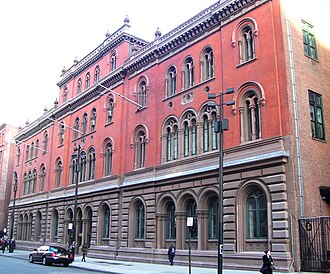
The LPC hit the ground running in 1965. The Wyckoff House in Brooklyn became the first numerically designated landmark, followed quickly by the Astor Library Building and the Bowling Green U.S. Custom House. In November 1965, the commission established its first landmark district: Brooklyn Heights.
Initially, the LPC focused on government buildings and institutions to avoid controversy. However, the agency's scope expanded over time. In 1973, Mayor John Lindsay signed legislation allowing the LPC to designate landmarks on a rolling basis and introduced scenic landmarks (such as Central Park in 1974) and interior landmarks (such as the New York Public Library Main Branch in 1974).
Key Facts
- Founded: April 21, 1962, by Mayor Robert F. Wagner Jr.
- Legal Foundation: The New York City Landmarks Law was signed on April 20, 1965.
- First Landmark: The Wyckoff House in Brooklyn.
- First District: Brooklyn Heights Historic District (November 1965).
- Major Victory: The 1978 Supreme Court ruling in Penn Central Transportation Co. v. New York City saved Grand Central Terminal.
- Cultural Milestone: The Stonewall Inn became the first landmark designated specifically for LGBT cultural significance in 2015.
Evolution of Preservation Efforts
Over the decades, the LPC has evolved from a small group of unsalaried members to a sophisticated agency. Its impact is reflected in the numbers: by 2016, the commission had designated 1,355 individual landmarks, 117 interior landmarks, 10 scenic landmarks, and 138 historic districts.
| Mayor | Period | Avg. Landmarks per Year |
|---|---|---|
| Michael Bloomberg | 2002–2023 | 26 |
| Bill de Blasio | 2014–2021 | 16 |
| Eric Adams | 2022–2025 | 10 |
The Battle for the Theater District
One of the most complex challenges faced by the LPC was the preservation of the Theater District in the 1980s. Following the loss of the Helen Hayes and Morosco theaters, the LPC sought to protect nearly 50 theaters. This led to a legal battle with major theatrical operators—including the Shubert, Nederlander, and Jujamcyn organizations—who argued that landmark status limited their ability to modify theaters for new productions. The New York Supreme Court and eventually the U.S. Supreme Court upheld the designations, ensuring the survival of the district's unique character.
Controversies and Cultural Gaps
Not all preservation efforts have been successful. The LPC has faced criticism for declining to protect sites of cultural rather than architectural significance. For example, the "Save Our Seaport Coalition" fought to protect the New Market Building for its WPA Moderne architecture and history as a fish market, but the LPC declined to hold a hearing in 2013.
Similarly, advocates for "Little Syria" in Lower Manhattan have struggled to preserve the neighborhood's ethnic heritage. While the St. George's Syrian Catholic Church was successfully landmarked in 2009, the LPC declined to protect the Downtown Community House and 109 Washington Street, citing a lack of sufficient architectural significance compared to other examples in the city.
Frequently Asked Questions
What event led to the creation of the NYC Landmarks Law?
The demolition of Pennsylvania Station between 1963 and 1966 served as the primary catalyst, sparking widespread public outcry and a demand for legal protections for the city's architecture.
What is the difference between a scenic and an interior landmark?
A scenic landmark protects a visually significant landscape or open space, such as Central Park. An interior landmark protects the specific architectural or historical features inside a building, such as the interior of the New York Public Library Main Branch.
How did the Supreme Court impact Grand Central Terminal?
In the 1978 case Penn Central Transportation Co. v. New York City, the U.S. Supreme Court upheld the LPC's authority to prevent the railroad from building an office tower atop the terminal, cementing the legality of landmark protections.
Can a building be a landmark if it isn't architecturally unique?
Yes. While many landmarks are chosen for architecture, some are designated for cultural significance. The Stonewall Inn, for example, was designated in 2015 specifically for its importance to LGBT history.
Why are some historic buildings, like those in Little Syria, not landmarked?
The LPC may decline designation if they believe the buildings lack sufficient architectural or historical significance, or if they feel better examples of that specific building type (such as tenements) exist elsewhere in the city.