New York City English: The Phonetics and Evolution of a Famous Accent
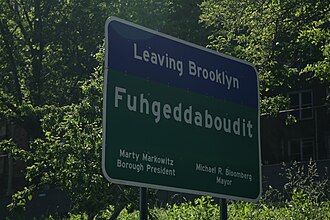
The sound system of New York City English, popularly known as the New York accent, is one of the most recognizable dialects in the United States. Its distinctiveness is amplified by widespread stereotypes and frequent portrayals in film, radio, and television. While locals often distinguish between a "Brooklyn accent," "Bronx accent," "Queens accent," or "North Jersey accent," linguistic research suggests these are generally variations of a single metropolitan dialect rather than distinct linguistic entities.
Unlike the accents found in the rest of New York State, which typically align with Inland Northern U.S. accents, the NYC dialect possesses a unique phonological structure that reflects the city's complex history of immigration and social stratification.
Key Facts
- Unified Dialect: Despite popular belief, there is no scientific evidence for meaningful geographic differences between the accents of the various NYC boroughs.
- Non-Rhoticity: The accent is traditionally known for non-rhoticity, where the /r/ sound is omitted at the end of syllables (e.g., "car" sounding like "cah").
- Social Influence: Variation in the accent is more closely tied to social class and ethnicity than to specific neighborhoods.
- Generational Shift: Younger speakers (born after 1950) are increasingly rhotic, adopting sounds closer to General American English.
Vowel Structures and Variations
The NYC accent is characterized by specific realizations of vowels, known as monophthongs (pure vowels) and diphthongs (gliding vowels). One of the most notable features is the treatment of the caught vowel, which is traditionally raised in NYC speech.
The NURSE Vowel and the "Toity-Toid" Stereotype
A common stereotype of the New York accent is the use of a front-rising diphthong in words containing the /ɜːr/ sound (the NURSE vowel), leading to phrases like "toity-toid" instead of "thirty-third." In reality, this is an unrounded [əɪ] sound. Research by William Labov in 1966 showed that this variant was already recessive among speakers under 20 at that time, though it lingered among older generations.
Vowel Fronting and Mergers
Unlike the Philadelphia accent, New York City English generally does not exhibit fronting of the /oʊ/ (as in goat) or /u/ (as in goose) vowels. However, recent trends show a cot-caught merger (where the vowels in these two words become identical) among younger residents of Queens, particularly those with foreign parentage.

Consonant Articulation
The NYC accent employs specific consonant patterns that contribute to its unique rhythm and sound.
Alveolar Consonants
The consonants /t/, /d/, /n/, and /l/ are often articulated with the tongue blade rather than the tip. In some cases, /t/ and /d/ are pronounced with the tongue touching the teeth, which can make words like "three" and "tree" sound nearly identical.
The "Dark L"
The accent consistently uses the dark L [ɫ], a common feature across the U.S. In New York City, this dark L is often present even in the initial position of a word, except among Latino speakers.
Social and Ethnic Variability
Linguistic variation in New York City is driven more by identity and heritage than by geography. The influx of Eastern European Jewish and Italian immigrants in the early 20th century significantly shaped the city's speech patterns.
- Jewish-American influence: Research indicates a higher likelihood of using specific variants of /ɔ/ and fully released final stops (e.g., pronouncing the 't' in "sent" clearly).
- Italian-American influence: These speakers were more likely to use specific variants of /æ/ (tending toward [ɪə]).
Today, these distinctions are becoming less pronounced as younger generations across different ethnic backgrounds converge toward a more unified city-wide speech pattern.
Summary of NYC Phonological Features
| Feature | Description | Example/Effect |
|---|---|---|
| Non-Rhoticity | Omission of /r/ at the end of syllables | "Car" $\rightarrow$ [kɑː] |
| Raised Caught Vowel | Higher articulation of the /ɔ/ sound | Distinct from "cot" |
| Dark L | Velarized /l/ sound | Used even in initial positions |
| Dentalization | Tongue touching teeth for /t/ and /d/ | "Three" and "Tree" homophones |
Frequently Asked Questions
Is there a real difference between a Brooklyn and a Bronx accent?
While popular culture suggests they are different, linguistic research fails to find specific features that vary based on these geographic locations. The perceived differences are usually the result of social class or ethnic variation.
What is the "toity-toid" pronunciation?
It is a stereotypical representation of the NURSE vowel (/ɜːr/) being pronounced as an unrounded diphthong [əɪ]. While common in old stereotypes, it is very rare among younger New Yorkers.
Why is the New York accent changing?
The accent is evolving due to generational shifts, with younger speakers adopting more rhotic sounds (pronouncing the /r/) and some experiencing the cot-caught merger, influenced by global trends and diverse parentage.
How did immigration affect the NYC accent?
Large waves of Italian and Jewish immigrants in the early 1900s introduced specific vowel shifts and consonant habits that became integrated into the general metropolitan dialect.