Neoliberalism: The Ideology of Free-Market Capitalism and Its Global Impact
Neoliberalism is a political and economic ideology that champions free-market capitalism. While the term is often used pejoratively in modern discourse, it describes a profound societal transformation driven by market-based reforms. Since the late 20th century, neoliberalism has moved from the fringes of economic thought to become a dominant force in global policy-making.
At its core, the neoliberal project seeks to increase the role of the private sector in both the economy and society. This is achieved through a specific set of economic liberalization policies designed to reduce state intervention and empower market mechanisms.
Key Facts
- Primary Goal: To shift economic control from the public sector to the private sector.
- Core Policies: Includes privatization, deregulation, lower taxes, and austerity.
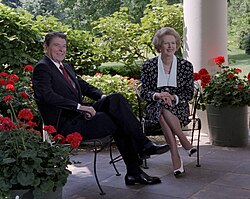
- Key Figures: Popularized by leaders such as Ronald Reagan and Margaret Thatcher.
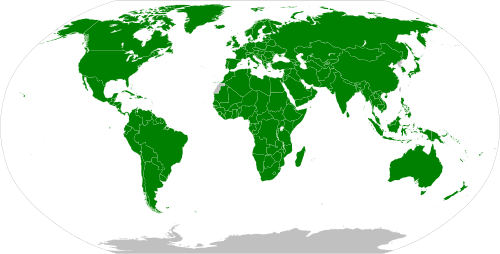
- Global Reach: Implemented across diverse regions including North America, Latin America, Europe, and the Asia-Pacific.
- Theoretical Roots: Influenced by the Austrian School and the Chicago School of economics.
The Pillars of Neoliberal Policy
Neoliberalism is not a single theory but a collection of policies aimed at economic liberalization—the process of reducing government regulations and restrictions in the economy. These policies typically include:
- Privatization: Transferring ownership of public services or state-owned enterprises to private companies.
- Deregulation: Removing government rules that constrain business operations.
- Austerity: Implementing strict reductions in government spending to lower budget deficits.
- Monetarism: A focus on controlling the money supply to manage inflation.
- Labor Market Flexibilization: Reducing protections for workers to make it easier for companies to hire and fire employees.
Historical Evolution and Global Spread
![Pamphlet calling for a protest of economic policy in 1983 following the economic crisis[115][116]](/images/f7/11/f7115d1aeb81469e34b427bfcf0b3a49c256f8b03826445236a78f0bca02ad90.jpg)
The origins of neoliberalism can be traced back to early intellectual gatherings, such as the Walter Lippmann Colloquium and the formation of the Mont Pelerin Society. These groups sought to create an alternative to the state-led economic models that prevailed after the Great Depression.
![Per capita income during the Great Depression[76]](/images/fd/6e/fd6e3b543be035bd2e3a4aa8b2f1fbc0b21b2e3016f33a3917215a0a1441a613.webp)
Implementation in the West
In the United Kingdom and the United States, neoliberalism gained mainstream political power in the 1980s. The policies of Margaret Thatcher and Ronald Reagan emphasized tax cuts, the breaking of labor unions, and a reduction in the welfare state.
Impact in Latin America and Asia
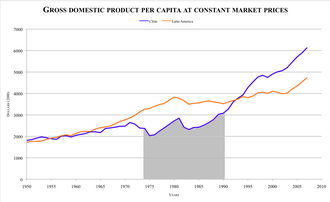
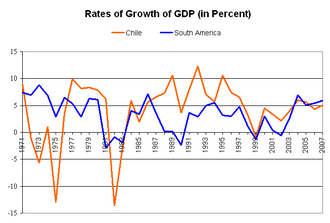
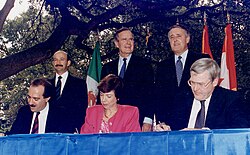
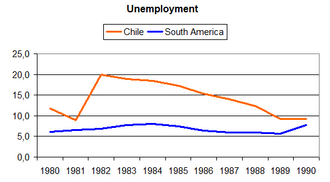
Neoliberal reforms were often applied aggressively in Latin America, most notably in Chile under the Pinochet regime, where "shock therapy" (rapid, drastic economic changes) was utilized. Similar trends appeared in Peru, Argentina, Mexico, and Brazil. In the Asia-Pacific region, countries like China, Taiwan, Japan, South Korea, Australia, and New Zealand adopted various forms of market liberalization to integrate into the global economy.
Theoretical Foundations
Neoliberalism draws from several distinct schools of economic thought:
- The Austrian School: Emphasizes individual action and the efficiency of the price mechanism.
- The Chicago School: Promotes monetarism and the removal of barriers to trade.
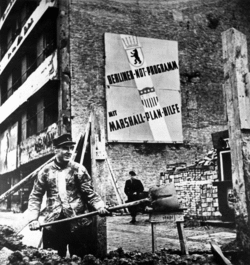
- The Washington Consensus: A set of standard policy prescriptions for developing countries facing economic crises, often mandated by international organizations.
Criticisms and Societal Consequences
Critics argue that neoliberalism leads to market fundamentalism—the belief that markets can solve all social and economic problems. This has led to several documented concerns:
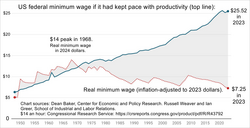
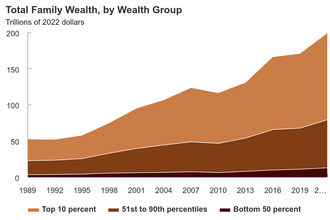
- Inequality: A significant increase in wealth concentration at the top of the economic ladder.
- Financialization: The increasing influence of financial markets over the real economy.
- Social Impact: Critics link neoliberal policies to mass incarceration and the erosion of public health systems.
- Environmental Degradation: The prioritization of growth and deregulation over environmental protections.
![United States incarceration rate per 100,000 population, 1925–2014[395][396]](/images/e0/f6/e0f6e64d517e761498ec5d7a5fa5381c90456f78fe365d293c23bda870e2da05.png)
Summary of Neoliberal Characteristics
| Feature | Neoliberal Approach | State-Led Approach |
|---|---|---|
| Public Services | Privatization | Public Ownership |
| Regulation | Deregulation | Strong Oversight |
| Government Spending | Austerity / Reductions | Social Investment |
| Trade | Free Trade / Globalization | Protectionism / Managed Trade |
| Labor | Flexibilization | Strong Union Protections |
Frequently Asked Questions
What is the difference between classical liberalism and neoliberalism?
While both value individual liberty and free markets, neoliberalism is a more modern political project that actively uses the state to create and enforce market mechanisms in all areas of human life, rather than simply leaving the market alone.
Who are the most influential figures associated with neoliberalism?
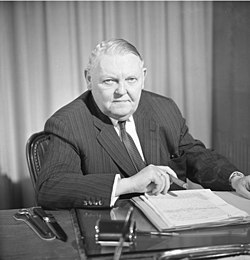
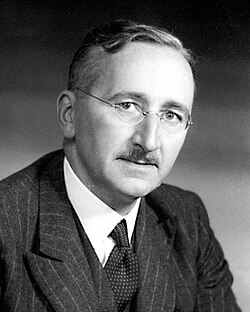
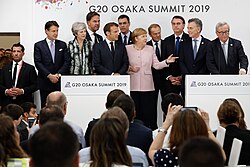
Economically, figures like Friedrich Hayek and Milton Friedman provided the theoretical basis. Politically, Margaret Thatcher in the UK and Ronald Reagan in the US were instrumental in implementing these ideas on a national scale.
What is the "Washington Consensus"?
The Washington Consensus refers to a set of ten economic policy prescriptions—such as fiscal discipline, tax reform, and trade liberalization—that the IMF and World Bank typically required from developing countries in exchange for loans.
How does neoliberalism affect wealth inequality?
Critics argue that by reducing taxes for the wealthy, deregulating financial markets, and cutting social safety nets, neoliberalism facilitates the upward transfer of wealth, leading to increased inequality.
Is neoliberalism still dominant today?
While it remains a powerful force in global institutions, neoliberalism has faced significant challenges in recent years due to economic crises, the rise of economic nationalism, and political opposition to globalization.