Nelly Madison: Life, Legacy, and Influence at Montpelier
Nelly Madison was a woman of intellect and resilience who played a pivotal role in the domestic and civic life of early America. As the mother of President James Madison, her influence extended from the classrooms of her children to the broader efforts of the American Revolution, all while managing the complexities of a vast Virginia estate.
Domestic Leadership and Education
In her adult life, Nelly Madison took a direct role in the intellectual development of her children. She personally oversaw their early education, ensuring they were proficient in the foundational skills of reading, writing, and arithmetic.
Beyond education, she was a central figure in the management of the Montpelier household. This responsibility included overseeing a 2,650-acre estate. The scale of this operation was significant; the family owned several indentured servants and over 100 enslaved persons to maintain the property.
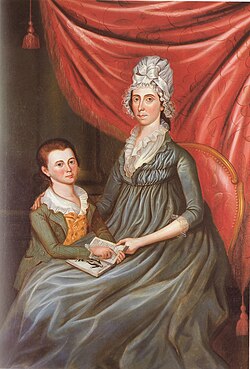
Civic Engagement and the American Revolution
Nelly Madison's contributions extended far beyond the walls of her home. During the American Revolution, while her husband served as a colonel in the Virginia militia and chairman of the Orange County Committee of Safety, Nelly engaged in patriotic fundraising.
She joined a drive among Virginia women to secure funds and supplies for the Continental Army (the official army of the colonies). During this time, she maintained a correspondence with Martha Jefferson. On a national scale, the Ladies Association—of which she was a part—successfully raised $300,000 to provide linen shirts for George Washington's troops.
Intellectual Life and Later Years
Known for her sharp intellect, Nelly Madison was an avid reader who kept herself well-informed on current events and public affairs. Her contemporary, Mary Cutts, described her as a "lady of excellent education, strong mind, and good judgement." Her spiritual life was equally active, as she was a devoted Episcopalian and an admirer of the preacher James Waddel.
After her husband's death in 1801, Nelly continued to live at Montpelier. She resided in her own semi-private wing on the south end of the residence, where she maintained her own household and received visitors. She remained very close to her son, James, and her daughter-in-law, Dolley. During James's presidency from 1809 to 1817, Nelly received a stipend for her health and remained in frequent correspondence with the First Couple.
Key Facts
- Estate Management: Managed the 2,650-acre Montpelier estate, which included over 100 enslaved persons.
- Revolutionary Support: Helped the Ladies Association raise $300,000 for the Continental Army.
- Education: Taught her children reading, writing, and arithmetic.
- Family Ties: Maintained a close relationship with President James Madison and Dolley Madison.
- Intellectual Standing: Recognized for her strong mind, education, and knowledge of public affairs.
| Category | Details |
|---|---|
| Residence | Montpelier (South Wing) |
| Civic Contribution | Fundraising for the Continental Army |
| Family Role | Educator and caregiver |
| Religious Affiliation | Episcopalian |
| Key Associates | Martha Jefferson, James Madison, Dolley Madison |
Frequently Asked Questions
What role did Nelly Madison play during the American Revolution?
Nelly Madison supported the Continental Army by participating in a fundraising drive with other Virginia women. This effort was part of the Ladies Association, which raised $300,000 to purchase linen shirts for the troops.
How did Nelly Madison contribute to her children's education?
She took charge of her children's early schooling, personally teaching them the essentials of reading, writing, and arithmetic.
What was Nelly Madison's relationship with her son and daughter-in-law?
She maintained a very close relationship with James and Dolley Madison. Even after her husband died, she lived in a wing of Montpelier and exchanged frequent letters with them during James's presidency.
How was Nelly Madison described by her peers?
Mary Cutts described her as a woman of excellent education, good judgement, and a strong mind, noting her deep interest in public affairs and current events.
What were the dimensions of the Montpelier estate under her care?
The estate spanned 2,650 acres and was supported by several indentured servants and more than 100 enslaved persons.