Neapolitan Music: From Classical Conservatories to Folk Traditions
Naples has served as a vibrant epicenter for Western European musical traditions for centuries. Its influence spans from the pioneering church-run conservatories of the 16th century to the Baroque masterpieces of Alessandro Scarlatti and the comic operas of Pergolesi, Piccinni, Rossini, and Mozart. Beyond the concert hall, the city's popular music—exemplified by world-famous songs like 'O Sole mio and Funiculì Funiculà—remains a permanent fixture in the global musical consciousness.
Key Facts
- The "Conservatory of Europe": By the 18th century, Naples was a premier global hub for musical training.
- San Carlo Theater: Built in 1737, it remains one of the world's finest musical theaters.
- Canzone Napoletana: A formal genre of composed popular music popularized by the Festival of Piedigrotta.
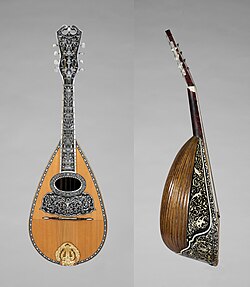
- The Mandolin: The tear-shaped Neapolitan mandolin is a classical instrument, not just a folk tool.
- Sceneggiata: A unique Neapolitan "musical soap opera" performed in local dialect.
The Classical Legacy and the Birth of the Conservatory
In the mid-16th century, the Spanish throne established four church-run institutions in Naples: Santa Maria di Loreto, Pietà dei Turchini, Sant'Onofrio a Capuana, and I Poveri di Gesù Cristo. Originally, these were called conservatories because they "conserved" (sheltered and educated) orphans. Because music was central to their training, the term eventually evolved to mean "music school" across Europe.
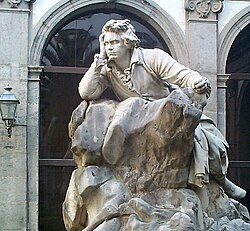
These institutions became vital feeder systems for the commercial music and opera worlds. By the 18th century, Naples was known as the "conservatory of Europe," hosting legendary composers such as Domenico Cimarosa, Bellini, and Donizetti. Even a young Wolfgang Amadeus Mozart visited the region in 1770, composing part of his Symphony No. 11 while resting in Sessa Aurunca during his journey to Naples.
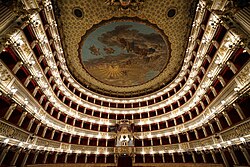
The city also birthed the opera buffa (comic opera) and established the San Carlo Theater in 1737. In 1826, under French rule, the four original conservatories were consolidated into a single institution at the former monastery of San Pietro a Maiella, which continues to operate today as the Royal Academy of Music.
Canzone Napoletana and Folk Traditions
While classical music flourished in theaters, the Canzone Napoletana emerged as the soul of the city's popular identity. This genre became formalized in the 1830s through an annual songwriting competition at the Festival of Piedigrotta. The first winner, Te voglio bene assaie, was composed by the opera master Gaetano Donizetti.
Following the festival's end in 1950, the genre evolved with modern classics like Malafemmena by Totò and Indifferentemente by Mario Trevi.
Traditional Folk Instruments
Distinct from the composed songs is the anonymous folk music of Naples, which utilizes unique percussion instruments:
- Putipù: A drum-like instrument with a membrane and handle that produces a rhythmic "burping" sound.
- Triccaballacca: A wooden clapper with hinged mallets and metal jingles.
- Tammorra: A traditional Neapolitan tambourine featuring a single drum head and perimeter jingles.
The Neapolitan Mandolin
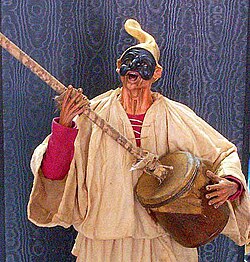
The Neapolitan mandolin is characterized by its tear-shaped bowl back and eight strings tuned in pairs (g, d', a', e'). While often associated with posteggiatori (street musicians who serenade for tips), the instrument has a rigorous classical history. Students at the Naples Conservatory study a repertoire written for the mandolin by composers such as Vivaldi, Beethoven, and Paganini.
Regional Stage and Song Forms
The Sceneggiata
The Sceneggiata is a local stage musical often described as a "musical soap opera." Performed in Neapolitan dialect, these plays focus on themes of betrayal, domestic grief, and petty crime, with the action frequently pausing for emotional songs. The most famous production, Zappatore (1929), was so popular it was adapted into films, including one produced in New York's Little Italy.
The Cantautore
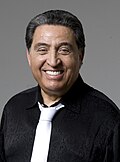
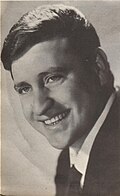
The Cantautore (singer-songwriter) tradition focuses on social relevance and protest. Modern figures like Pino Daniele—known for hits such as Napule è—and Edoardo Bennato have kept this genre influential. Other notable performers include Daniele Sepe, who incorporates global protest songs and multi-instrumental skills.
Modern Evolution and Global Influence
Contemporary Neapolitan music frequently blends traditional sounds with American jazz, rock, and African rhythms. For example, Massimo Ranieri's Oggi o dimane pairs classic Neapolitan songs with North African instrumentation. Additionally, the city has embraced the "musical" format (commedia musicale), starting with the 1953 film Carosello Napoletano featuring Sophia Loren.
Musical Venues of Naples
From grand opera houses to open squares, Naples offers diverse settings for musical performance:
| Venue | Primary Use / Significance |
|---|---|
| San Carlo Theater | World-renowned opera house and host to visiting orchestras. |
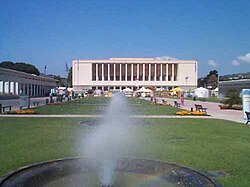
| Teatro Mediterraneo | Versatile stage located at the Overseas Fair Grounds. |
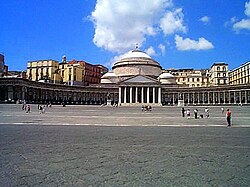
| Piazza Plebiscito | The city's largest public venue for parades and celebrations. |
| Trianon Theater | Dedicated to Neapolitan Song and traditional plays. |
| Teatro delle Palme | Host to the Alessandro Scarlatti Association's chamber music. |
Frequently Asked Questions
Why were the music schools in Naples called "conservatories"?
They were originally church-run institutions designed to "conserve" or shelter orphans. Because music was a primary part of their education, the term eventually became synonymous with music schools throughout Europe.
What is the difference between Canzone Napoletana and folk music?
Canzone Napoletana consists of composed popular songs often written for competitions or festivals, whereas Neapolitan folk music is largely anonymous and relies on traditional percussion and dance.
What is a Sceneggiata?
It is a Neapolitan musical drama, similar to a soap opera, performed in dialect. It focuses on emotional themes like betrayal and heartbreak, with the plot serving as a vehicle for specific songs.
Is the mandolin only used for folk music?
No. While common in street music, the Neapolitan mandolin has a classical repertoire with works composed by masters like Beethoven and Vivaldi.
Who are some famous modern Neapolitan singer-songwriters?
Pino Daniele is perhaps the most famous, along with Edoardo Bennato, Nino D'Angelo, and Daniele Sepe.