Nazi Urban Planning and Social Control
The relationship between the built environment and human behavior has long been a tool for those in power. By manipulating the layout of cities and the design of buildings, regimes can influence how citizens think, move, and interact. While this practice of using design for social control—the use of institutional or architectural means to regulate population behavior—was not unique to the Third Reich, the Nazi regime applied it with a particular level of brutality and ideological precision.
The Ideology of Spatial Planning
The concept of using architecture to enforce political ideology was already present in other contemporary regimes. Following the 1917 Russian Revolution, Soviet planning introduced "living cells" and collective farms to align daily life with Marxist ideology. Similar patterns of state-mandated design were observed in Cambodia and China.
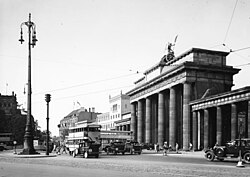
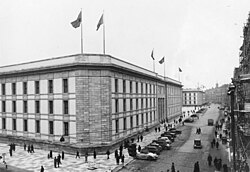
For the Third Reich and other European dictatorships, urban design served as a visible manifestation of power and authority. In Germany, this was achieved by replacing slums with middle-class employment hubs and constructing massive monuments designed to be visible from across the entire metropolitan area, ensuring the state's presence was ever-present in the citizen's field of vision.
Expansion and Cultural Erasure
As Germany expanded into conquered territories, spatial planning shifted from social regulation to a tool of destruction. In areas inhabited by those the regime deemed "undesirables," specifically Jews and Slavs, urban planning was used to dismantle existing cultures. The Nazi Party oversaw the wholesale destruction of indigenous cities, replacing them with new settlements designed to echo German urban patterns and enforce Nazi ideologies on the land.
Racial Hygiene and Segregation
Central to Nazi ideology was the pursuit of a "master race," based on theories of racial hygiene—a pseudo-scientific ranking of people based on perceived racial and physical superiority. Urban planning became the primary mechanism for implementing these theories in the physical world.
In German cities, planners utilized techniques similar to colonial planning to physically separate populations. This included the creation of designated areas where non-Germans were strictly prohibited and the establishment of separate housing zones.
The Creation of Ghettos
In occupied Eastern European territories, segregation became far more lethal. The regime established purpose-built ghettos in cities such as Warsaw and Lvov. These were not merely residential areas but tools of control designed to isolate Jews from the general population. By deliberately restricting the geographic size of these areas, the regime created extreme population densities and stripped away essential city services, leading to the deaths of tens of thousands of people.
Key Facts
- Social Control: The Nazi regime used urban design to display authority and enforce specific social behaviors.
- Cultural Erasure: Conquered cities in Eastern Europe were destroyed and replaced with settlements reflecting German culture and Nazi ideology.
- Racial Hygiene: Urban planning was used to physically manifest the regime's hierarchy of racial superiority.
- Systemic Segregation: The use of prohibited zones and ghettos (such as in Warsaw and Lvov) was designed to isolate and destroy "undesirable" populations.
| Region | Primary Planning Goal | Key Methods |
|---|---|---|
| Domestic Germany | Authority and Social Alignment | Monumental architecture, slum replacement |
| Conquered Territories | Cultural Erasure and Colonization | Destruction of cities, new German-style settlements |
| Eastern European Cities | Segregation and Extermination | High-density ghettos, removal of city services |
Frequently Asked Questions
How did Nazi urban planning differ from Soviet planning?
While both used architecture for social control, Soviet planning focused on Marxist ideology through "living cells" and collective farms, whereas Nazi planning focused on racial hygiene, the display of state power, and the physical segregation of races.
What was the purpose of the massive monuments in German cities?
These monuments were strategically aligned to be visible from across the metropolitan area, serving as constant reminders of the regime's power and authority to the population.
What is "racial hygiene" in the context of urban design?
Racial hygiene was the ideological ranking of people by race and physical traits. In urban design, this translated to the physical separation of populations, creating "pure" German zones and segregated areas for those deemed inferior.
How were ghettos used as a tool of control in Warsaw and Lvov?
Ghettos were designed to isolate Jews from the rest of society. By limiting the physical space and denying basic city services, the regime created lethal living conditions through extreme overpopulation.
What happened to the cities in conquered Eastern territories?
Many existing cities were completely destroyed to erase the local culture. They were replaced by new settlements planned to mirror German cities and implement Nazi social ideologies.