Navy of the Argentine Republic
The Navy of the Argentine Republic (Armada de la República Argentina) is the maritime branch of the Argentine Armed Forces. Founded on May 25, 1810, the Navy is tasked with safeguarding Argentina's sovereignty over its territorial waters and the South Atlantic. Symbolized by the red Phrygian cap—a global emblem of the pursuit of liberty—the Navy has evolved from a revolutionary force into a professional maritime organization, though it currently faces significant operational and financial hurdles.
Based primarily at the Puerto Belgrano Naval Base, the force operates under the command of the President of Argentina as Commander-in-Chief, with the Chief of General Staff overseeing operational directives.

Key Facts
- Founded: May 25, 1810.
- Main Base: Puerto Belgrano Naval Base.
- Current Fleet: Includes 3 destroyers, 6 corvettes, 11 patrol boats, 1 amphibious warfare ship, and 19 auxiliary ships.
- Submarine Status: Currently non-operational following the loss of the ARA San Juan.
- Key Aircraft: P-3C/N Orion (patrol), AS-555 Fennec (attack), and SH-3 Sea King (transport).
- Navy Day: Celebrated annually on May 17.
Historical Evolution
Early Modernization (1810–1909)
Following its inception during the Argentine War of Independence, the Navy underwent a period of rapid modernization in the 1870s. By the end of the 19th century, Argentina had established a formidable presence with a fleet comprising five armored cruisers, four coastal defense ironclads, and a variety of British-built cruisers, destroyers, and torpedo boats.
Global Standing and the World Wars (1910–1982)
Argentina maintained neutrality for much of both World Wars, only declaring war on the Axis powers in March 1945. By 1940, the Argentine Navy was ranked as the eighth most powerful navy in the world and the largest in Latin America. This era was defined by a massive $60 million building program that produced a force of 14,500 sailors and over a thousand officers.
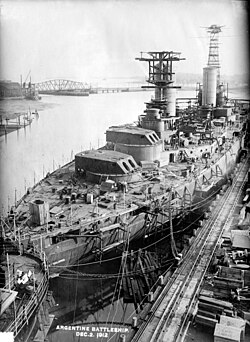
The fleet during this peak period featured the Rivadavia-class battleships, American-built vessels that served as the cornerstone of Argentine naval power until 1956.
The Falklands War and its Aftermath
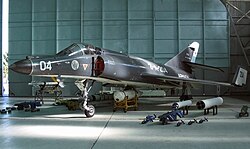
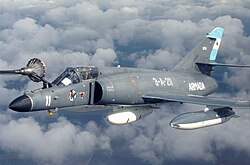
The 1982 Falklands War marked a pivotal moment for the Navy, particularly its aviation wing. The Naval Aviation Command (Comando de Aviación Naval or COAN) utilized the Dassault-Breguet Super Étendard, an aircraft platform capable of launching Exocet air-to-surface missiles. These were responsible for the sinking of the HMS Sheffield and the merchant vessel Atlantic Conveyor.
Despite these tactical successes, the post-war era brought significant challenges, including UK sanctions that hindered the acquisition of spare parts for critical equipment, such as the Martin Baker Mk. 6 ejection seats.
Current Fleet and Operational Status
Surface Fleet and Patrol Capabilities
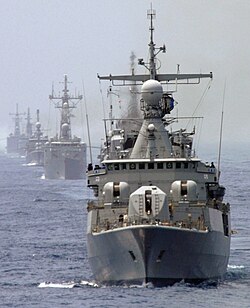
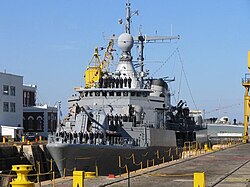
In recent years, Argentina has shifted its focus toward offshore patrol to combat illegal fishing, particularly by foreign vessels in the South Atlantic. In 2018, Argentina acquired four Gowind-class offshore patrol vessels (OPVs) from France, including the L'Adroit. All four were delivered by 2022 to bolster maritime surveillance.
However, the broader fleet has suffered from chronic underfunding. Reports indicate that only a fraction of the Navy's vessels are in sailing condition due to a lack of spares and expired ordnance. A stark example of this decay occurred in January 2013, when the Type 42 destroyer ARA Santísima Trinidad sank at her moorings after being mothballed for a decade.
The Submarine Crisis
The Argentine submarine service is currently defunct. On November 15, 2017, the ARA San Juan (S-42) disappeared during a routine transit with 44 personnel on board. Following an extensive search, the loss was confirmed, and subsequent reports highlighted a chronic lack of funding for maintenance and training as contributing factors.
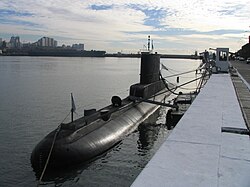
Efforts to restore submarine capabilities have included negotiations with Brazil for the transfer of Tupi-class submarines and interest in Russian Kilo or Lada-class vessels, though these projects have faced various political and financial delays.
Naval Aviation and Maritime Patrol
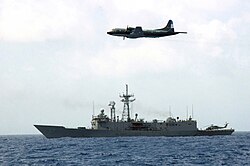
To replace aging assets, Argentina has focused on acquiring P-3C Orion maritime patrol aircraft from Norway. While payment delays initially stalled the process, deliveries began in September 2024, with further aircraft undergoing refurbishment in the United States through 2026.
Future Strategic Goals
The Argentine government is currently evaluating several projects to reassure national ocean sovereignty. These include the development of a multipurpose landing ship, a polar ship, and a floating dock to increase logistical capacity, particularly for Antarctic claims. Additionally, the Navy continues to monitor illegal fishing, which is estimated to cost the nation between US$1 billion and $2.6 billion annually.
Fleet Summary Table
| Category | Asset/Class | Status/Notes |
|---|---|---|
| Patrol Vessels | Gowind-class OPV | 4 ships delivered by 2022 |
| Destroyers | Almirante Brown-class | Active but facing spare parts shortages |
| Submarines | TR-1700 class | Non-operational (Post-ARA San Juan) |
| Patrol Aircraft | P-3C Orion | Entering service 2024–2026 |
| Attack Aircraft | Super Étendard | Project to restore flying condition abandoned |
Frequently Asked Questions
Why is the Argentine submarine fleet currently non-operational?
The submarine service became defunct following the 2017 disaster of the ARA San Juan. Chronic underfunding for maintenance and personnel training contributed to the loss, leaving the Navy without active submarines.
What is the role of the Gowind-class vessels?
These French-built offshore patrol vessels (OPVs) are designed to increase Argentina's ability to monitor its territorial waters and combat illegal foreign fishing in the South Atlantic.
How did the Super Étendard impact the Falklands War?
The Super Étendard served as a platform for Exocet air-to-surface missiles, which were used to destroy the HMS Sheffield and the Atlantic Conveyor.
What is the current status of the P-3C Orion acquisition?
Argentina signed an agreement with Norway for four P-3C aircraft. Despite initial payment delays, the first aircraft was delivered in September 2024, with others following through 2026.
What happened to the ARA Libertad in 2012?
The sail training ship was seized in Ghana by creditors. However, the UN International Tribunal for the Law of the Sea ruled that the ship had military immunity and ordered its unconditional release.