National Museum of Korea: A Journey Through Centuries of Art and History
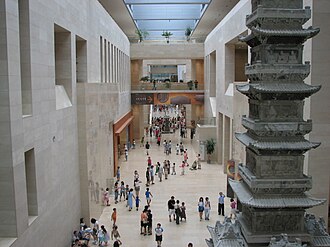
The National Museum of Korea stands as the flagship institution for the preservation and study of Korean history and art. Since its establishment in 1945, the museum has served as a vital center for archaeology, historical research, and cultural education. Today, it is one of the largest museum complexes in the world, offering visitors a profound window into the soul of the Korean Peninsula.
Located in the Yongsan District of Seoul, the museum moved to its current, expansive site in 2005. This modern facility is designed to protect a massive collection of over 310,000 pieces, utilizing advanced technology to ensure the longevity of these precious relics.
Key Facts
- Established: December 3, 1945
- Location: Yongsan-gu, Seoul, South Korea
- Collection Size: Over 310,000 pieces
- Total Floor Space: 295,551 m² (6th largest museum globally)
- Annual Visitors: Approximately 3.78 million (2024 data)
- Special Feature: Earthquake-resistant architecture (up to 6.0 Richter Scale)
A Rich and Resilient History
The roots of the museum trace back to 1909, when Emperor Sunjong established the Imperial Household Museum. Following Korea's independence in 1945, the collections from the Imperial Household Museum and the Japanese Government General Museum formed the nucleus of the new National Museum.
The institution's journey has been marked by resilience. During the Korean War, 20,000 artifacts were moved to Busan to ensure their safety. Over the following decades, the museum occupied various locations, including Gyeongbokgung Palace and the former Japanese General Government Building. In 2005, it finally opened its current home in Yongsan Family Park, situated on land formerly used as a US Army garrison.
| Category | Details |
|---|---|
| Type | History and Art Museum |
| Primary Location | 137, Seobinggo-ro, Yongsan-gu, Seoul |
| Public Transit | Ichon Station |
| Exhibition Galleries | 6 Permanent Galleries |
| Branch Location | Incheon International Airport (Gate 22) |
Museum Layout and Permanent Galleries
The museum is architecturally symbolic: the left side represents the past, while the right side represents the future. The building is divided into three main floors, each housing distinct collections.
First Floor: Prehistory to Early Modern History
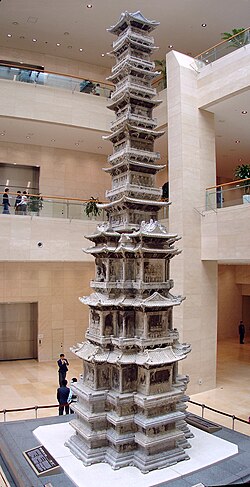
The ground floor features outdoor gardens, waterfalls, and a collection of pagodas and steles. Inside, the first floor is dedicated to the foundations of Korean civilization.
- Prehistory and Ancient History Gallery: Contains roughly 4,500 artifacts ranging from Paleolithic stone tools to the luxurious ornaments of the Silla era.
- Medieval and Early Modern History Gallery: Showcases the cultural heritage of the Unified Silla, Balhae, Goryeo, and Joseon periods.
Second Floor: Calligraphy, Painting, and Donations
The second floor focuses on the aesthetic and personal contributions to Korean culture.
- Calligraphy and Painting Gallery: Houses 890 pieces of traditional art, including Buddhist paintings and works from the Sarangbang (Scholar's Studio).
- Donation Gallery: Features 800 pieces of art gifted by private collectors, organized into eleven specialized rooms.
Third Floor: Sculpture, Crafts, and Asian Art
The top floor explores the intricate craftsmanship of religious and regional art.
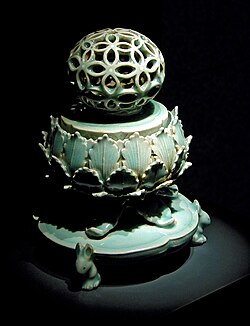
- Sculpture and Crafts Gallery: Home to 630 pieces, including exquisite Goryeo celadon and Buddhist sculptures.
- Asian Arts Gallery: Contains 970 pieces that explore the cultural exchange along the Silk Road, featuring art from India, Southeast Asia, China, and Japan.
Masterpieces of the Collection
Among the hundreds of thousands of items, several stand out as quintessential representations of Korean artistry.
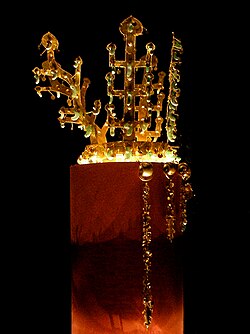
Silla Gold Crown (National Treasure No. 191)
This 5th-century crown was discovered in the North tomb of Hwangnamdaechong in Gyeongju. Its intricate design reflects the high political and social status of its owner, likely a woman, as indicated by accompanying silver belt ornaments.
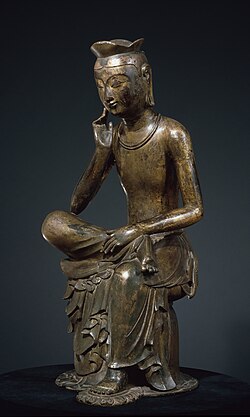
Pensive Bodhisattva (National Treasure No. 83)
A masterpiece of 7th-century sculpture, this figure depicts a Bodhisattva in deep contemplation. The elegant craftsmanship is characteristic of the Baekje period, while the pose shows connections to Buddhist traditions across East Asia.
Gyeongcheonsa Ten-Story Pagoda (National Treasure No. 86)
Originally erected in 1348 during the Goryeo dynasty, this stone pagoda has a storied history, including a period of illegal smuggling to Japan before its eventual return. It is now housed within the museum's "Path to History" section.
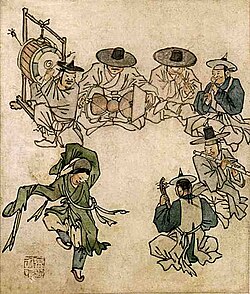
Genre Paintings by Danwon
The 18th-century painter Kim Hong-do, known by his pen name Danwon, created an album of twenty-five genre paintings. These works provide a candid, often humorous look at the daily lives of common people through expressive brushstrokes.
The Return of the Oegyujanggak Uigwe
One of the most significant historical narratives involving the museum is the repatriation of the Oegyujanggak Uigwe. These royal protocols, which meticulously document Joseon Dynasty state ceremonies, were looted by French forces in 1866. After decades of diplomatic negotiations, the books were finally returned to Korea from France in 2011 via a renewable lease agreement. These documents are recognized globally and are inscribed in the UNESCO Memory of the World Register.
Frequently Asked Questions
How large is the National Museum of Korea?
The museum is the sixth largest in the world by floor space, covering a total of 295,551 square meters.
What can I see in the Prehistory Gallery?
You can view approximately 4,500 artifacts, including stone handaxes from the Paleolithic era and royal ornaments from the Silla period.
Is the museum safe for delicate artifacts?
Yes, the building is constructed with fire-resistant materials and is designed to withstand earthquakes of up to magnitude 6.0. Display cases also use shock-absorbent platforms.
Does the museum have an international presence?
Yes, the museum opened a branch at Incheon International Airport in 2021 to celebrate its 20th anniversary and provide easier access to travelers.
What is Goryeo Celadon?
Goryeo celadon is a type of high-quality ceramic from the Goryeo dynasty, known for its distinct green glaze and intricate designs, such as the Celadon Openwork Incense Burner.