National Highway System: The Backbone of U.S. Economy and Defense
The National Highway System (NHS) is a comprehensive network of roads designed to ensure the seamless movement of people and goods across the United States. Managed by the Federal Highway Administration, this system spans approximately 160,000 miles (260,000 km), serving as a critical artery for the nation's economic stability, national defense, and general mobility.
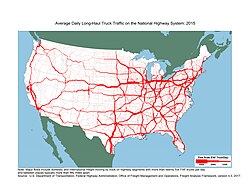
Despite representing only 4% of all roads in the United States, the NHS is disproportionately vital to the country's functionality. It carries over 40% of all highway traffic, 75% of heavy truck traffic, and 90% of tourist traffic. Its reach is vast, with roughly 90% of the American population living within five miles (8.0 km) of the network, and every urban area with a population exceeding 50,000 is connected to it.
Key Facts
- Total Length: 160,000 miles (260,000 km), making it the longest such network in the world.
- Traffic Volume: Handles 75% of heavy truck traffic and 90% of tourist traffic.
- Population Reach: 90% of the U.S. population lives within 5 miles of the system.
- Infrastructure: Connects hundreds of airports, ports, and transit terminals.
The Five Components of the NHS
The National Highway System is not a single type of road but a collection of five distinct sub-systems. While some routes may overlap and belong to multiple categories, each serves a specific strategic purpose.
Interstate Highway System
Also known as the Dwight D. Eisenhower National System of Interstate and Defense Highways, this network is fully integrated into the NHS while maintaining its own separate identity. It provides the high-speed, long-distance connectivity essential for interstate commerce and travel.
Other Principal Arterials
These are highways in both rural and urban settings that link major arterials to critical intermodal transportation facilities—hubs where different modes of transport meet. This includes access to 207 airports, 198 ports, 190 rail or truck terminals, 67 Amtrak stations, 58 pipeline terminals, 82 intercity bus terminals, 307 public transit stations, 37 ferry terminals, and 20 multi-purpose passenger terminals.
Strategic Highway Network (STRAHNET)
STRAHNET consists of highways essential to the strategic defense policy of the United States. These roads are prioritized to ensure defense access, continuity, and emergency capabilities during national security events.
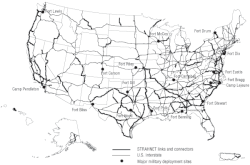
Major Strategic Highway Network Connectors
These specific routes act as the final links between major military installations and the broader STRAHNET system, ensuring that defense assets can move efficiently from bases to the primary strategic network.
Intermodal Connectors
Intermodal Connectors are the specialized routes that provide the necessary links between major intermodal facilities and the other four sub-systems of the NHS, ensuring a fluid transition between ships, planes, trains, and trucks.
NHS Infrastructure Summary
| Metric/Facility | Value/Quantity |
|---|---|
| Total System Length | 160,000 miles |
| Percentage of Total U.S. Roads | 4% |
| Heavy Truck Traffic Share | 75% |
| Tourist Traffic Share | 90% |
| Airports Connected | 207 |
| Ports Connected | 198 |
| Public Transit Stations | 307 |
Frequently Asked Questions
What is the National Highway System (NHS)?
The NHS is a network of 160,000 miles of roads identified by the Federal Highway Administration as essential to the United States' economy, defense, and overall mobility.
How much of the U.S. population has access to the NHS?
Approximately 90% of the American population lives within 5 miles (8.0 km) of the network.
What is STRAHNET?
The Strategic Highway Network (STRAHNET) is a sub-system of the NHS specifically designed to support U.S. strategic defense policy by providing emergency capabilities and defense access.
Why are intermodal connectors important?
Intermodal connectors are vital because they link major transportation hubs (like ports and airports) to the rest of the highway system, allowing for the efficient transfer of goods and passengers between different modes of transport.
Does the NHS include the Interstate Highway System?
Yes, the entire Dwight D. Eisenhower National System of Interstate and Defense Highways is included in the NHS, though it retains its own separate identity.