NAS Banana River: From WWII Seaplane Base to Patrick Space Force Base
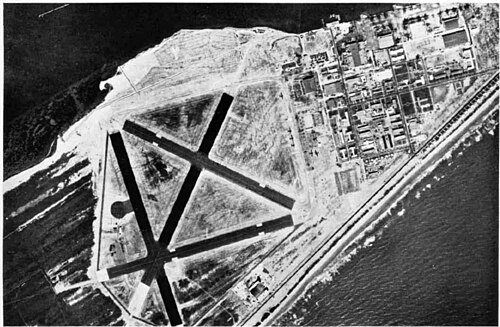
The history of the land now known as Patrick Space Force Base begins with the strategic needs of the United States Navy during the buildup to World War II. Authorized by the Naval Expansion Act of 1938, Naval Air Station (NAS) Banana River was commissioned on October 1, 1940. Established as a subordinate base of the Naval Air Operational Training Command at NAS Jacksonville, the Navy acquired 1,900 acres of Florida scrub land south of Cocoa Beach to create a vital hub for maritime aviation.
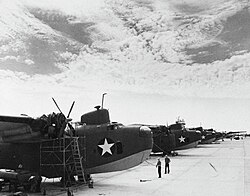
During the early 1940s, the base evolved rapidly from a training site into a frontline defense installation. As the United States entered the war against Japan and Germany in December 1941, NAS Banana River became a center for anti-submarine patrols, utilizing PBY Catalina and PBM Mariner seaplanes to protect the Florida coast from enemy threats.
Key Facts
- Commissioned: October 1, 1940, on 1,900 acres of land.
- WWII Peak: Hosted 278 aircraft, 587 civilian employees, and over 2,800 personnel.
- Primary Aircraft: PBY Catalina, PBM Mariner, and OS2U Kingfisher seaplanes.
- Evolution: Transitioned from Navy (1940) to Air Force (1948) and finally to Space Force (2020).
- Modern Legacy: Now operates as Patrick Space Force Base.
Naval Operations During World War II
NAS Banana River served as a versatile facility for both combat operations and specialized training. While PBM Mariners initially conducted patrols, they were replaced by OS2U Kingfisher seaplanes in March 1942, allowing the PBMs to return to training duties. By 1943, the addition of landing strips enabled shore-based aircraft to operate alongside seaplanes.
The base's activities were diverse, ranging from maritime patrol operations against German U-boats to air search and rescue. It also hosted the Aviation Navigation Training School and a confidential experimental unit known as Project Baker, which focused on developing instrument landing equipment. International cooperation was also present, as officers from the Free French Naval Air Service trained in PBMs at the facility.
Unit Presence and Maintenance
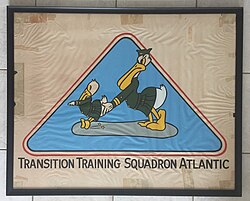
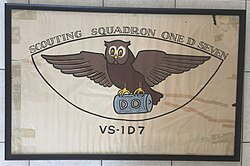
The base supported several key units, including the Transition Training Squadron Atlantic (detachment) and VS-1D7. Beyond flight operations, NAS Banana River maintained a significant aircraft repair and maintenance facility. In a notable wartime detail, a small group of German prisoners of war from Camp Blanding were stationed at the base to assist with cleanup duties.
The Flight 19 Probe and the Loss of PBM-5
Following the end of World War II, NAS Banana River played a tragic ancillary role in the search for Flight 19—five TBM Avenger torpedo bombers that vanished during a training mission on December 5, 1945. Two PBM Mariner seaplanes from NAS Banana River were diverted to conduct square pattern searches west of 29°N 79°W.
One of these aircraft, a PBM-5 (Bureau Number 59225), disappeared after a routine radio call at 19:30 Eastern Time. Shortly after, the tanker SS Gaines Mills reported a mid-air explosion and flames leaping 100 feet high on the sea. The USS Solomons (CVE-67) also reported losing radar contact with an aircraft at that exact position. No wreckage was ever recovered.
A subsequent board of inquiry investigated the loss. Evidence suggested that aviation gasoline (AvGas) fumes often collected in the bilges of PBM aircraft, earning them the nickname "the flying gas tank." Investigators suspected the explosion was caused either by a violation of strict no-smoking regulations or a stray electrical spark in the lower hull.
Environmental Legacy and Land Pollution
Between 1942 and 1947, the Navy utilized a 52-acre dump on private land southeast of the base for solid waste, which likely included practice bombs and munitions. This land was later developed into a residential area called "South Patrick Shores" between 1956 and 1961.
Health complaints from residents emerged in the 1990s and again in 2018, prompting the U.S. Army Corps of Engineers to investigate the site to determine if a federal cleanup was necessary.
Transition to the Air Force and Space Force
NAS Banana River was deactivated in September 1947 and transferred to the U.S. Air Force in September 1948. It was renamed the Joint Long Range Proving Ground in 1949 and finally Patrick Air Force Base in August 1950. Many original Navy structures, including hangars and seaplane ramps, remain part of the current installation.
The Space Age and Modernization
From 1966 to 1975, the base became a global focal point due to the Space Program, hosting an average of three VIP visits per week. In 1971, the Defense Equal Opportunity Management Institute (DEOMI) was established on-site.
The base also underwent significant security and infrastructure upgrades. Following the 9/11 attacks, State Road A1A was modified with barriers and inspections to protect the Air Force Technical Applications Center (AFTAC) headquarters. Between 2010 and 2014, a massive military construction project replaced the AFTAC building with a 276,000-square-foot command and control facility, featuring a radiochemistry laboratory and a large parking garage.
The Shift to the Space Force
On December 20, 2019, the United States Space Force was established. On December 9, 2020, in a ceremony with Vice President Mike Pence, the facility was officially renamed Patrick Space Force Base, becoming one of the first two installations to bear the name of the new military branch.
| Era | Name | Primary Branch | Key Focus |
|---|---|---|---|
| 1940–1947 | NAS Banana River | U.S. Navy | Anti-submarine patrol & seaplane training |
| 1948–1949 | Joint Long Range Proving Ground | U.S. Air Force | Testing and proving |
| 1950–2020 | Patrick Air Force Base | U.S. Air Force | Space Program support & AFTAC |
| 2020–Present | Patrick Space Force Base | U.S. Space Force | Space domain operations |
Frequently Asked Questions
What was the primary purpose of NAS Banana River during WWII?
The base served as a hub for anti-submarine patrols along the Florida coast using PBY Catalina and PBM Mariner seaplanes, as well as a training center for seaplane pilots, bombardiers, and navigation.
What happened to the PBM-5 aircraft during the Flight 19 search?
The PBM-5 disappeared on December 5, 1945, after a mid-air explosion was witnessed by the tanker SS Gaines Mills. It is suspected that AvGas fumes in the bilge ignited, causing the aircraft to be destroyed.
What is Project Baker?
Project Baker was a confidential experimental training unit at NAS Banana River dedicated to the development and testing of instrument landing equipment.
How did the base transition to the Space Force?
After decades as Patrick Air Force Base, the facility was transferred to the U.S. Space Force following the branch's creation in 2019, officially receiving its new name on December 9, 2020.
What environmental concerns are associated with the former base?
The Navy buried solid waste, including potential munitions and practice bombs, on private land between 1942 and 1947. This area, now known as South Patrick Shores, has been investigated by the U.S. Army Corps of Engineers following resident health complaints.