Naïve Art: The Beauty of Self-Taught Expression
Naïve art refers to visual art created by individuals who lack formal academic training in the traditional pillars of art education, such as anatomy, perspective, art history, and technical methodology. Characterized by a childlike simplicity and a frank approach to subject matter, this style prioritizes raw expression over the rigid rules of the academy.
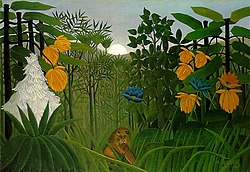
While once dismissed as mere amateurism, naïve art is now a globally recognized genre. It is celebrated for its honesty and unique aesthetic, with dedicated museums and galleries across Europe and the Americas. From the lush jungles of Henri Rousseau to the rural landscapes of the Hlebine School, naïve art challenges our definitions of technical skill and artistic value.
Key Facts
- Definition: Art produced by self-taught artists without formal training in perspective or anatomy.
- Visual Style: Typically features flat rendering, bold patterns, and a lack of traditional depth.
- Distinction: Differs from folk art (which is rooted in community tradition) and outsider art (which involves minimal contact with the art world).
- Pseudo-Naïve: A style where trained artists intentionally emulate the naïve aesthetic.
- Key Figure: Henri Rousseau, a French Post-Impressionist discovered by Pablo Picasso, remains one of the most influential figures in the genre.
Defining the Boundaries: Naïve, Folk, and Outsider Art
The terminology surrounding non-academic art is often a subject of debate. While these terms overlap, they describe different contexts of creation.
Naïve Art vs. Folk Art
Naïve art is generally used for fine arts—such as painting and sculpture—created by self-taught individuals. In contrast, folk art typically refers to objects with a practical use that derive from a specific popular cultural tradition. However, this distinction is not always absolute.
Naïve Art vs. Outsider Art
Outsider art (also known as art brut) describes works created by people who have had almost no contact with the mainstream art world. Naïve artists, conversely, are often aware of "fine art" conventions like graphical perspective but either cannot fully implement them or consciously choose not to.
Primitivism and Pseudo-Naïve Art
When a professionally trained artist mimics the naïve style, the result is called pseudo-naïve or faux naïve art. Similarly, primitivism refers to a self-conscious movement where trained artists (such as Paul Gauguin or Paul Klee) adopted styles inspired by non-Western or "primitive" cultures.
Technical Characteristics of the Naïve Style
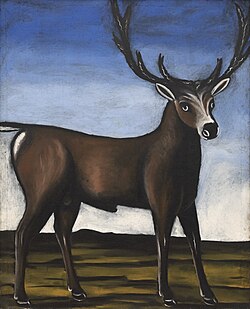
The hallmark of naïve art is its "awkward" relationship with the formal rules of painting established during the Renaissance. Specifically, naïve art often ignores the three primary rules of perspective:
- Proportional Scaling: Objects do not necessarily decrease in size as they move further into the distance.
- Color Muting: Colors remain vibrant and saturated in the background rather than fading.
- Detail Precision: Background elements are often rendered with the same sharp accuracy as the foreground.
These choices result in a flat, geometrically erroneous rendering that resembles children's drawings or medieval paintings, emphasizing simplicity and pattern over subtlety.
Notable Movements and Schools
The Sacred Heart Painters
Organized by critic Wilhelm Uhde for a 1928 Paris exhibition, this group included Henri Rousseau, André Bauchant, Camille Bombois, Séraphine Louis, and Louis Vivin.
The Hlebine School
Emerging around 1930 in the village of Hlebine, Croatia, this school was founded by Krsto Hegedušić to foster a national rural artistic expression independent of Western influence. Led by masters like Ivan Generalić, the school became a global phenomenon following the 1952 Venice Biennale, focusing on stylized depictions of country life.
Jewish Naïve Art
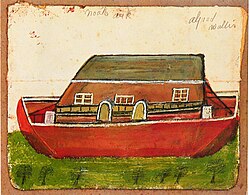
In the late 19th and early 20th centuries, artists in Israel were influenced by Middle Eastern ancient art. Rabbi Moshe Mizrahi Shah and later Yitzhak Frenkel created biblical scenes that blended popular art with "high" art traditions.
The Evolution of Critical Perspective
Historically, terms like "naïve" or "primitive" were used dismissively. However, modern critics such as Jerry Saltz and Roberta Smith argue for the dissolution of the barrier between academic and non-academic art. They advocate for the canonization of self-taught artists like Hilma af Klint and Bill Traylor, arguing that the separation is often based on class, gender, or background rather than talent.
Recent exhibitions, such as Which Modernism? (2023-2024), have sought to reposition naïve art not as an "outsider" phenomenon, but as a legitimate part of modernism that influenced and was influenced by the avant-garde.
Summary of Art Classifications
| Term | Primary Characteristic | Context/Origin |
|---|---|---|
| Naïve Art | Self-taught, flat perspective | Individual expression, aware of fine art |
| Folk Art | Practical use, traditional | Community or cultural tradition |
| Outsider Art | Minimal mainstream contact | Isolated or marginalized creators |
| Pseudo-Naïve | Imitative simplicity | Trained artists mimicking the style |
| Primitivism | Inspired by non-Western art | Professional movement (e.g., Gauguin) |
Frequently Asked Questions
What is the main difference between naïve art and folk art?
Naïve art generally refers to fine arts like painting created by self-taught individuals, whereas folk art typically involves functional objects rooted in a specific cultural or community tradition.
Who is the most famous naïve artist?
Henri Rousseau is one of the most influential naïve painters; a French Post-Impressionist whose work was famously recognized by Pablo Picasso.
Why is it called "pseudo-naïve" art?
It is called pseudo-naïve (or faux naïve) when a professionally trained artist intentionally adopts the simplistic, flat style of a self-taught artist for aesthetic reasons.
Is naïve art still produced today?
While "strict" naïvety is rarer today due to the rise of autodidacticism (self-directed education), the style continues to be practiced and is represented in museums worldwide.
Where can I see naïve art in museums?
Dedicated museums exist in several cities, including Paris and Vicq (France), Zagreb (Croatia), Riga (Latvia), Kecskemét (Hungary), and Rio de Janeiro (Brazil).