Munich 1972 Summer Olympics: The Cheerful Games and Their Complex Legacy
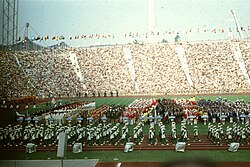
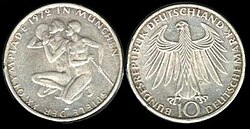
The 1972 Summer Olympics, officially known as the Games of the XX Olympiad, were held in Munich, West Germany, from August 26 to September 11, 1972. Branded as "Munich 1972," the event was designed to project a new, democratic image of Germany to the world, adopting the motto Heitere Spiele, or "The Cheerful Games." This marked the second time Germany hosted the Summer Olympics, following the 1936 Berlin Games held under Nazi rule.
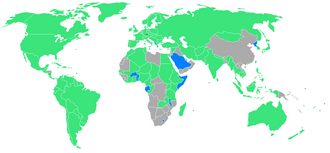
The event saw a massive global turnout, with 7,134 athletes from 121 nations competing across 195 events in 21 different sports. The Games were opened by President Gustav Heinemann and closed by International Olympic Committee (IOC) president Avery Brundage.
Key Facts
- Host City: Munich, West Germany.
- Dates: August 26 – September 11, 1972.
- Participation: 7,134 athletes (6,075 men, 1,059 women) from 121 nations.
- Scale: 195 events across 21 sports and 28 disciplines.
- Motto: "The Cheerful Games" (Heitere Spiele).
- Notable Venue: The Olympiastadion and the surrounding Olympiapark.
Host City Selection and Preparation
Munich secured the Olympic bid on April 26, 1966, during the 64th IOC Session in Rome. The city won over competing bids from Detroit, Madrid, and Montréal. Interestingly, Montréal would go on to host the subsequent Summer Games in 1976. In Spain, internal conflicts between Barcelona and Madrid led to the submission of the Madrid bid, despite Barcelona having a more developed project at the time.
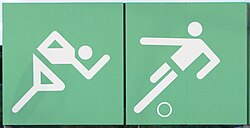
The visual identity of the Games was highly influential, featuring distinct signage pictograms designed by Otl Aicher to ensure clear communication across different languages.
The Munich Massacre
The "Cheerful Games" were tragically overshadowed by the Munich massacre. A terrorist attack led to the suspension of Olympic events for the first time in modern history. Following a 34-hour stoppage, IOC president Avery Brundage famously declared that "the Games must go on." A memorial ceremony was held in the Olympic stadium before competitions resumed.
The tragedy resulted in the rescheduling of the closing ceremony from September 10 to September 11. This event fundamentally changed the nature of the Olympics, prompting a permanent increase in security measures for all subsequent Games, beginning with the 1976 Winter Olympics.
Athletic Highlights and Controversies
Despite the tragedy, the 1972 Games produced legendary athletic performances. Finland's Lasse Virén achieved a historic double, winning both the 5,000m and 10,000m races—a feat he would repeat in 1976.
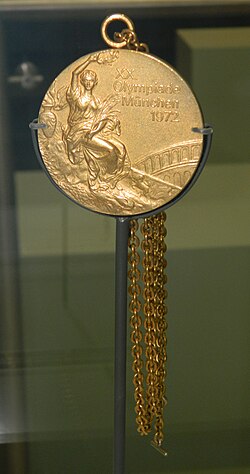
The Games were also marked by political and medical controversies. American runners Vincent Matthews and Wayne Collett were banned by the IOC after staging a protest on the victory podium. Additionally, Rick DeMont of the United States was stripped of his gold medal in the 400-meter freestyle swimming after testing positive for ephedrine, a substance found in his prescribed asthma medication. While the USOC recognized his performance in 2001, the IOC has refused to restore the medal.
Venues and Infrastructure
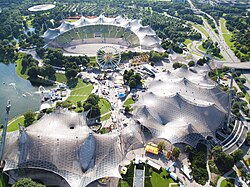
The center of the action was the Olympiapark (Olympic Park), which housed the main stadium, boxing hall, and swimming facilities. However, events were spread across Greater Munich and other German cities to accommodate the scale of the competition.
| Location | Venue | Sports Hosted |
|---|---|---|
| Olympiapark | Olympiastadion | Athletics, Opening/Closing Ceremonies |
| Olympiapark | Schwimmhalle | Swimming, Diving, Water Polo |
| Olympiapark | Sporthalle | Gymnastics, Handball |
| Oberschleißheim | Regatta Course | Canoe Sprint, Rowing |
| Kiel-Schilksee | Yachting Center | Sailing, Water Skiing |
| Riem | Riding Facility | Equestrian |
Frequently Asked Questions
Why were the 1972 Olympics called "The Cheerful Games"?
The motto "The Cheerful Games" (Heitere Spiele) was chosen to present a friendly, open, and democratic image of West Germany, intentionally contrasting with the 1936 Berlin Olympics held under the Nazi regime.
How many athletes participated in the Munich 1972 Games?
A total of 7,134 athletes competed, consisting of 6,075 men and 1,059 women from 121 different nations.
What happened to Rick DeMont's gold medal?
Rick DeMont was stripped of his gold medal in the 400-meter freestyle because his asthma medication contained ephedrine, a banned substance. Despite the USOC's later recognition of his win, the IOC has not restored the medal.
Which countries were excluded from the 1972 Summer Olympics?
Rhodesia's invitation was withdrawn four days before the opening ceremony due to protests from African nations. The People's Republic of China also did not compete due to an ongoing dispute with the Republic of China over representation.
How did the Munich massacre affect future Olympic Games?
The attack led to a significant and permanent increase in security protocols for all subsequent Olympic Games to prevent similar tragedies.