Multinational Corporations: Evolution, Economics, and Global Impact
A multinational corporation (MNC) is a corporate organization that owns and controls the production of goods or services in at least one country other than its home country. While often used interchangeably with terms like multinational enterprise (MNE), transnational corporation (TNC), or stateless corporation, the defining characteristic of an MNC is control. This distinguishes them from international portfolio investment organizations, such as mutual funds, which invest abroad primarily to diversify financial risk rather than to manage operations.
Today, the most influential companies in the world, including those listed in the Forbes Global 2000, operate as publicly traded multinational corporations. Their reach extends across borders through various operational strategies.
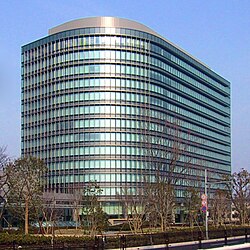
How Multinational Corporations Operate
MNCs employ several methods to establish and maintain their international presence:
- Importing and exporting goods and services across borders.
- Making significant investments in foreign countries.
- Buying and selling licenses in foreign markets.
- Contract manufacturing, where a local manufacturer in a foreign country is permitted to produce the MNC's products.
- Opening dedicated manufacturing facilities or assembly operations abroad.
Key Facts
- Control is key: MNCs must control production abroad, not just invest financially.
- Rapid Growth: The number of businesses with foreign operations grew from a few thousand before WWII to 78,411 by 2007.
- Investment Flow: While China, India, and Brazil are major recipients of MNC investment, 70% of foreign direct investment (FDI) flows into developed countries.
- Concentration: Three-quarters of MNCs are headquartered in economically advanced nations.
- Historical Roots: The earliest MNCs were colonial charter companies like the British and Dutch East India Companies.
The History of Global Enterprise
Colonialism and Early Trade
The origins of the MNC are deeply tied to colonialism. Early corporations were founded to establish port cities and "factories." The British East India Company (founded 1600) and the Dutch East India Company (VOC, founded 1602) are primary examples. The British East India Company eventually functioned as a quasi-government in India, maintaining its own army and officials. Other early examples include the Swedish Africa Company (1649) and the Hudson's Bay Company (HBC, 1670). While the VOC was taken over by the Dutch government in 1799, the HBC evolved into a modern department store chain that continued until 2025.
The Rise of Mining and Oil
In the 19th century, international mining became a dominant force. Rio Tinto, founded in 1873, expanded globally to mine copper, aluminum, iron, uranium, and diamonds. In South Africa, Cecil Rhodes established the British South Africa Company and De Beers, the latter of which nearly controlled the global diamond market.
By the 1930s, the oil industry was dominated by the "Seven Sisters," a cartel of seven MNCs that controlled most oil rights in the Persian Gulf, Iraq, and Iran. These companies colluded to keep prices high and pressured host countries for lower royalties. Although nationalized oil companies and OPEC gained dominance in the 1970s, the industry eventually consolidated into the "super-major" integrated oil companies known as Big Oil.
Economic Theory and Global Strategy
The role of MNCs involves a complex relationship between economic globalization and local culture. As early as 1963, experts like Ernest Dichter argued that cultural anthropology is a vital tool for competitive marketing. This approach involves managing a consumer's national attachments to facilitate a "global corporate village" of world customers.
Foreign Direct Investment (FDI) and Legal Domicile
Foreign Direct Investment (FDI) is often facilitated by international agreements, such as the North American Free Trade Agreement (1994–2020). MNCs can strategically choose their legal domicile (the jurisdiction of the parent company) to optimize operations. For example, the Netherlands is often chosen for its flexible company laws, while Great Britain offers advantages regarding double-taxation treaties with the United States.
Regulation and Taxation
Taxation remains a contentious issue. Many OECD countries use a territorial tax system, taxing only revenue earned within their borders. In contrast, the US has historically applied corporate taxation extraterritorially, which has led some companies to pursue "tax inversions" to change their domiciled state. To prevent base erosion and profit shifting, many nations employ controlled foreign corporation (CFC) rules.
Summary of Multinational Corporation Characteristics
| Feature | Description | Example/Detail |
|---|---|---|
| Primary Requirement | Control of production abroad | Distinguishes MNCs from portfolio investors |
| Common Strategies | FDI, Licensing, Contract Manufacturing | Opening foreign assembly plants |
| Taxation Models | Territorial vs. Extraterritorial | OECD territorial systems vs. US extraterritoriality |
| Historical Precedents | Colonial Charter Companies | British East India Company, VOC |
Frequently Asked Questions
What is the difference between an MNC and an international investment fund?
The primary difference is control. An MNC owns and controls the production of goods or services in a foreign country, whereas an investment fund typically buys shares or assets to diversify financial risk without managing the daily operations of the company.
What were the "Seven Sisters" in the oil industry?
The Seven Sisters were a group of seven multinational oil companies that dominated global oil production in the 1930s, controlling the majority of oil rights in the Persian Gulf, Iran, and Iraq.
What is a tax inversion?
A tax inversion occurs when a company changes its legal domicile to another country—typically one with a territorial tax system—to reduce its overall corporate tax burden, often in response to extraterritorial taxation laws.
Which countries are the largest recipients of MNC investment?
Developing and former communist countries, specifically China, India, and Brazil, are among the largest recipients of MNC investment, although a majority of total foreign direct investment still flows into developed nations.
How did early colonial companies differ from modern MNCs?
Early colonial MNCs, such as the British East India Company, often held quasi-governmental powers, including the ability to maintain their own armies and govern local territories, which is not a feature of modern corporate entities.